Get Full Government Meeting Transcripts, Videos, & Alerts Forever!
Get email alerts on the Civic Education Historical Displays topic
No spam. Unsubscribe anytime.
Proponents tell committee Senate Bill 34 would restore historical displays, including the Ten Commandments
Summary
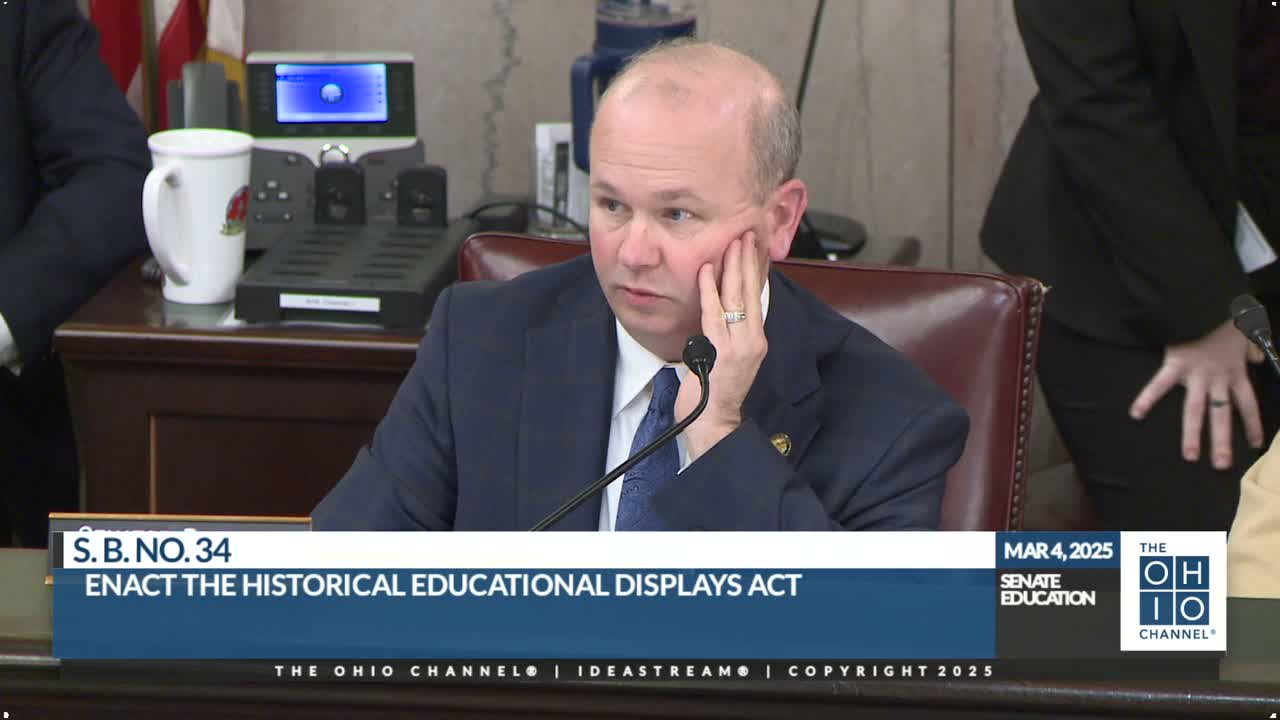
Proponents of Senate Bill 34 urged the Senate Education Committee to require public classrooms to display one of a list of historical documents — including the Ten Commandments — arguing the displays would teach civic and moral foundations. Committee members questioned choice of documents and constitutional risks.
Supporters of Senate Bill 34 told the Senate Education Committee the bill would promote historical literacy by requiring each public classroom to display one document from a legislatively defined list that includes founding texts and, in some options, the Ten Commandments.
Tim Throckmorton, national director of church engagement and community impact at the Family Research Council, urged support and framed the Ten Commandments as part of America’s legal and moral history. “I therefore urge your support of Senate Bill 34,” Throckmorton said. He cited historical uses of the Ten Commandments in early American primers and the presence of Moses imagery in the U.S. Capitol as context for the proposal.
Nut graf: Proponents argued the displays would reconnect students with founding texts and civic traditions. Committee members raised questions about which documents belong on a mandate list, whether more modern milestones might be appropriate, and whether posting religious material such as the Ten Commandments would invite constitutional challenges.
Proponent testimony and questions
Monty Lobb, executive director of the Christian Business Partnership (a division of the Center for Christian Virtue), said students show poor familiarity with founding documents and that the Ten Commandments have long influenced Western legal traditions. “The Ten Commandments are important to our religious and legal systems because they serve as a moral and ethical foundation,” Lobb said.
Senator Smith challenged proponents on selection criteria and whether other documents — the Emancipation Proclamation, the Nineteenth Amendment, Supreme Court decisions such as Obergefell v. Hodges, or the National Archives’ “100 milestone documents” — should be listed. Proponents said the bill’s list focuses on documents tied directly to the nation’s founding and civic origins.
Constitutional concerns
Senator Smith also asked whether the 1980 Supreme Court decision Stone v. Graham, which struck down a Kentucky law requiring Ten Commandments postings in public schools, should factor into the committee’s consideration. Proponents argued the historical and contextual display differs from the Kentucky law’s approach, but the exchange highlighted the potential for legal challenge.
Ending
Proponents closed by reiterating support for the bill as a civic‑education measure. The hearing concluded with no committee vote; members signaled differing views on the scope and selection of mandated documents and raised questions about legal defensibility and inclusiveness for non‑Christian students.