Get Full Government Meeting Transcripts, Videos, & Alerts Forever!
Get email alerts on the Sb113 Dei topic
No spam. Unsubscribe anytime.
Senator introduces bill to prohibit DEI policies in K–12; sponsors and opponents debate scope and effects
Summary
Sponsor Vice Chair Blessing presented Senate Bill 113 to the Senate Education Committee, saying the bill would bar DEI programs and training in public schools; proponents argued DEI prioritizes identity over merit, while other senators pressed sponsor on unintended effects for disabled students, ESL programs and targeted scholarships.
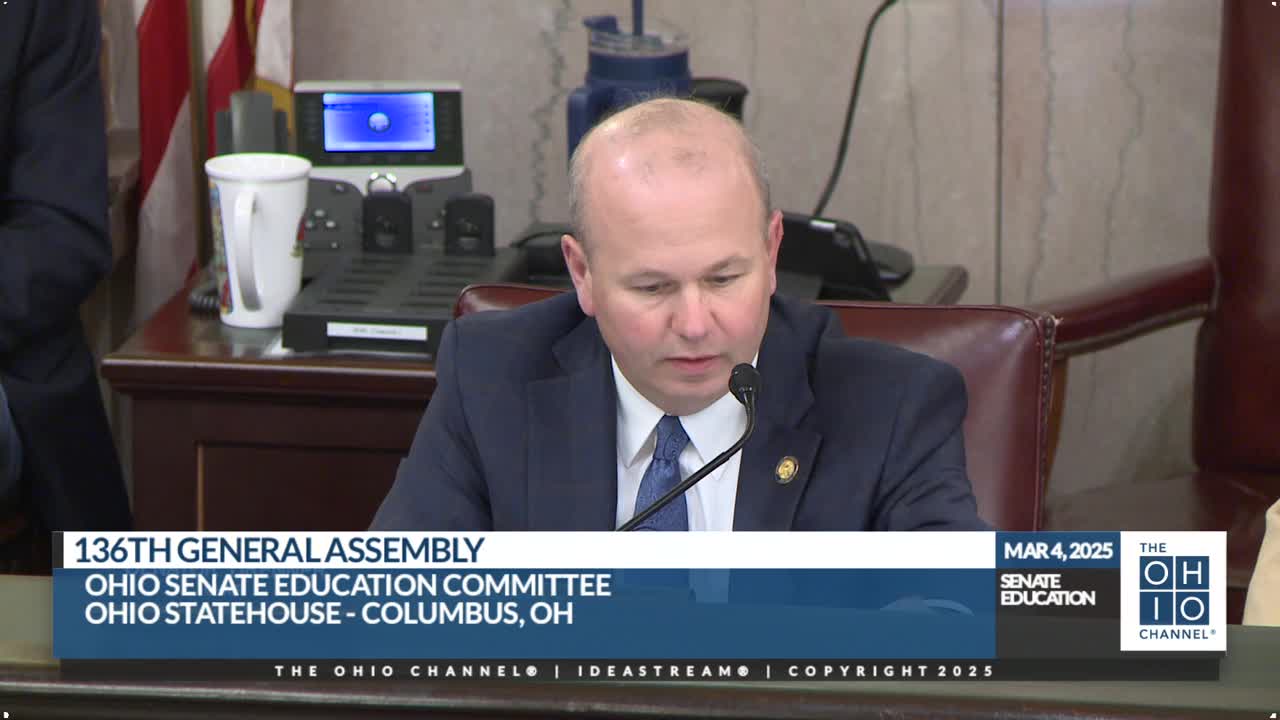
Vice Chair Blessing presented sponsor testimony on Senate Bill 113 to the Senate Education Committee, saying the legislation “will prohibit diversity, equity, and inclusion policies in public schools.” Blessing told the committee the bill would bar orientations or trainings on DEI, the continuation or creation of DEI offices or departments, and the use of DEI language in job descriptions.
In his testimony Blessing argued DEI “prioritizes identity over ability” and said the approach “lowers expectations” and “deepens racial divisions.” He referenced cases and federal law while arguing against DEI practices in K–12, citing Students for Fair Admissions v. Harvard (2023) to argue that racial preferences have been rejected by the U.S. Supreme Court and invoked Title VII and other federal civil-rights protections in his remarks.
Committee members pressed the sponsor on details and consequences. Senator Smith asked whether the bill would make it illegal to post job descriptions seeking employees for roles that serve students with disabilities or English learners; Blessing replied the bill would not prevent compliance with the Americans with Disabilities Act and that targeted ESL postings would not be barred. The sponsor said he intended the bill to leave in place state and federal nondiscrimination obligations, including Title VII and ADA requirements.
Ranking Member Ingram and others criticized the bill’s premise and asked whether it would help districts close persistent achievement gaps. Ingram cited Ohio data and asked if the bill addresses gaps in college attainment for Black Ohioans; Blessing replied the bill is not designed to address those attainment questions and suggested policy choices other than DEI should be used to improve student outcomes.
Several exchanges during the hearing exposed differing views about what “DEI” policies are and potential unintended consequences. Senator Smith warned that some legitimate, non-ideological programs — such as transportation for students with physical disabilities, programs for English-language learners, or adaptive athletics like wheelchair track and field — could be swept up if the bill is read too broadly; the sponsor replied that ADA compliance and similar legal obligations would remain in force and said he would work with colleagues on specific questions.
Blessing argued that limiting DEI in K–12 would restore “merit-based” approaches to curriculum, hiring and student programs. Opponents on the committee urged that the bill could hinder targeted efforts to increase access and that separate, focused solutions (for example on college-credit access) might be more effective than a broad prohibition.
No committee vote occurred during the hearing; a proponent-only testimony period concluded and the committee moved to other bills.