Get Full Government Meeting Transcripts, Videos, & Alerts Forever!
Get email alerts on the Conservation Districts topic
No spam. Unsubscribe anytime.
Soil and Water Conservation Commission reports FY24 gains, large demand for Waukapa cost‑share
Summary
The Idaho Soil and Water Conservation Commission told the House Agriculture Affairs Committee it delivered high district satisfaction, expanded technical assistance and heavy demand for Waukapa cost‑share in fiscal year 2024, while statewide expenditures exceeded revenues and one field vacancy remains open.
The House Agriculture Affairs Committee heard the Idaho Soil and Water Conservation Commission’s fiscal year 2024 annual and performance report on its work supporting 50 local conservation districts across the state.
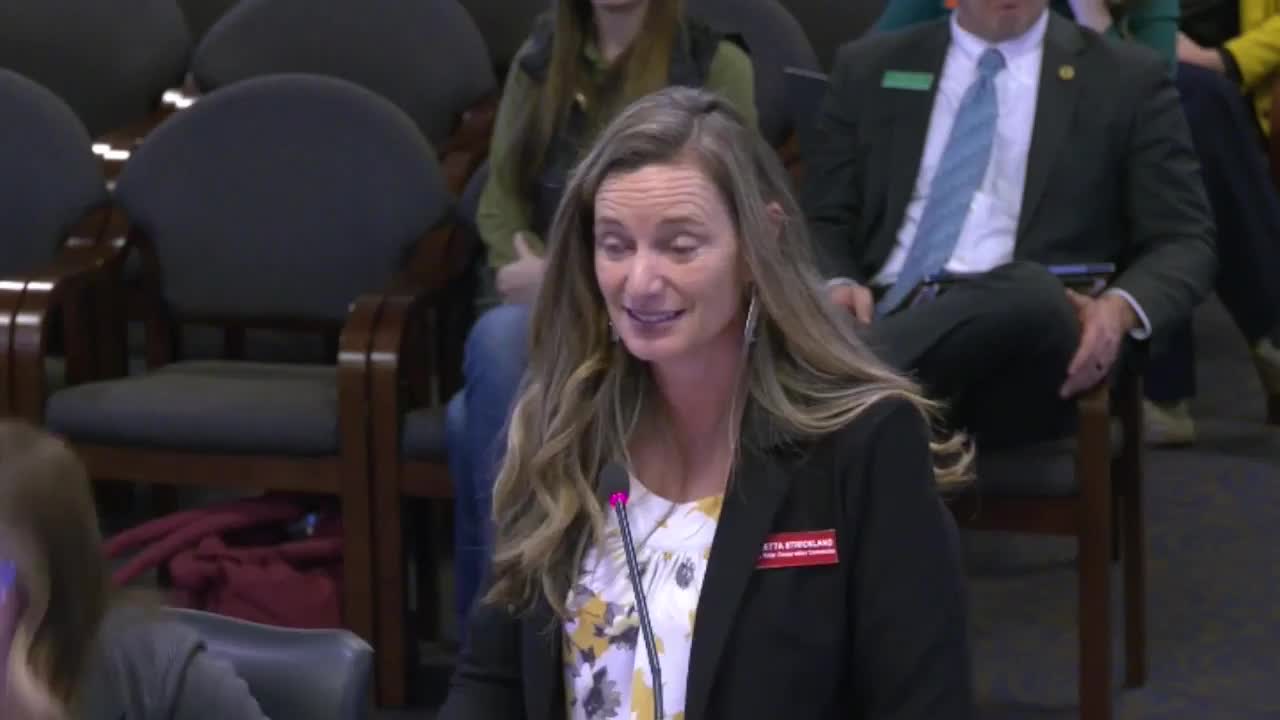
The report, presented by Loretta Strickland, the commission’s ag program manager and acting administrator, said the commission recorded high customer satisfaction and helped deliver conservation projects through several statewide programs, but demand for cost‑share funds outpaced available state money. “This level of customer satisfaction is, I suggest, directly related to the quality of our staff and their commitment to listening and responding to district supervisors and staff,” Strickland said, quoting the commission administrator.
Why it matters: The commission distributes legislative appropriations to local conservation districts and manages programs that influence irrigation efficiency, water quality and rangeland conservation. Large one‑time and supplemental appropriations such as Waukapa can quickly multiply private and partner investments in on‑the‑ground projects, meaning decisions about distribution, matching rules and program priorities affect landowners and local governments across the state.
Key figures and program results - Revenues reported for FY24 totalled about $3,950,000; expenditures were just over $7,900,000. The commission said $1,580,000 appropriated for distribution to districts was disbursed per statute and rule. - The commission has authorization for up to 17.75 full‑time positions and reported one field staff vacancy the agency is working to fill. - District support: 97.5% of responding conservation districts reported overall satisfaction with commission services; 95% said they were satisfied with the commission’s communications. Commission staff reported delivering nearly 12,000 staff hours to assist districts and about 2,771 hours of technical assistance to landowners participating in CREP. - Conservation programs: Commission staff supported 9,705 acres enrolled in the Conservation Reserve Enhancement Program (CREP). The Resource Conservation and Rangeland Development Program (RCRDP) financed conservation projects on 8,221 privately owned acres, the report said. Staff helped implement best management practices on 63,075 acres.
Waukapa demand and outcomes The commission highlighted Waukapa (state water quality cost‑share) as the most active program in FY24. The agency said $10 million in Waukapa appropriations were added in the 2022–24 period. Across that period the commission reported 170 project proposals requesting roughly $20.2 million in Waukapa cost‑share; 98 proposals were funded from the $10 million, resulting in an estimated $36.1 million in combined project value when partner and landowner funds were included.
For FY24 specifically, the commission reported a $5 million Waukapa appropriation, 80 project proposals submitted, and 50 projects selected for funding; districts combined state Waukapa funds with landowner and other monies to implement projects with a total value of roughly $17.7 million. The commission summarized that, for FY24, each state dollar invested in Waukapa produced about $3.54 in on‑the‑ground conservation.
Funding allocation rules and match Strickland reviewed how district operating funds were distributed under statute and commission rule: the first $725,000 of the trustee and benefit appropriation is distributed equally among the 50 districts (the commission said that equated to $14,500 per district), and the remaining match pool is apportioned proportionally based on eligible local support received in the prior year under IDAPA rules governing allocation to conservation districts. The report gave a median match allocation of $13,834 and a match‑to‑local support ratio of about 1.49:1, noting the state was $297,000 short of the statutory 2:1 maximum match threshold.
Fiscal process and authority Melanie Ziegler, the commission’s fiscal manager, told the committee the commission receives a base general fund appropriation and may receive incremental increases; she said the commission’s budget grows at roughly 3% annually under the governor’s guidance and that supplemental appropriations (for example, Waukapa money added by the legislature) have been the vehicle for large program expansions in recent years.
District perspective and local programs Representatives of the Idaho Association of Soil Conservation Districts (IASCD) described locally led projects, youth outreach and community infrastructure work. Devin Fielding, IASCD treasurer and a producer from Shelly, said districts are locally elected boards that use a mix of state, federal and private funding and stressed growing interest among younger producers in conservation measures. Tory O’Neil, IASCD vice president and a Custer County supervisor, described education events and on‑the‑ground projects such as pivot irrigation upgrades, willow plantings and a bridge reconstruction after flash flooding.
Questions and follow‑up Committee members asked about the large number of unfunded Waukapa proposals, whether aquifer recharge projects had been proposed (the commission reported none specifically requested recharge assistance), and how district operating money flows from the legislature through the commission to local districts. Strickland and Ziegler pledged to provide further detail on program mixes and fiscal flows as requested.
The commission said priority work for the coming period includes finishing Waukapa project implementation and catching up on total maximum daily load (TMDL) responsibilities now that program efficiencies have improved.
The commission concluded by thanking the committee and saying staff would stand for questions and follow‑up.