Get Full Government Meeting Transcripts, Videos, & Alerts Forever!
Get email alerts on the Broadband Bead Commerce topic
No spam. Unsubscribe anytime.
Commerce outlines $580M BEAD, other broadband funding and timeline to JFAC; state has $35M remaining in state broadband fund
Summary
The Department of Commerce told JFAC it is allocating federal and state broadband funds — including a $580 million BEAD allocation, a $120 million capital projects fund and a $35 million Idaho broadband fund — and detailed project timelines, pre‑qualification and application phases.
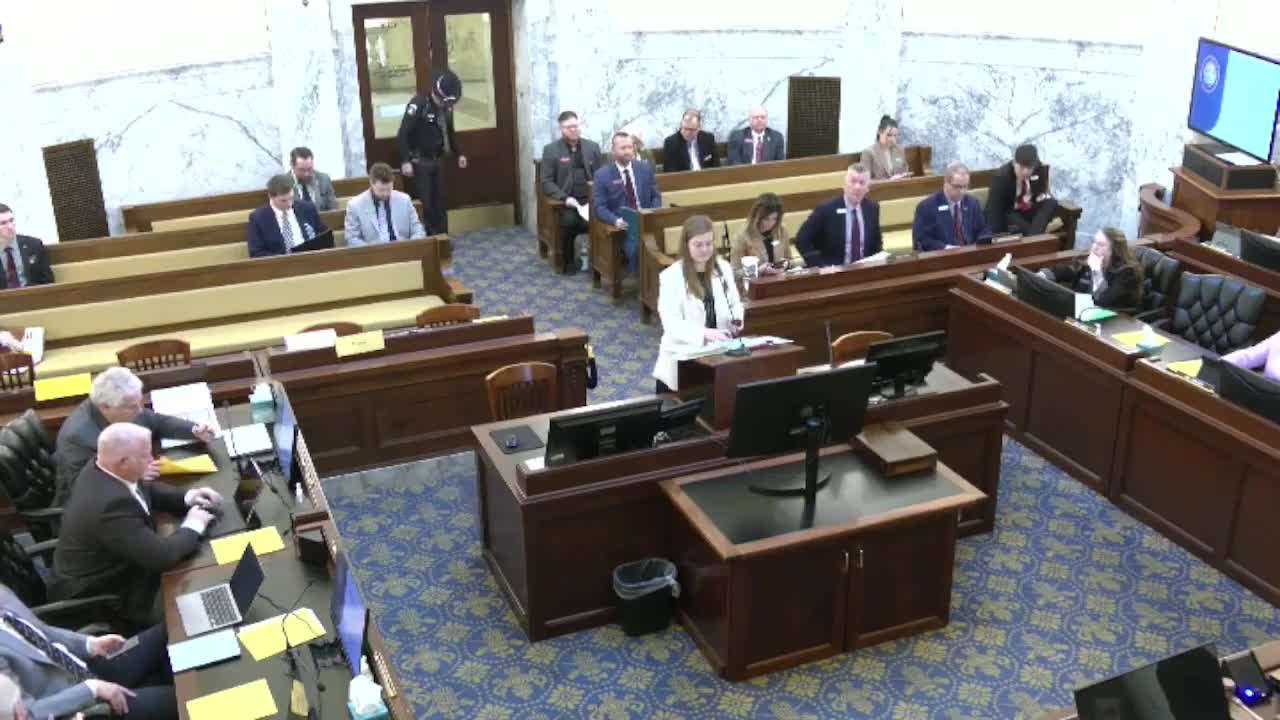
The Joint Finance‑Appropriations Committee heard an update from the Idaho Department of Commerce on broadband funding and deployment timelines, including state and federal programs intended to extend service to unserved and underserved locations.
Analyst Brooke Dupree opened the presentation and Director Tom Keeley and Broadband Manager Ramon Jabe Sanchez described three principal funding streams and the agency’s approach to project selection, collaboration with providers and timelines for applications to federal programs.
Why it matters: Broadband connectivity is a foundational economic and social infrastructure. Federal and state investments influence which rural and urban communities receive upgraded service and how quickly projects are completed.
Funding streams and pipeline
- Idaho Broadband Fund (state general fund): $35 million initial appropriation; Ramon Sanchez told the committee about $26.5 million of that fund already obligated and roughly $8.5 million remaining for allocation under the Idaho Broadband Advisory Board’s direction. - Capital Projects Fund (ARPA/other federal dollars): roughly $120 million appropriated and, according to the presentation, currently obligated under contract for 18 projects across Idaho to connect approximately 35,000 homes and businesses. - BEAD (Broadband Equity, Access and Deployment) program under IIJA: Commerce described a $580 million federal program for Idaho. The department said it had spent two years preparing and entered a pre‑qualification phase for applicants in Q1 of the calendar year, with a funding application phase planned for Q2. Commerce expects to evaluate applications over the summer and to submit a final package to federal partners in mid‑fall or early winter.
Project priorities and technology
Ramon Sanchez said the BEAD program’s priorities favor fiber first, then licensed fixed wireless, and only where those are not feasible would alternative technologies (including low‑Earth orbit satellites) be considered. He said Idaho’s approach has been to coordinate public and private partners on a regional basis and to use planning grants to local jurisdictions to improve readiness for BEAD applications.
Commerce also said it has made planning grants to 15 local communities — a unique use of BEAD planning funds — to strengthen public‑private collaboration for project proposals.
Timeline and process
Sanchez outlined a planning and application schedule: pre‑qualification in Q1 of the calendar year, a funding application period in Q2, grading and evaluation through the summer, and a final package to federal partners in mid‑fall or early winter. If the timeline holds, some BEAD dollars could begin moving within about a year of application approval, though Commerce cautioned projects will take additional time to build and connect locations.
Committee questions and technologies
Committee members asked whether low‑Earth orbit (LEO) satellite services such as Starlink should affect investment in fiber. Sanchez said Idaho’s BEAD approach is technologically agnostic but that fiber remains the most reliable solution for many locations; he said LEO satellites were likely to play a role for remote sites where fiber or fixed wireless are cost‑prohibitive. Commerce staff said recent federal guidance emphasizes a priority order (fiber, licensed fixed wireless, then alternatives) but allows alternatives in limited circumstances.
What the committee recorded
No formal votes or actions were taken during the briefing. Commerce emphasized continued coordination with the Idaho Broadband Advisory Board, tribal governments, Internet service providers, and local jurisdictions as it moves into the BEAD application phase.
Speakers (selected)
Brooke Dupree, budget and policy analyst, Legislative Services Office; Tom Keeley, director, Idaho Department of Commerce; Ramon Jabe Sanchez, broadband manager, Idaho Department of Commerce; Jeremy Chase, business development and tourism administrator; Deanna Ross, financial specialist; members of JFAC including Senators Cook and Wintrow.
Sources and materials
Analyst LBB pages and a Commerce handout from a November JFAC tour showing broadband allocations and project lists were provided to the committee. Commerce said project lists and contracts for capital projects are presently under obligation.