Get Full Government Meeting Transcripts, Videos, & Alerts Forever!
Get email alerts on the Public Health Budget topic
No spam. Unsubscribe anytime.
Lawmakers review public health budget overhaul as agency seeks to restore programs, modernize data systems
Summary
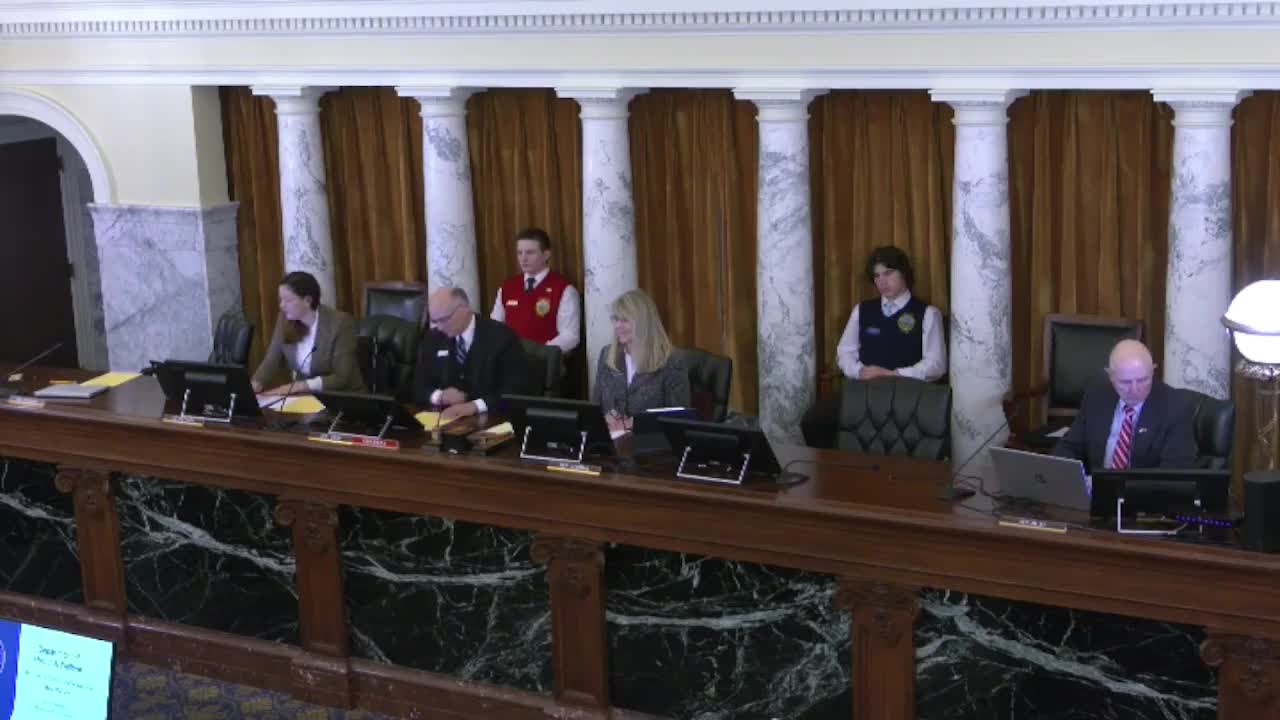
Division and department leaders briefed the Joint Finance‑Appropriations Committee on Wednesday on the Department of Health and Welfare’s Division of Public Health Services, outlining requests to restore previously reduced programs, fund workforce incentives and finish multiyear information‑technology upgrades.
Division and department leaders briefed the Joint Finance-Appropriations Committee on Wednesday on the Department of Health and Welfare’s Division of Public Health Services, outlining requests to restore previously reduced programs, fund workforce incentives and finish multiyear information technology upgrades.
The Division of Public Health Services is asking to restore multiple ongoing programs that were converted to one‑time funding in recent years and to continue a slate of one‑time investments largely supported by federal ARPA and other federal grants. Division staff told the committee the FY2025 base was $164,020,000 and that the governor’s FY2026 recommendation totaled roughly $154,000,000 after adjustments and program restructures discussed at the hearing.
The request covers five program areas: physical health services (immunizations, maternal/child health, chronic and communicable disease prevention), emergency medical services (EMS), laboratory services, suicide prevention and awareness, and health care policy initiatives (including administration of the State Healthcare Innovation Plan, or SHIP). Keith Bybee, division manager of budget and policy analysis, walked members through the line‑item requests and said this review was effectively a “0‑based budgeting” exercise for the division. “You can find it on page 2‑57 in your budget book,” Bybee said while describing the division’s structure and recent funding shifts.
Why it matters: the division distributes most funds as trustee and benefit payments to local public health districts and community providers; changes in ongoing vs. one‑time funding change local planning and staffing. Committee members pressed department leaders about federal grant carryover, data modernization progress and which activities could be moved to other agencies.
Major restorations and ongoing requests
- Suicide prevention and awareness: The program, originally established following the Health Quality Planning Commission report (2015), seeks $1,807,700 from the general fund and $195,000 in federal funds to restore ongoing support. Bybee summarized that the program supports the state suicide prevention plan, youth programs and crisis hotline support.
- Drug overdose prevention: The department asked to restore four FTE and $2,820,200 ongoing for the Drug Overdose Prevention Program, first established in 2017 to coordinate overdose response and prevention strategies.
- Refugee health screening: Request to restore 1.5 FTE and $991,000 ongoing to continue the Idaho Refugee Health Screening Program serving arrivals resettling in Boise and Twin Falls.
- Women, Infants and Children (WIC) and related nutrition programs: A large ongoing restoration request includes $6,944,600 ongoing for the WIC supplemental nutrition program and other nutrition‑related restorations tied to maternal/child health services.
- Fit and Fall Proof and Alzheimer/dementia activities: Smaller ongoing restorations include $140,000 for Fit and Fall Proof (a community fall‑prevention exercise program) and $275,200 for Alzheimer’s and related dementia coordination.
One‑time and federal grant investments
- Data modernization: Multiple one‑time requests were presented for modernizing vital records and other public health data systems. Bybee described funds drawn from Epidemiology and Laboratory Capacity (ELC) grants and CDC‑related Data Modernization Initiative awards. He said the modernization effort aims to replace paper processes (birth, death and other reporting) and to reduce siloed systems — the department estimates some 62 separate public health data systems across programs.
- Vital records and immunization funds: The division requested $2,500,000 ongoing from dedicated funds for the state immunization program (to ensure access to vaccines for Idaho children under 19) and requested an increase for Vital Records receipt authority ($150,000 ongoing) to process over 100,000 records per year.
- ARPA/one‑time public health infrastructure grants: The department listed several one‑time items on page 266 of the budget book totaling about $8,752,500; the governor recommended these. Examples include public health infrastructure grants to hire and retain workforce and a year‑4 communicable disease prevention grant requesting $2,041,800 one‑time to support 4.4 limited service positions.
Workforce and rural incentives
Committee members asked about the governor’s rural physician incentive proposal and other workforce items embedded within the public health request. Bybee and Director Alex Adams described a mix of loan repayment and recruitment incentives for physicians practicing in federally designated health professional shortage areas. Adams said the rural physician incentive funding has been oversubscribed in prior years and that the requested ongoing funds are intended to increase retention and access in rural communities. Division administrator Elke Shaw Tullock told the committee the division’s loan repayment programs have a reported retention rate near 91% for providers who receive loan repayment funds and remain in Idaho practice.
Committee concerns and clarifications
Several lawmakers requested more detail on data modernization outcomes before approving additional funding. Senator Cook asked for a follow‑up memo showing what prior ARPA and data modernization dollars produced; Adams committed to provide a short briefing and documentation to the committee.
Representative Price and others asked whether specific programs (for example, drug overdose prevention, Fit and Fall Proof, and Alzheimer’s coordination) might be better placed in other agencies such as the Commission on Aging or the Office of Drug Policy. Adams and Tullock said the department is open to transfers but noted the programs’ prevention focus and existing operational relationships within public health. Adams described the reorganization the department has undertaken and said “we’re trying to ensure that our practical implementation of any of these programs at the local level reflects Idaho values.”
Funding context and structural note
Bybee emphasized that a portion of the FY2025 expenditures reflected ARPA and CARES Act carryover and that some programs were intentionally moved from ongoing to one‑time during base adjustments; the division’s FY2026 submission seeks to restore many of those lines to ongoing status. He noted the committee will need to consider structural questions about how much of the division’s funding should be sustained ongoing appropriations versus one‑time federal carryover.
What’s next
Committee members asked for more detailed deliverables and progress reports on IT modernization projects and for documentation listing which functions are tied to federal grant periods. Adams and Tullock offered to provide a three‑page summary of modernization activity and to work with analysts on follow‑up questions.
Ending
Department leaders asked the committee to consider the requests with an eye to continuity of local public health services. “This committee’s got a lot of work in front of it on this division specifically,” Bybee said. The committee paused the conversation after the allotted time to move to other agenda items and asked staff to provide the requested follow‑up materials.