Get Full Government Meeting Transcripts, Videos, & Alerts Forever!
Get email alerts on the State Liquor Division Budget topic
No spam. Unsubscribe anytime.
State Liquor Division briefs JFAC on revenue distributions, staffing and IT, requests modest FY2026 increases
Summary
The Idaho State Liquor Division told the Joint Finance-Appropriations Committee about FY2024 revenues and statutory distributions, staffing challenges in retail stores, and FY2026 requests for modest pay increases for temporary retail staff, IT and store replacement items.
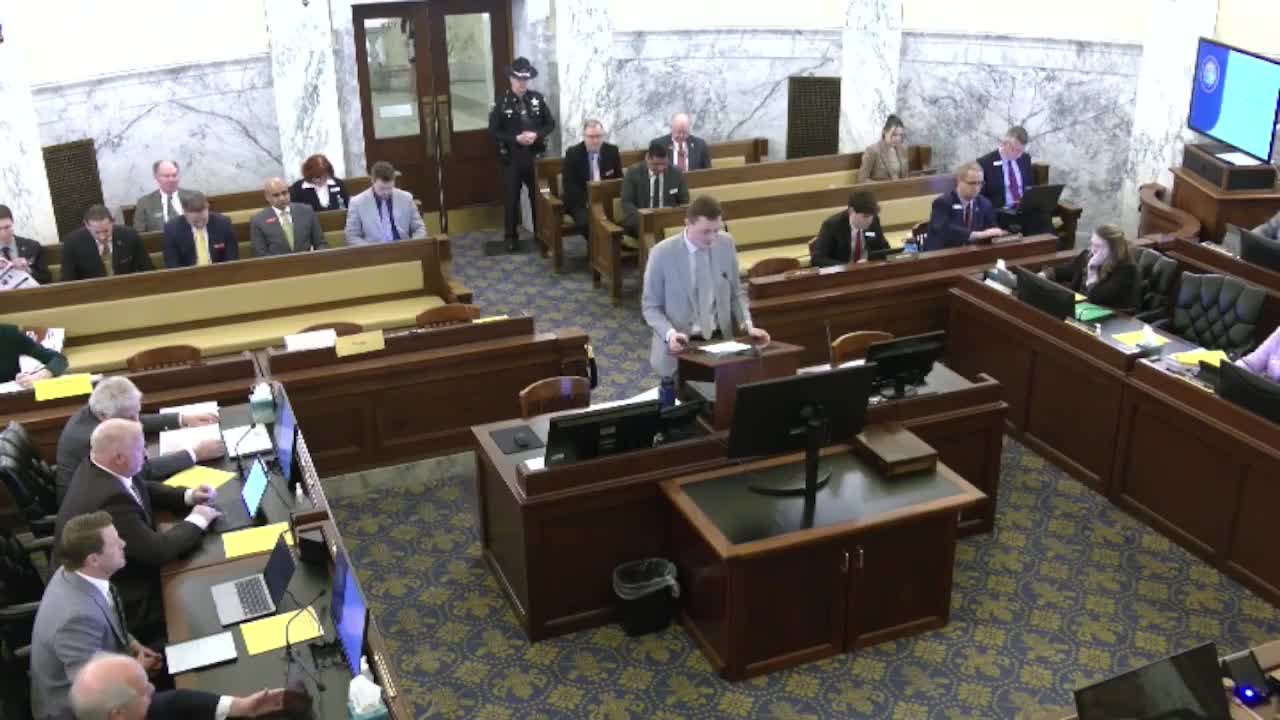
The Joint Finance‑Appropriations Committee heard a presentation on the Idaho State Liquor Division’s finances and FY2026 budget requests, including requests to modestly raise pay for temporary store clerks, purchase network security equipment, and fund retail store replacements.
The briefing, delivered by Legislative Services analyst Kellen McGurkin and Division Director Andrew Arulanandam, outlined the division’s statutory role under Idaho law and showed FY2024 distributions and operating results. McGurkin told the committee that FY2024 distributions from the division totaled $118.3 million and explained the statutory distribution sequence, including a 2% surcharge on liquor sales that funds court services and a split of available funds between local governments and other statutory recipients.
Why it matters: Liquor division net revenues are a recurring source of funding for courts, cities and counties, and for special funds such as Peace Officer Standards and Training. Budget decisions affect both retail operations and those downstream distributions.
Most important figures and structure
- The division reported total retail and other liquor sales of about $319.1 million in FY2024 and reported net income of roughly $116.6 million; FY2024 distributions were ~$118.3 million. McGurkin said the small gap between net income and distributions reflects inventory and asset accounting adjustments. - Statutory distributions: a 2% surcharge on all liquor sales goes to the court services fund (about $6.7 million in FY2024). McGurkin said the remaining funds are split with roughly half flowing to cities, counties and magistrate courts (about $56.3 million), and fixed distributions and statutory transfers — including a 1.5% share to the Peace Officer Standards and Training fund — taken from the other half before any remainder moves to the general fund. - Staffing and operations: the agency’s FTP cap is 257.25. Retail operations account for about 210 full‑time positions, the agency uses about 185 part‑time store clerks and works with 106 contract liquor stores. McGurkin said the agency’s filled FTP is about 93% and it typically spends about 96% of its appropriated personnel funds. - Fund balances: McGurkin noted a decline in the division’s free fund balances from about $38 million in FY2022 to $14 million in FY2024; he attributed that in part to a spike in higher‑margin direct‑to‑consumer sales during the COVID‑19 pandemic that the agency has since drawn down.
FY2026 requests and one‑time items
Arulanandam and staff outlined the division’s FY2026 requests, which are largely modest and operational:
- Ongoing dedicated requests totaling $131,400, chiefly a $57,400 request to raise temporary retail staff hourly pay from $15.00 to $15.45 and a $72,000 request to cover new shrink‑wrap freight requirements tied to a new freight contract. - One‑time IT/security and replacement items: a $1.2 million replacement package (store shelving, lighting, flooring and signage, vehicles and warehouse equipment); a $200,000 request for 70 firewalls and 70 network switches to complete a network modernization project; and $100,000 to bring the agency website into compliance with web content accessibility guidelines (ADA). Arulanandam said the website is “currently out of compliance with standards related to the Americans with Disabilities Act.” - The division also described implementing Cradlepoint cellular routers in FY2024 and said pairing those routers with managed firewalls and switches would reduce monthly expenses and save on upfront hardware compared with a hardwired network solution.
Staffing and turnover discussion
Committee members questioned whether incremental pay increases would meaningfully reduce turnover among temporary retail clerks. Director Andrew Arulanandam said the division previously experienced roughly 140% annual turnover in temp hours and that recent increases reduced turnover to “roughly 84%.” Chief Deputy/CFO Tony Grama told the committee: “our temporary, store clerks are state employees. We don't hire them through an agency,” and added that temporary clerks are not eligible for automatic change‑in‑employee‑compensation (CEC) adjustments, so the division must request line‑item enhancements to change their pay.
Several legislators suggested the division may need larger pay changes to be competitive with private‑sector employers; Arulanandam said the division prefers an incremental approach and cautioned that higher pay alone might not solve turnover.
Accessibility, cybersecurity and inventory
When asked why a website accessibility project would cost $100,000, Arulanandam said the division consulted an expert and received a list of items to fix and that legal risk from private enforcement suits was a factor in deciding to invest now to reduce future exposure.
On cybersecurity, analysts and staff described a plan to upgrade from DSL/T1 connections to cellular connectivity paired with managed firewalls and switches. The analyst said LSO’s impact review found OITS’s recommendations “appropriate” and that the new configuration is projected to save about $100,000 in hardware costs upfront and reduce monthly costs by about $10,000 compared with a hardwired option.
Enhancements enacted in recent sessions
McGurkin summarized recent appropriations the committee has approved: a $189,000 increase to raise pay for temp retail staff from $13.50 to $15.00 in the prior year; $79,000 for store relocation/remodeling costs; $42,000 to convert temporary clerk hours into two full‑time positions; $83,000 for a program systems specialist; and various one‑time replacement and security items including shelving, cameras and warehouse equipment.
What the committee recorded
No formal motions or votes on the Liquor Division budget were recorded during the hearing. The briefing served to inform JFAC members before they consider appropriation language later in the session.
Speakers (selected)
Kellen McGurkin, budget and policy analyst, Legislative Services Office; Andrew Arulanandam, director, Idaho State Liquor Division; Tony Grama, chief deputy and CFO, Idaho State Liquor Division; Tony Faraca, chief deputy director (introduced); Tony Aldine, business analyst (introduced); Senator Cook; Senator Ward Engelking; Senator Wintrow; Representative Bridal; Senator Carlson.
Sources and documents cited at the hearing
The analyst cited the agency’s Legislative Budget Book pages (LBB, pages cited in the presentation) and statutory distribution language in Idaho law governing the State Liquor Division (Title 23). McGurkin referenced the statutory distribution flow and “Idaho Code §23‑404” (transcribed in the hearing as section 23 4 0 4). The division supplied a slide deck with sales, distribution and appropriation figures for FY2021–FY2024 and FY2026 budget requests.
Next steps
The Liquor Division’s requests and the committee’s questions were recorded as part of the agency budget review; no committee action or vote occurred at the hearing. The division’s staff remained available to answer further questions as JFAC develops appropriation language.