Get Full Government Meeting Transcripts, Videos, & Alerts Forever!
Get email alerts on the Fish And Game topic
No spam. Unsubscribe anytime.
Fish and Game seeks $18.2 million in mostly one-time enhancements; appeals to use reserves for fire rehabilitation
Summary
The Idaho Department of Fish and Game told the Joint Finance-Appropriations Committee it is requesting $18.18 million in enhancements for 2026 — about 88% one-time — to cover hatchery and facility replacements, disease monitoring, depredation claims and fire rehabilitation; the governor recommended the agency's requests in full.
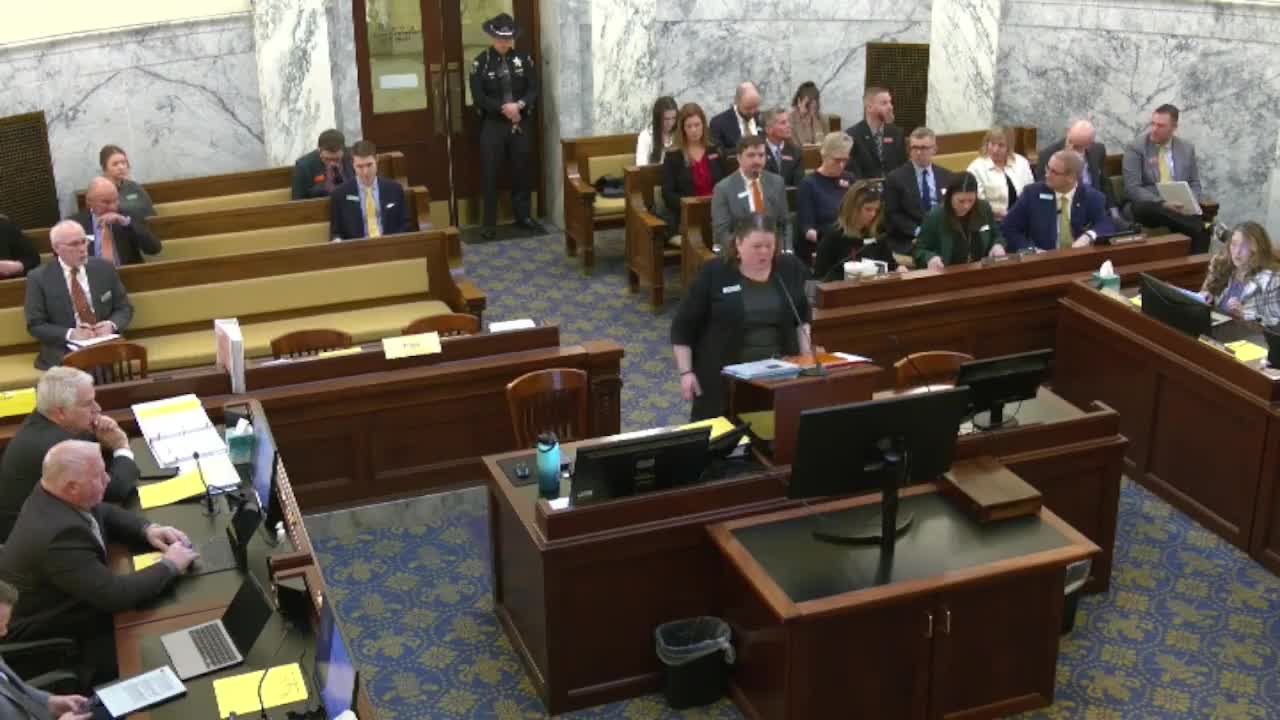
Director Jim Fredericks presented the Idaho Department of Fish and Game's budget to the Joint Finance-Appropriations Committee, outlining a mix of ongoing requests and substantial one-time spending for replacement items, maintenance and emergency rehabilitation.
The department is funded entirely with dedicated and federal funds and receives no state general fund. Agency materials provided to the committee show the department is allocated approximately 550 FTP and operates 19 state-run facilities, including hatcheries that drive facility and utility costs.
Fredericks told the committee the agency regularly spends about 85–91% of its appropriations and that some year-to-year variance reflects the timing and restrictions of federal and dedicated fund uses. Chief John Oswald said an observed dip in a consolidated cash balance between FY2023 and FY2024 reflected delayed federal grant billing in FY2024 that the department has since caught up with in FY2025.
The agency requested $18,184,900 in enhancements for FY2026, about 88% of which are one-time items. Jessup's presentation listed several of the larger requests: roughly $590,000 for wolf census and depredation costs; $4.9 million to address a maintenance backlog; $3 million for depredation claims; $2.5 million ongoing for Phase 3 work at the Eagle Valley Ranch related to Chinook salmon, steelhead and bull trout; ArcGIS software licenses ($140,000); and funding to align federal grant appropriations ($679,900).
Fredericks said the agency made a supplemental request tied to the Valley Fire east of Boise, which burned about 9,900 acres including part of the Boise River Wildlife Management Area. He said the immediate cost for initial rehabilitation — aerial herbicide application, seed purchase and initial seeding to stabilize winter range for deer and elk — is roughly $750,000, and that longer-term restoration will incur additional costs. "This will be...an ongoing thing with an initial herbicide treatment and seeding, but then moving into sagebrush planting down the road and then some more extensive restoration," Fredericks said. He said the utility company has expressed interest in a voluntary contribution but details are still under discussion.
On digital services, the agency said it has spent a small portion of its initial website modernization appropriation ($750,000) on discovery and auditing work and now expects the full modernized website to cost roughly $1.3 million; the department cited another western state's redesign at about $1.5 million for comparison. On remote connectivity, the department asked for $65,000 to improve connectivity at multiple remote hatcheries and management sites; administration bureau chief John Oswald said that ITS helped specify hardware and that some sites require point-to-point connections that increase per-site costs.
Committee members requested greater detail on specific items: the department was asked to provide accounting for website phase 1 spending, to clarify the total and ongoing costs for Valley Fire rehabilitation and to document the technical specifications for the proposed connectivity hardware.
Fredericks closed by thanking the committee and noting the budget aims to maintain healthy and abundant fish and wildlife populations across the state.