Get Full Government Meeting Transcripts, Videos, & Alerts Forever!
Get email alerts on the Agricultural Research Extension topic
No spam. Unsubscribe anytime.
University of Idaho presents Ag Research and Extension budget; highlights new Parma lab and digital-literacy outreach
Summary
University of Idaho officials and the Agricultural Research and Extension Service presented FY2026 budget requests, including a request for a viticulture/small-fruits faculty line and building maintenance funding; extension staff highlighted adult computer literacy work funded by ARPA and a pending FCC-related grant proposal.
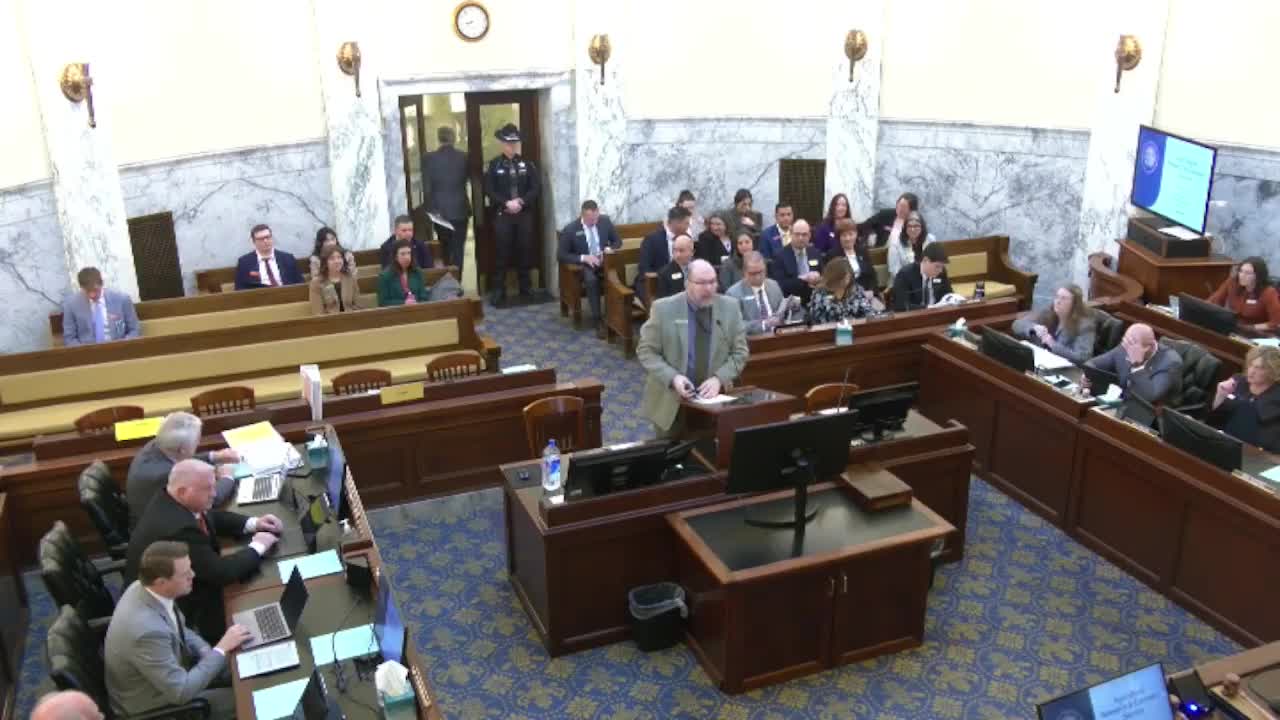
University of Idaho leaders and the Agricultural Research and Extension Service (ARES) presented an overview of their FY2026 base budget and enhancement requests to the Joint Finance-Appropriations Committee on Feb. 10, emphasizing new facilities, research hires and extension outreach to rural communities.
What was presented Kevin Campbell, budget and policy analyst with the Legislative Services Office, summarized ARESprograms and the servicebudget. He noted the Agricultural Experiment Station operates 10 research and extension centers and that the service has a physical presence in 42 of Idaho's 44 counties and three recognized tribal communities. Campbell said ARES had about 341.33 FTP as a current count and that personnel represent the largest share of expenditures.
Dean's remarks and priorities Michael Perella, dean of the College of Agricultural and Life Sciences, described investments in facilities — including a new research laboratory in Parma, the Idaho Center for Plant and Soil Health — and said those facilities will support breeding, irrigation research and soil-health work. "We are proud of the quality and impact of the research we conduct, the students we train, and the unbiased information we deliver to the citizens of Idaho," Perella said, and added that the college leverages state investments to attract external competitive grants.
Specific FY2026 requests and recent appropriations Campbell summarized recent and requested funding: FY2024 appropriations included $394,000 for new faculty positions in animal and plant sciences and agricultural engineering; FY2025 included $232,000 for maintenance of the new Parma research laboratory and $322,200 for two faculty positions in irrigation and forestry. For FY2026 the service requested $157,900 ongoing for a viticulture and small-fruits research faculty position and $250,100 for building maintenance at the Idaho Center for Agriculture, Food, and the Environment. Campbell said the viticulture position would address grower-identified needs in disease prevention, water and pest management, and post-harvest storage.
Extension and digital-literacy outreach Perella and extension staff outlined extensionactivities beyond production agriculture, noting five extension focus areas: agriculture, natural resources, 4-H youth development, communities and families. They described ARPA-funded adult computer-literacy work that helped rural residents develop basic digital skills and said the college recently participated in a federal FCC grant competition; Perella said the University had one of 24 national proposals and that the award would be approximately $13 million if funded. He said the grant work would include two-year schools and broad statewide partners to address the digital divide.
Results and metrics Perella said extension reported more than 450,000 face-to-face contacts with Idahoans and engaged over 75,000 youth in 4-H programs last year. He also said recent change-in-employee-compensation appropriations helped reduce turnover at the college from 14% to 11% in FY2024.
Committee questions and follow-up Legislators asked for the rationale for placing adult computer-literacy work in extension; Perella said extensionserves broader community needs, including digital-economy awareness and workforce-readiness in rural communities. Senator Rose and other members said the committee will track federally funded pilot programs that transition into ongoing state-funded efforts and noted the need for staff work to inventory ARPA-initiated efforts across agencies.
No formal actions recorded No votes or formal motions were taken during the presentation. ARES and University of Idaho staff said they would provide requested follow-up information to the committee.