Get Full Government Meeting Transcripts, Videos, & Alerts Forever!
Get email alerts on the Public Safety topic
No spam. Unsubscribe anytime.
Idaho State Police details budget requests as staffing shortfalls, forensic expansion and fentanyl response top concerns
Summary
ISP told the Joint Finance and Appropriations Committee about multiple budget requests for FY2026, including fentanyl interdiction staffing, forensic lab expansion, sexual-assault kit investigators, a proposed HDA fund shift to maintain patrol operations, and concerns about recruiting and retention of troopers.
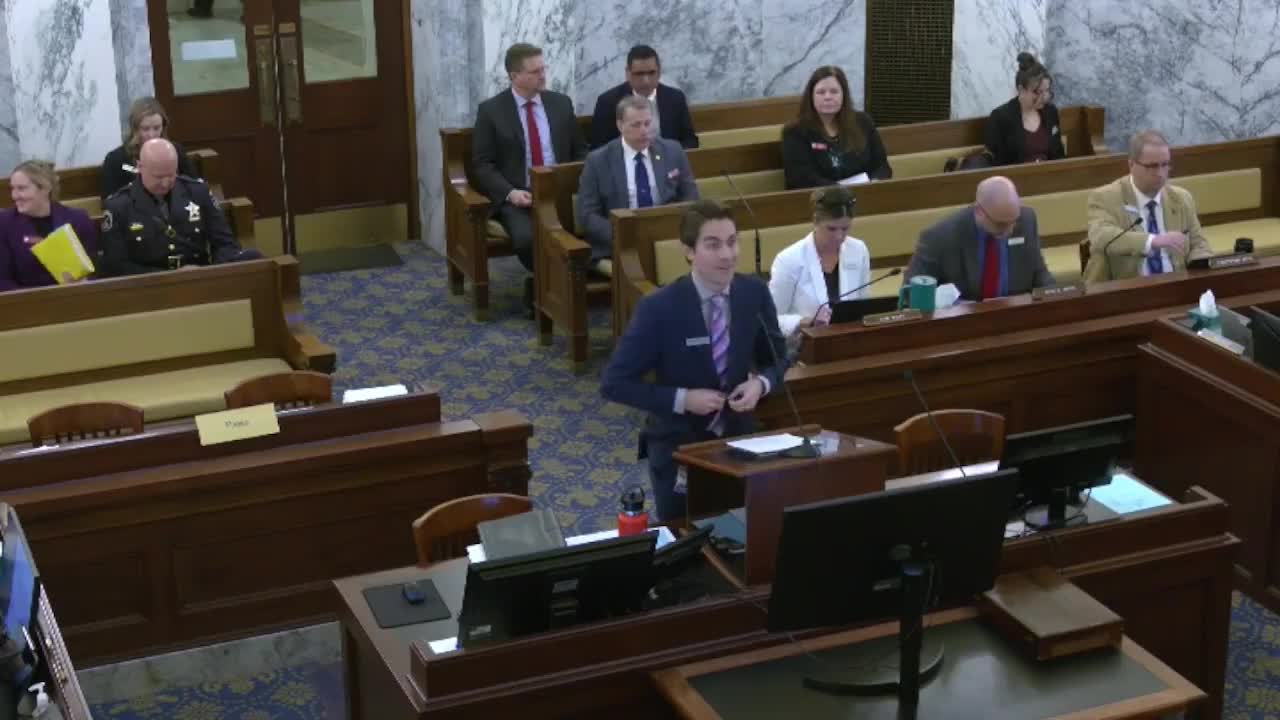
The Idaho State Police (ISP) on Feb. 12 outlined an array of budget requests and operational pressures to the Joint Finance and Appropriations Committee, emphasizing growth in drug interdiction work, forensic capacity needs and a personnel shortfall that the agency said is compromising statewide patrol coverage.
Noah Peterson, budget policy analyst with the Legislative Services Office, walked the committee through ISP’s FY2026 enhancement requests and funding history. He said ISP is requesting several targeted additions including 10 FTP and $1,043,300 for a fentanyl-focused unit, four detectives for a special investigations unit assigned to certain Idaho Department of Correction facilities ($757,300; 4 FTP), one forensic deputy lab manager ($118,200; 1 FTP), and funding tied to legislation that would add certain misdemeanors for DNA collection ($168,100). Peterson also described a requested transfer of $4,995,500 and 37.48 FTP tied to an HDA (Highway Distribution Account) fund shift that the agency said would be necessary for patrol to “maintain current operations.”
Colonel Bill Gardner, ISP director, told the committee the agency has 583.67 FTP allocated and has experienced vacancies and turnover that have created acute coverage gaps in some regions. Gardner said the agency’s fill rate averaged 92.5% over five years but that certain districts, including northern Idaho, are “decimated” and that recruiting applicants for some posts has become extremely difficult. He said recent examples include losing troopers to municipal departments and other states and that some districts must rely on troopers sent temporarily from other parts of Idaho to cover patrol duties.
Gardner and Christine Otto, ISP’s chief financial officer, described several additional requests and program moves: converting contracted upfitting and fleet service roles into two full-time positions (2 FTP, net $63,300), moving certain digital forensics personnel from the investigations program into Forensic Services (2 FTP, net 0 transfer), transferring federal funds to miscellaneous revenue where contract structure requires it ($659,700), and a request for a disaster recovery site for the Idaho law enforcement telecommunications system (ILETS) ($233,000 ongoing from the ILETS fund).
On the sexual-assault kit initiative (SACI), Peterson described plans to convert roles originally intended as retired-officer contractors into permanent employees so those investigators could become POST-certified and have the privileges required for the investigations. Gardner said SACI and the forensic team have had “enormous” success in identifying offenders and stressed the importance of continued legislative support. The agency also asked for one-time Millennium Fund support: the governor recommended $500,000 in one-time operating funds for a fentanyl public-education campaign, subject to Millennium Fund committee approval.
Committee members questioned OITS modernization: Peterson said ISP had proposed moving 20 IT positions to the Office of Information Technology Services (OITS), while the governor’s recommendation moved 16 and adjusted the net cost. Senator Cook and others expressed concern about creating a “shadow IT” and asked for job-grade and role details; Peterson and Colonel Gardner said some specialized application-development and support personnel should remain within ISP to provide agency-specific support.
Committee members also pressed on forensic capacity and facilities. Colonel Gardner described a planned new, larger forensic laboratory in Meridian and a smaller renovation/addition in Twin Falls to address regional drug identification needs. Gardner said the current lab is decades old and the new Meridian facility would allow consolidation and room for growth.
There were no formal committee votes recorded on ISP’s requests during the hearing; the presentation generated follow-up requests from members for more detailed financial schedules, turnover data, and further information on grant timelines and federal funding.