Get Full Government Meeting Transcripts, Videos, & Alerts Forever!
Get email alerts on the State Lands Wildfire Funding topic
No spam. Unsubscribe anytime.
Department of Lands presses for wildfire funding, new positions and expanded timber-protection pay; governor recommends large transfers to suppression fund
Summary
The Idaho Department of Lands told the Joint Finance-Appropriations Committee that rising wildfire costs, timber-protection needs and federal partnerships justify new staff and larger preparedness funding; the governor recommended large transfers to the fire suppression fund.
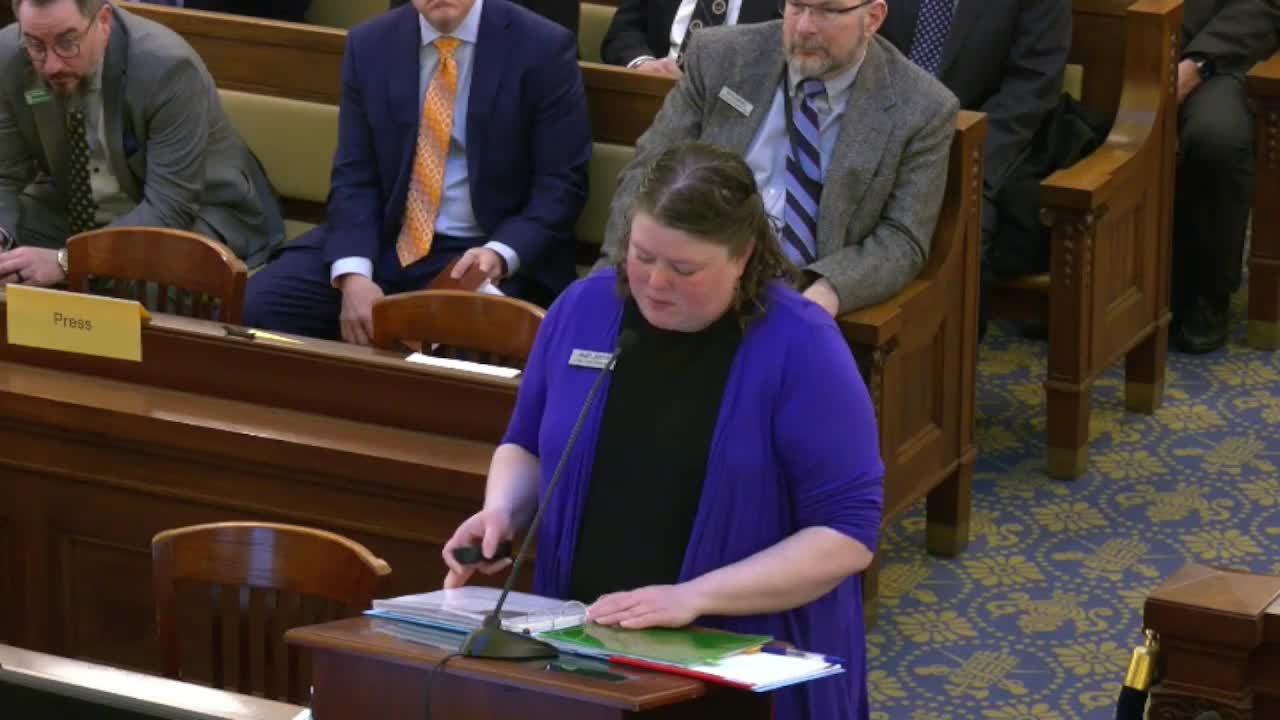
The Idaho Department of Lands told the Joint Finance-Appropriations Committee on Jan. 22 that rising wildfire costs, program growth on federal and private lands and additional preparedness needs justify multiple budget enhancements, including new positions and funding for timber-protection partners.
Director Dustin Miller and Legislative Services analyst Janet Jessup detailed the department—s budget and argued the state must balance suppression reserves with investments in preparedness, mitigation and shared forest management.
Jessup walked the committee through the department—s multiple funding sources and highlighted the fire suppression deficiency warrant fund, a continuously appropriated fund historically prefunded by legislative transfers. She noted the governor recommended transfers totaling $100 million into the suppression account in the current and next fiscal year: a $60 million supplemental transfer for the current year and a $40 million transfer to the deficiency fund in the proposed budget.
On operational items, the department requested six new full-time positions tied to fire response and forest management, including a fire emergency support program manager, a fire aviation section manager and a statewide forest assessment program manager. Much of the department—s recent budget growth came in federal funds for firefighter pay, wildfire reduction projects and abandoned-mine remediation, the analyst said.
The department also asked for a line-item CEC (cost-of-living/personnel placeholder) for the state—s two Timber Protective Associations (TPAs), which are long-established, quasi-governmental organizations that provide fire protection on private forest lands. Jessup explained the TPAs are not state employees and therefore do not receive the standard state CEC; the department requested an equivalent, and the governor—s recommendation included an increase for the TPAs to provide parity.
Director Miller described the Good Neighbor Authority (GNA), a state-federal partnership that uses timber-sale receipts from federal lands to fund active management and restoration. "About $40,000,000 is what's been generated to date," Miller said, and he supplied a breakdown of where those receipts have been used: personnel, operating, payments to the Forest Service and restoration contracts. Miller told lawmakers that the department has agreements with six of seven national forests in Idaho and that GNA work accounted for roughly 24% of the Forest Service's Idaho volume in the prior year.
Miller said the department—s fire-business and electronic billing systems are improving invoicing speed but that reimbursement timing from federal partners remains a constraint. He told the committee the suppression account balance could drop to about $13 million in FY 2026 without the governor's supplemental transfers and that the state continues to receive large invoices and cost-share obligations that could further strain the fund.
Committee members asked for historical suppression-cost data and received commitments from staff to provide multi-year expenditure figures for planning. Members also pressed on timber assessments, how timber-owner assessments and TPA funding flows are calculated under state law, and why some one-time requests were not recommended in the governor—s budget.
On abandoned-mine work, Miller said the department is responsible for closing and securing thousands of abandoned mine sites and that the abandoned-mines fund has not kept pace with need. "We have a huge task on our hands to close and secure nearly 9,000 abandoned mines across the state," Miller said, and he described the fund as limited relative to the work required.
Ending: The committee heard detailed operational and fiscal requests from the Department of Lands and its partners. The governor recommended large transfers into the fire suppression deficiency fund and some targeted increases (including a TPA CEC and firefighter bonuses), but the committee did not take final action during the hearing and asked staff for additional historic cost and funding-flow data to guide deliberations.