Get Full Government Meeting Transcripts, Videos, & Alerts Forever!
Get email alerts on the Career Technical Education topic
No spam. Unsubscribe anytime.
JFAC hears CTE budget requests as schools report wait lists for welding, nursing
Summary
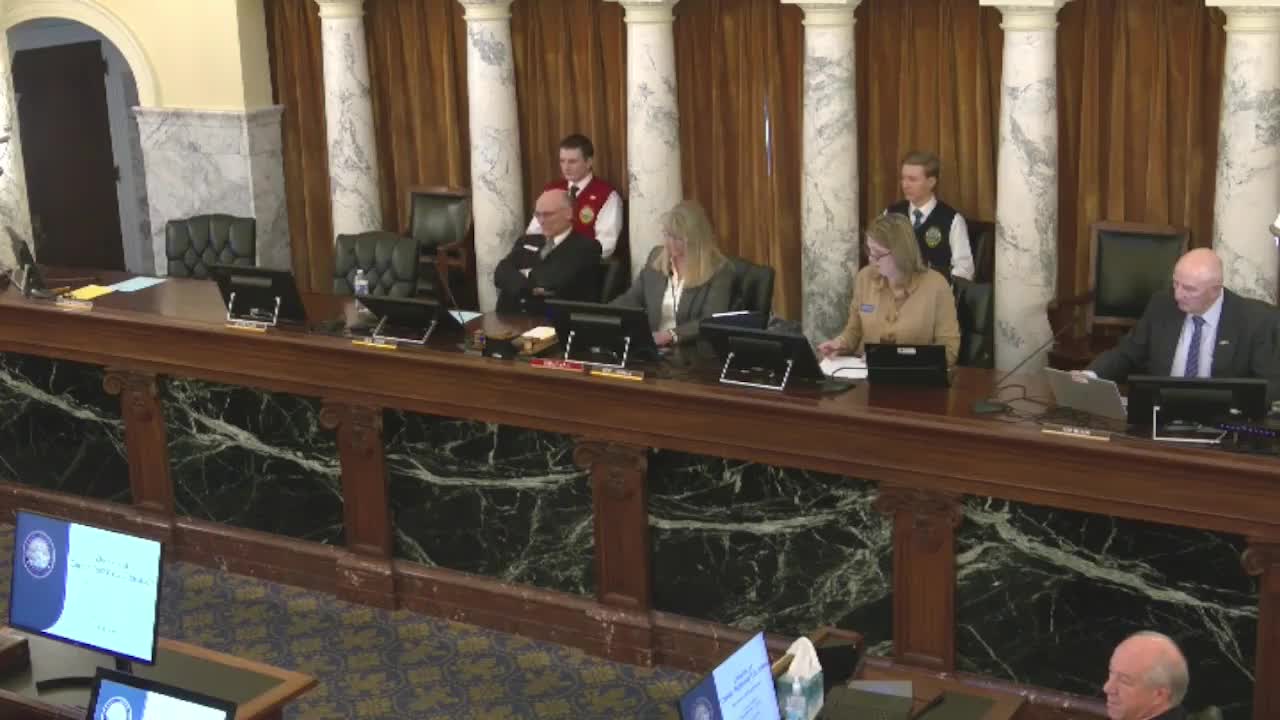
The Joint Finance-Appropriations Committee on Feb. 10 heard an overview of the Division of Career Technical Education(CTE) budget and FY2026 requests, including a governor-recommended $10 million ongoing grant program to expand capacity in high-demand programs such as welding and nursing.
The Joint Finance-Appropriations Committee on Feb. 10 heard an overview of the Division of Career Technical Education(CTE) budget and FY2026 requests, including a governor-recommended $10 million ongoing package intended to expand capacity in high-demand programs such as welding and nursing.
CTE budget and program overview Kevin Campbell, a budget and policy analyst with the Legislative Services Office, told JFAC that CTE is a statewide system spanning secondary schools, six technical colleges, adult education programs and workforce training centers. "CTE plays a central role in Idaho's ongoing workforce development efforts," Campbell said during his presentation. He outlined multiple funds CTE uses, including the Displaced Homemaker Fund (revenue from a divorce fee used for career training), the Hazardous Materials and Waste Enforcement Fund (permit fees that support firefighter hazmat training), and the Motorcycle Safety Fund (driver and registration fees that support motorcycle safety training).
Why the request and how the money would be used Joshua Whitworth, the executive director for the State Board of Education and interim administrator for the CTE division, told committee members that demand for CTE programs has grown sharply and that both facilities and qualified instructors are limiting factors. "We are seeing large demand across the entire career technical education ecosystem," Whitworth said, adding that waiting lists remain at many colleges and high schools. Whitworth described the governor's $10 million ongoing recommendation as a grant program to expand capacity in oversubscribed programs and to be deployed where industry demand is highest. He said the grant design being proposed would require industry engagement and matching funds in some cases so state dollars are paired with business commitments to hire or otherwise support graduates. "The grant would require some engagement by industry to participate in that," Whitworth told the committee.
Committee concerns: oversight, distribution and detail Committee members repeatedly pressed CTE staff for more detail on how the $10 million would be distributed and overseen. Representative Furness said he wanted a "more detailed response" on precisely where the money would go and why $10 million was chosen. Whitworth responded that the division intends to run the funding as competitive grants to technical colleges and districts and to tie awards to industry-verified demand and performance reporting.
Capacity constraints: faculty and facilities Several legislators asked whether shortages were driven by insufficient facilities, instructors, or both. Whitworth described the problem as three-fold: demand (students and businesses), faculty who can be certified to teach technical subjects, and facilities such as welding booths or simulation labs. "We see it actually on both," he said, describing constraints on both faculty and facilities. Senator Galloway noted wait lists for welding and nursing and asked whether demand in the labor market matched training capacity. Whitworth said demand for welders is growing with manufacturing and large projects and that expanding seats will generally mean investing in existing technical colleges' capacity rather than creating new programs.
Specific line items and other requests Campbell summarized recent appropriations and requests: CTE received one-time appropriations in FY2024 including $10 million for secondary CTE programs and $5 million for postsecondary equipment. For FY2026, CTE requested roughly $664,000 ongoing to add instructors in at-capacity postsecondary programs, $125,400 for a business-industry engagement manager, $50,000 for adult education and literacy, and $700 in (federal) grant spending authority (as presented). The governor's recommendation included $10 million ongoing to build capacity in high-demand CTE programs. CTE staff also said they would share lists of oversubscribed programs with the committee to support future planning and distribution decisions.
Fund balances and program-specific questions Legislators asked about specific funds: Representative Tanner and Senator Bierke questioned the Hazardous Materials fund balances and whether negative reporting reflected reporting errors or true shortfalls; Whitworth said staff would follow up with validated reporting. Lawmakers also asked about the Motorcycle Safety Fund, noting that balances have grown while expenditures appear limited; Whitworth said CTE would evaluate program activity and fee structure and return with recommendations.
Operational details and local support Whitworth described the proposed business-industry engagement manager role as a district-facing position that would embed with school districts to build employer connections and public-private partnerships in places that cannot afford such staff locally. That differs from the statewide workforce development council, which Whitworth said focuses on statewide strategy and technical advisory committees.
No formal actions recorded No formal votes or motions were recorded during the presentation and question period. Committee members asked for additional documentation and follow-up from CTE staff on oversubscribed programs, fund balances, and a detailed plan for the $10 million proposal.
Next steps CTE officials said they will provide the committee with lists of oversubscribed programs and additional detail about fund balances and proposed grant administration. The committee did not take formal action during this hearing.