Get Full Government Meeting Transcripts, Videos, & Alerts Forever!
Get email alerts on the Probation And Parole Appointments topic
No spam. Unsubscribe anytime.
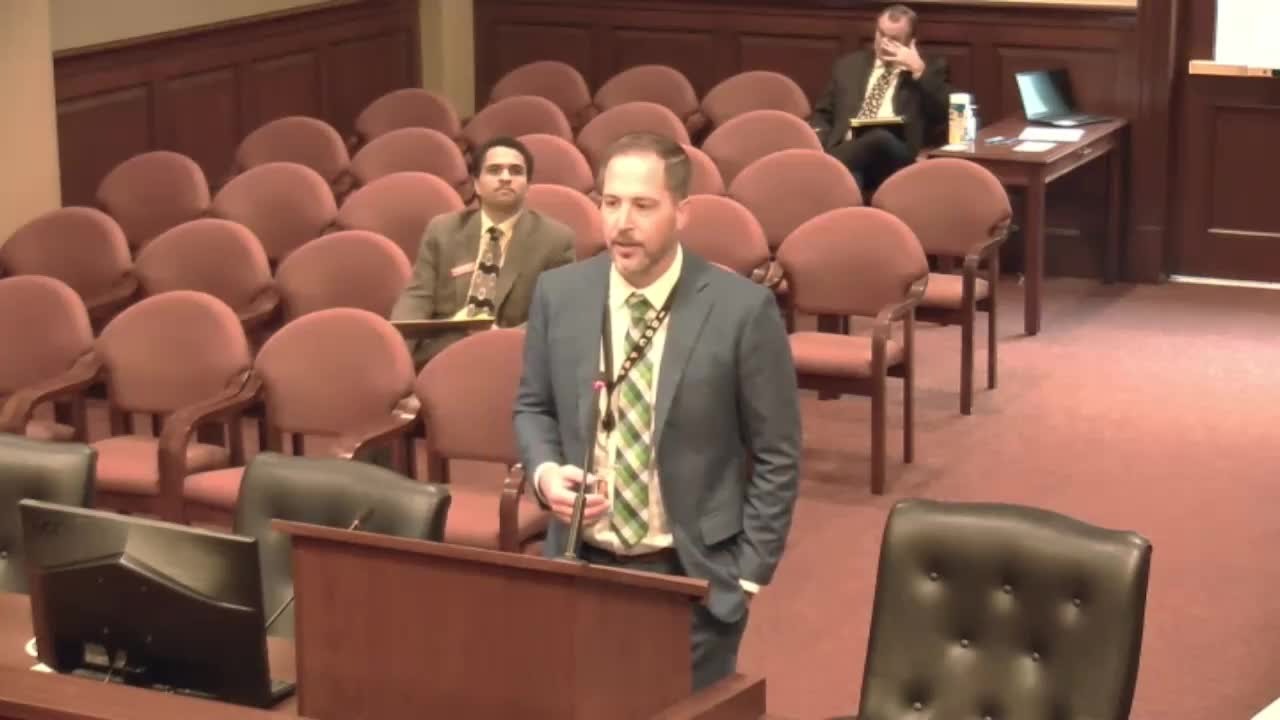
Deputy Chief Corey Barrier testifies on supervising high-acuity offenders; appointment vote deferred
Summary
Corey Barrier, deputy chief of probation and parole, described his experience supervising high-acuity offenders and his approach to behavior change during an appointment hearing before the Senate Judiciary and Rules Committee; the committee will vote on the appointment at a later meeting.
Corey Barrier, deputy chief of probation and parole for the Idaho Department of Corrections, appeared before the Senate Judiciary and Rules Committee as a gubernatorial nominee to serve on the offender management board. He described his 18-year corrections career and emphasized an evidence-based, connection-focused approach to supervision for higher-risk clients.
Barrier said, “My name is Corey Barrier. I've been with... I'm currently the Deputy Chief of Probation and Parole, for the Department of Corrections. I've been with the department for about 18 years.” He told the committee he has experience supervising offenders directly and training officers, and that he wants to “enhance public safety through evidence based practices” and by connecting clients with specialized treatment providers.
On unique challenges supervising sex-offense (***) clients, Barrier told senators the work requires “an elevated level of understanding” and that he does not claim to have all the answers but has experience coordinating with community providers. He emphasized meeting basic needs as a foundation for compliance and behavior change: “It's hard for me to affect change or get somebody to comply with conditions of supervision when they don't have a roof over their head or food to eat.”
Senators asked about the time commitment: Barrier said service on the offender management board would be an ancillary duty to his primary job overseeing seven probation and parole districts and roughly 500 staff. The committee did not take a vote on his appointment at the meeting; the chair said appointments would be voted on at the following meeting.