Get Full Government Meeting Transcripts, Videos, & Alerts Forever!
Get email alerts on the Higher Education Tuition topic
No spam. Unsubscribe anytime.
Senate committee clears bill to raise Idaho community college tuition cap
Summary
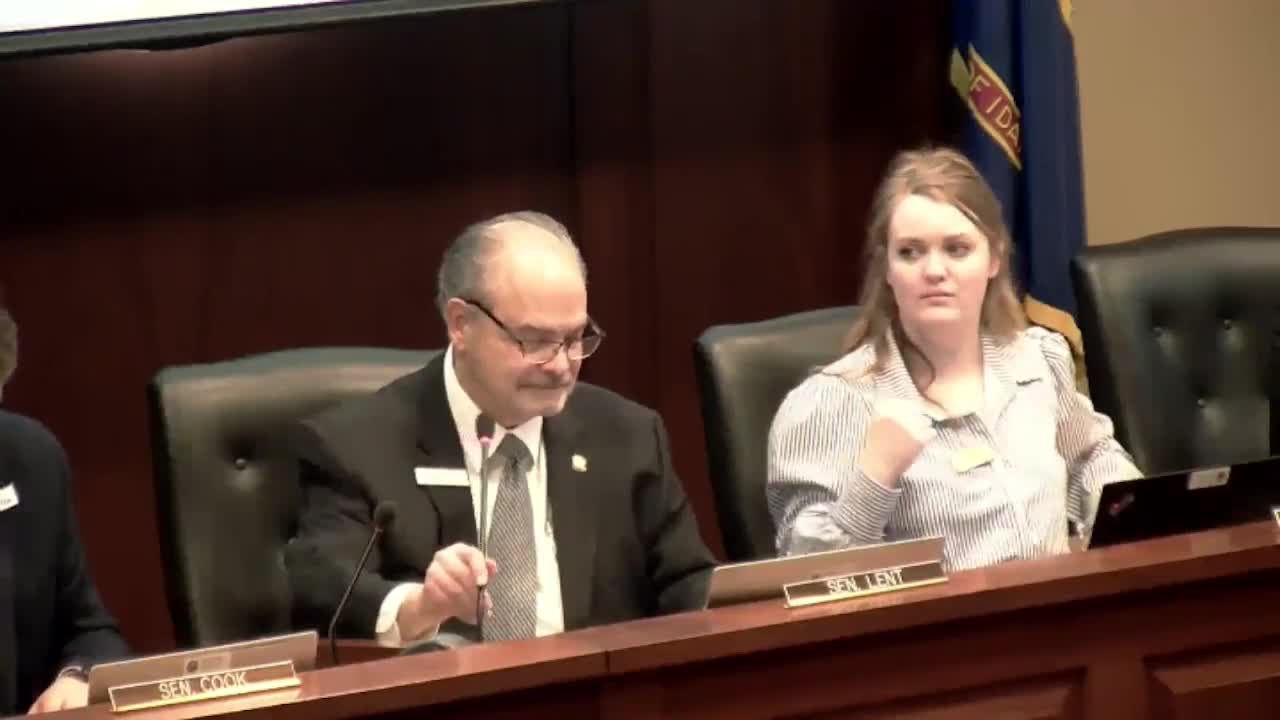
The Senate Education Committee voted to send House Bill 79 to the Senate floor with a due‑pass recommendation after Representative James Petske said the bill would update a long‑unchanged tuition cap for community colleges to give local boards limited ability to adjust rates.
The Senate Education Committee voted to send House Bill 79 to the Senate floor with a due‑pass recommendation after Representative James Petske told the panel the measure updates a long‑unchanged tuition cap for Idaho’s community colleges.
"We are essentially changing 1 number," Representative James Petske said, adding the change is meant to address a cap on community college tuition that has not been changed in code since 2008. "All the community colleges hit that cap around 2016. So since that time, they have not been able to adjust their tuition at all to account for inflationary increases in their costs."
The bill modifies the statutory tuition rate cap that applies to community colleges and includes minor editorial fixes, Petske said. Committee members asked how quickly colleges could raise rates if the cap is changed. Petske said state code already limits local boards to a maximum tuition increase of 10% per year and that community colleges are likely to target about a 5% increase in the first year.
Petske described community college finances as resting on three revenue sources: locally voted property tax levies, state general fund appropriations and tuition. He told the committee that when tuition is held at an outdated cap, colleges must rely more on property taxes and state dollars.
Senator Cook asked whether colleges would immediately hit the new cap; Petske answered that, because of the existing 10%‑per‑year limit, it would take multiple years to reach the new ceiling and that his conversations with colleges indicated a more modest, phased approach.
The committee offered no further substantive debate and approved a motion to send House Bill 79 to the Senate floor with a due‑pass recommendation. The motion was moved and seconded on the record; the recorded vote was voice only and the motion carried.
The bill now goes to the full Senate for further debate and a roll‑call vote.
Votes at a glance: The committee approved the motion to send House Bill 79 to the Senate floor with a due‑pass recommendation (voice vote; no roll‑call tally recorded in the transcript).