Get Full Government Meeting Transcripts, Videos, & Alerts Forever!
Get email alerts on the Public Health Budget topic
No spam. Unsubscribe anytime.
Joint Finance panel presses Department of Health and Welfare to restore public‑health programs, fund data modernization
Summary
The Joint Finance Appropriations Committee heard detailed briefings on the Division of Public Health Services budget, including requests to restore ongoing programs cut to one‑time status, fund data modernization and workforce incentives, and resolve structural effects from prior ARPA/CARES spending.
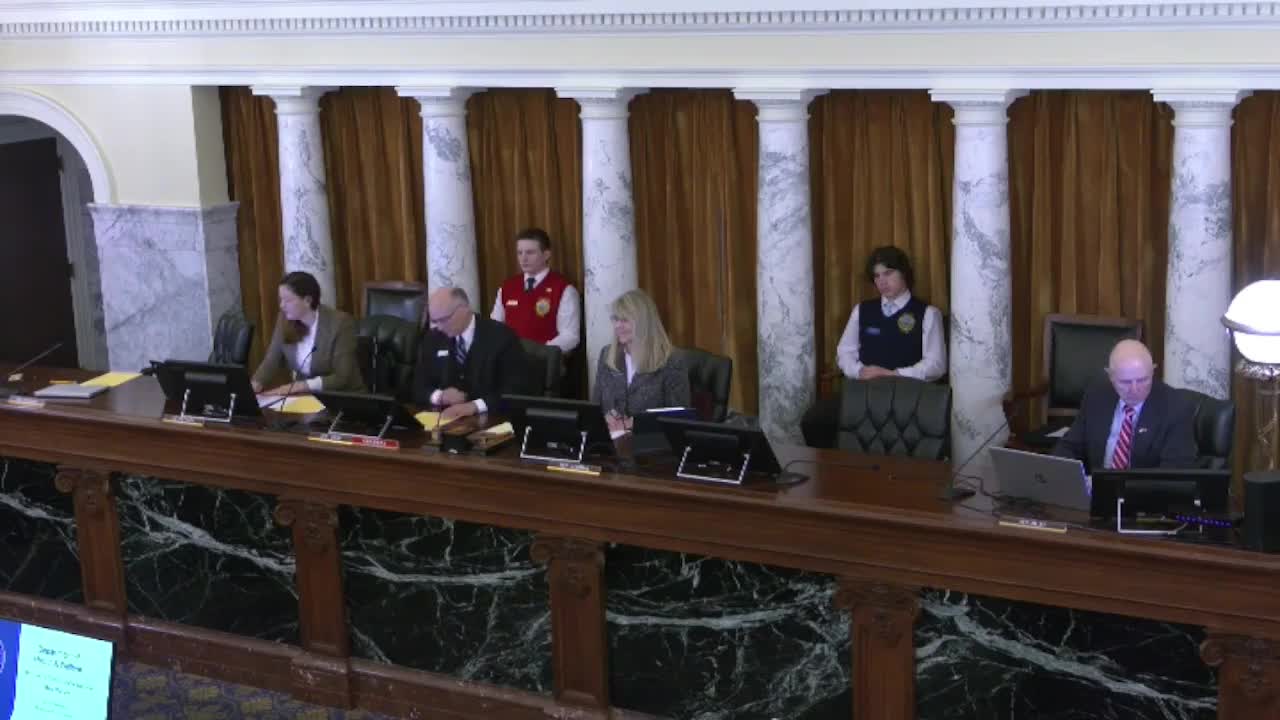
The Joint Finance Appropriations Committee heard on a snowy Monday from Department of Health and Welfare officials about the Division of Public Health Services’ fiscal 2026 budget request, which seeks to restore several programs moved from ongoing to one‑time funding and to pay for data and systems modernization.
Why it matters: Public Health Services administers immunizations, communicable‑disease surveillance, laboratory services, suicide‑prevention programs, vital records and other statewide functions that state officials say are essential to disease surveillance, emergency response and basic citizen services. Lawmakers pressed department leaders on program restorations, grant carryovers, and whether some activities should be run by other agencies or by the institutions that currently receive funds.
Keith Bybee, division manager of budget policy analysis, gave the committee an overview of the division’s programs and funding structure and highlighted a framing point repeated throughout the hearing: the division’s FY2025 appropriation was about $164,020,000 and the FY2026 governor’s recommendation reduced the requested total to about $154,000,000 after program changes. Bybee said the division’s large FY2021 appropriation reflected CARES Act and ARPA activity and that the subsequent shift of some programs to one‑time funding created a “structural question” the committee must resolve.
Bybee walked members through one‑time and ongoing enhancement requests. He said the division listed roughly $8,752,500 in one‑time enhancement requests (largely federal carryover and ARPA‑related) that include items described in the budget book as: public health infrastructure grants for workforce retention and training, medical education loan repayment support for providers in federally designated shortage areas, vital‑records data modernization under CDC data‑modernization grants, WIC modernization, and an ongoing Communicable Disease Prevention grant request that the division listed at $2,041,800 to support 4.4 limited‑service positions.
On ongoing restorations, Bybee and Director Alex Adams said the department asked to restore a range of programs previously moved to one‑time funding. Items listed on the budget slides and in committee discussion included (amounts as stated to the committee): suicide prevention ($1,807,700 general fund and $195,000 federal), Drug Overdose Prevention Program (restore four FTEs and $2,820,200), refugee health screening (1.5 FTE and $991,000 ongoing), Alzheimer's and related dementias coordination ($275,200), Fit and Fall Proof (community fall‑prevention; $140,000), diabetes and health‑equity programs ($1,063,700), HIV prevention ($957,300), oral‑health workforce activities ($379,600), integrated hepatitis surveillance ($599,200), and restoration of WIC‑related funding (approximately $6,944,600 ongoing listed on the slides). Bybee also described a request tied to the immunization assessment fund: the budget book lists a $22,500,000 figure for that fund and the division requested $2,500,000 ongoing from dedicated funds to support the Idaho immunization program.
Adams described the broader budget picture as an exercise in “0‑based” review: “I would characterize it as a healthy exercise,” he told the committee when summarizing reductions and program removals. He and division staff repeatedly told lawmakers the FY2025–FY2026 swing reflects a cleanup of past ARPA/CARES flows rather than unmanaged growth.
Committee members pressed for program‑level detail and for follow‑up information they can use when negotiating restorations. Senator Cook asked for a short memo on prior year data‑modernization work before additional one‑time money is approved; Adams agreed to provide a three‑page summary. Several members asked whether particular programs might better belong in other agencies: Representative Price suggested moving the Alzheimer/dementia and Fit and Fall Proof programs to the Commission on Aging and moving drug‑overdose work to the Office of Drug Policy. Adams said the department’s focus is prevention and suggested some functions differ in mission and practice from other agencies but that transfers would be entertained if they made operational sense.
The hearing also included debate over a $200,000 base reduction tied to Project ECHO, a continuing medical‑education platform hosted by the University of Idaho. Director Adams said the department has occasionally served as a pass‑through for grant‑style payments and questioned whether personnel funded through the university should sit in his budget; lawmakers were reminded that the legislature had included legacy intent language directing some pass‑through funding to continue.
Officials noted implementation risks. Adams told the panel the department manages roughly 118 federal grants and that short‑term federal policy changes have the potential to affect the budget picture; he described the effect of prior federal grant inflows (CARES/ARPA) on FY2021 appropriations and the subsequent “true up.” Bybee also flagged vacancy and FTE counts: the division had about 256.52 authorized FTEs with four vacancies reported as of Aug. 31, 2024.
What lawmakers asked for next: more details about how one‑time funds were spent, what specific outcomes were purchased with prior ARPA and CARES dollars, and how the state will measure program performance if restorations are approved. Several members urged that staff provide granular IT and systems notes tied to the data‑modernization requests, and one member asked the committee’s legislative impact team to analyze duplicative substance‑use funding across state budgets.
The department and division administrators told the committee they would provide follow‑up materials and data. Division administrator Elke Shaw‑Tulloch characterized the rural physician incentive loan‑repayment program as a retention tool; she told the committee the division sees a very high retention rate among loan‑repayment participants, “Almost 91% of the providers that receive these loan repayments stay in the state and practice in the state.”
Ending: The committee took questions but recorded no formal votes at the hearing. Members signaled they will review the requested restorations and one‑time items and expect follow‑up documentation on data modernization, the immunization assessment request and the structural consequences of moving previously ongoing programs to one‑time appropriations.
Speakers quoted in this article spoke during the Division of Public Health Services budget presentation and subsequent questions: Keith Bybee, Alex Adams and Elke Shaw‑Tulloch.