Get Full Government Meeting Transcripts, Videos, & Alerts Forever!
Get email alerts on the Legislative Compensation topic
No spam. Unsubscribe anytime.
Idaho Senate adopts resolution rejecting legislative pay increase
Summary
The Idaho Senate on Jan. 17 adopted Senate Concurrent Resolution 101 to reject a pay increase recommended by the Citizens Committee on Legislative Compensation, saying the rise — described by opponents as a 22% bump — was inappropriate amid cost-of-living strains. The resolution passed by voice vote and was transmitted to the Idaho House.
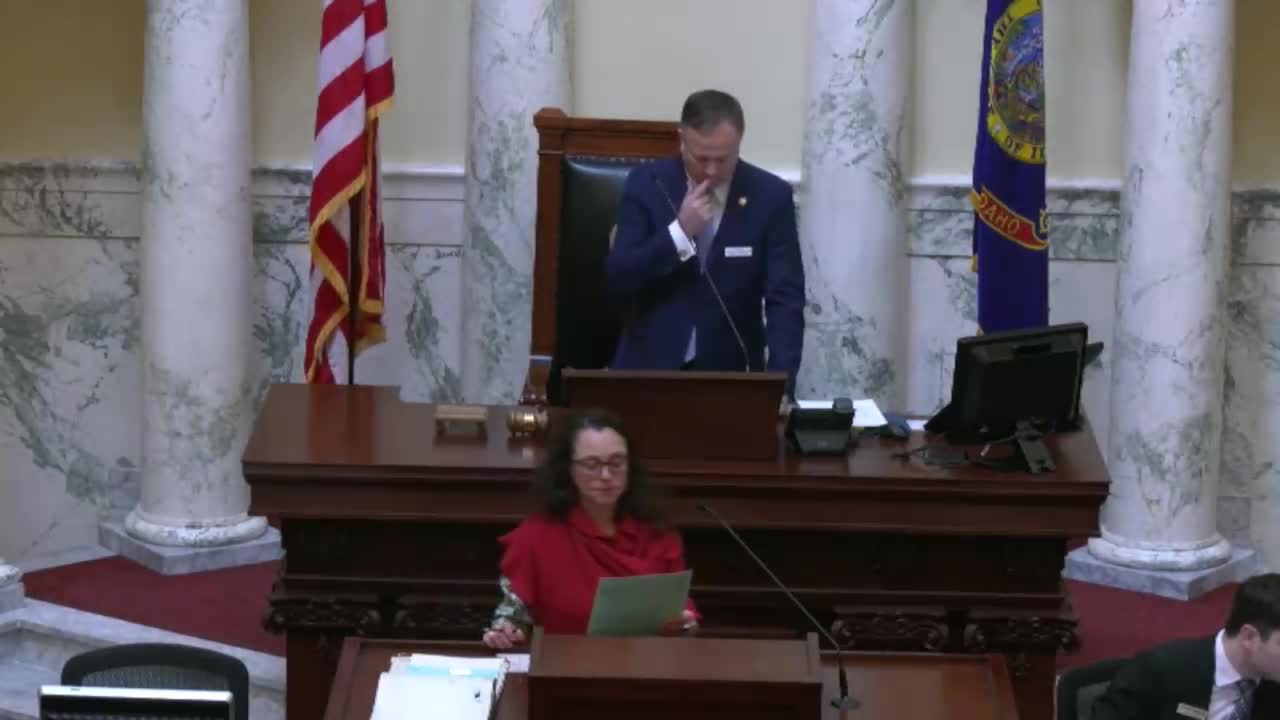
BOISE — The Idaho Senate on Friday adopted Senate Concurrent Resolution 101, rejecting a pay increase for state legislators that had been set by the Citizens Committee on Legislative Compensation.
Senator Zito, speaking as the sponsor, cited the Idaho Constitution in explaining the committee’s role. "The legislature shall have no authority to establish the rate of compensation and expense by law," Zito read, referencing Article III, Section 23 and arguing the citizens' panel exists to insulate pay-setting from legislative self-interest.
The resolution drew sharply divided remarks on the Senate floor. Supporters framed the measure as solidarity with Idaho households facing inflation; opponents warned the change reduces legislative capacity.
"At a time when inflation is causing deep hardships for many across the state, an increase of this magnitude is simply inappropriate," Zito said during debate, urging colleagues to reject the committee’s recommendation.
Senator Cole said the resolution aligned with "the principle of putting our people first," adding that lawmakers should seek relief for constituents before increasing compensation.
Senator Hart opposed the resolution, saying the committee’s report has "the force and effect of law" and noting the increase took effect Dec. 1. Hart described the numerical change the committee approved: the panel raised the annual compensation from $19,913 to $25,000 — an increase Hart characterized as about $5,087 and roughly 22 percent — and said the adjustment applies for a two-year period unless changed by concurrent resolution before the 25th legislative day of the next regular session.
Senator Lenny, who also supported the resolution, told colleagues he was mindful of constituent concerns and said the net change after taxes is small for most legislators.
After debate concluded, the Senate adopted SCR 101 by voice vote; no roll-call tally was recorded on the floor transcript. The clerk announced, "The ayes have it." The adopted resolution will be transmitted to the Idaho House of Representatives.
Votes at a glance
- Senate Concurrent Resolution 101 (rejection of legislative compensation recommendation): Adopted by voice vote; transmitted to the House. Moved by Senator Zito; second not specified on the floor record.
- Senate Concurrent Resolution 102 (study of Idaho's COVID-19 response): Introduced and referred to the Judiciary and Rules Committee for printing.
- Senate Bills 1005–1010 (first reading): Introduced and referred to the Judiciary and Rules Committee for printing.
- Committee referrals and appointments: Committee reports placed several gubernatorial appointments on the tenth order of business and held them for one legislative day (Steve Landon; Kurt Vlipek; George Lynch; Thomas J. Wilford). The Commerce and Human Resources Committee recommended confirmation of Steve Landon to the State Insurance Fund Board; the Education and State Affairs committees issued similar referral actions for other appointees (details in committee reports). House Bill 3 was reported out by the Local Government and Taxation Committee and referred to the second-reading calendar.
- Miscellaneous: The journal for Jan. 16, 2025, was read and approved as corrected; roll call at the start of the session recorded 33 present and 2 absent and excused (Senators Lehi and Rutke). The Senate adjourned until 11 a.m. Monday, Jan. 20, 2025.
Why this matters
Under Idaho’s constitution the Citizens Committee on Legislative Compensation sets legislative rates; the Senate’s concurrent resolution is the mechanism the Legislature can use to reject or reduce those rates before a specified legislative deadline. The exchange on the floor illustrated competing priorities: some senators emphasized fiscal optics and constituent hardship; others warned that limiting compensation can reduce the legislature’s capacity to perform oversight and set policy.
What the record shows and does not show
The floor debate included members’ characterizations of percentage and dollar changes and the committee’s effective date. The Senate adopted SCR 101 by voice vote; the transcript does not record a roll-call tally of individual yes/no votes on that adoption. The committee reports and bill referrals listed above appear on the transcript as formal actions and were referred or held as noted in committee announcements.
Next steps
The adopted concurrent resolution will be sent to the Idaho House for consideration. Appointments referred to the tenth order were held for a legislative day as shown in the committee reports; bills referred for printing will proceed through committee processes before further floor action.