Get Full Government Meeting Transcripts, Videos, & Alerts Forever!
Get email alerts on the Newborn Screening topic
No spam. Unsubscribe anytime.
Idaho Senate approves bill moving newborn screening rules into state law
Summary
The Idaho Senate on Feb. 4 passed Senate Bill 10 14, which transfers existing newborn screening administrative rules into Idaho code without adding new requirements; the bill was transmitted to the House after a unanimous 35-0 vote following roll-call changes.
The Idaho Senate on Tuesday approved Senate Bill 10 14, a measure that moves existing newborn screening administrative rules into Idaho law and makes no new testing requirements for infants born in the state.
Senator Kelly Blaylock, chairing debate for the Health and Welfare Committee, told colleagues the bill “moves existing rules on newborn screening into Idaho code. These rules govern tests conducted on infants born in Idaho today. A requirement that has been in place, since 1921.” He added, “This bill does not introduce new requirements or change current practices. It simply is moving oversight of what is being enforced today from unelected, agency staff to the elected officials in this room.”
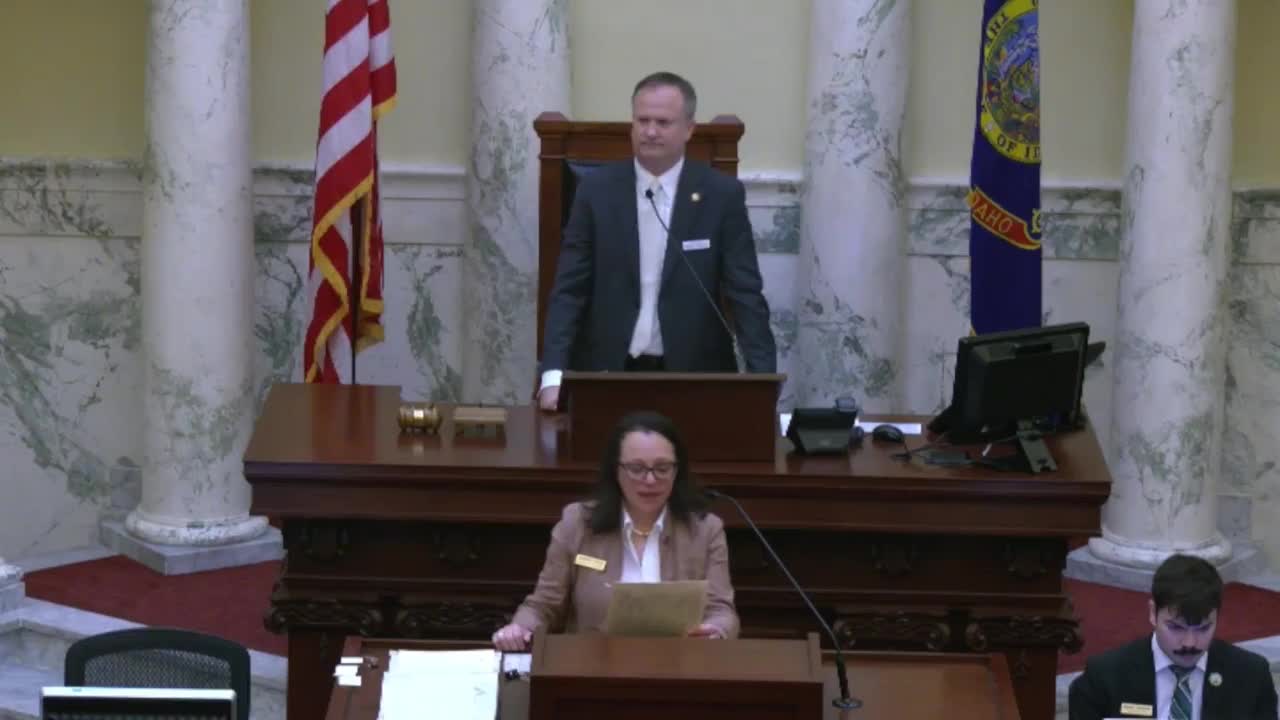
The sponsor opened and closed debate without further floor debate. The secretary called the roll; during the roll call multiple senators asked how they were recorded and several changed their votes. After the changes, the roll call showed 35 ayes, 0 nays. The Senate president ordered the bill transmitted to the House of Representatives for consideration.
The bill’s text, as read on the floor, relocates rule provisions that currently exist at the administrative level into Idaho code. The sponsor stressed the measure preserves existing screening practices and does not add new testing mandates. The Senate made no amendments on the floor and recorded no formal motions to alter the bill’s substance prior to passage.
Senate Bill 10 14 will next be considered by the Idaho House of Representatives, where any further changes would be made before the measure could become law.