Get Full Government Meeting Transcripts, Videos, & Alerts Forever!
Get email alerts on the Ethics Campaign Finance topic
No spam. Unsubscribe anytime.
Tennessee ethics office briefs House on gifts, campaign-finance rules and reporting deadlines
Summary
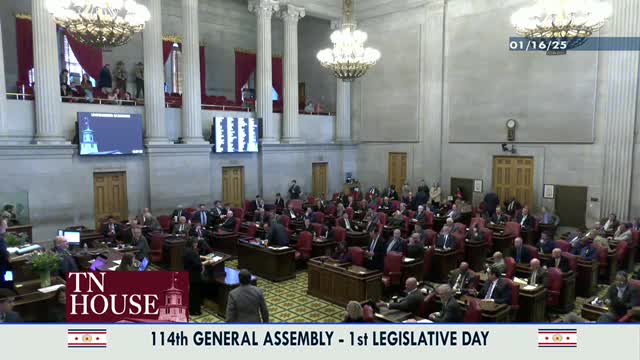
Officials from the Tennessee Bureau of Ethics and Campaign Finance conducted required annual training for House members on Jan. 13, covering TCA 3-6-113 disclosures, gift prohibitions, campaign contribution limits and recent advisory guidance on indirect gifts.
The Tennessee Bureau of Ethics and Campaign Finance (the Bureau) provided the House its annual ethics and campaign finance briefing on Jan. 13, reviewing filing deadlines, disclosure obligations and recent advisory guidance.
Lauren Topping, general counsel for the bureau, told members the annual statement-of-interest disclosure is due April 15, 2025, and must be amended through the year for changes such as travel paid by outside parties, consulting income over certain thresholds and any contract for campaign services. “You are required to disclose travel expenses, including any expenses which are incidental to that travel, if that travel is paid on your behalf by a person with interest in the public policy of Tennessee,” Topping said.
Topping highlighted a recent advisory opinion (cited by the bureau as Advisory Opinion 24-01) that found a closely connected set of nonprofit entities and a political organization could create a prohibited indirect gift when the nonprofit paid expenses that effectively benefited a lobbyist employer. The ethics office advised members to be skeptical of charities or outside groups offering to pay travel or lodging if those groups work closely with lobbyists.
The bureau reviewed practical campaign-finance rules: campaign funds may purchase property (cars, computers, furniture) but such purchases become campaign assets and cannot be used for personal purposes unless the campaign is reimbursed for personal use. The bureau discouraged the use of cash “fishbowl” collections and peer-to-peer payment apps (Venmo, Cash App, PayPal) because those services often lack complete contributor information required for state reporting. Topping warned of federal-level suspicious-activity patterns known as “smurfing” and said the bureau will coordinate with state and federal law enforcement to examine unusual patterns.
Topping also noted campaign-reporting dates: for candidates up for reelection in 2024, the next disclosure is the fourth-quarter report due Jan. 27, 2025 (roll date from Jan. 25); other filers should expect the year-end supplemental report due Jan. 31, 2025. She reminded members of gift prohibitions from lobbyists and employers of lobbyists and the need to disclose campaign-services contracts within five days of execution.
The Bureau provided written materials and said staff are available for questions. The training referenced Tennessee Code Annotated section 3-6-113 as the statutory requirement for the annual training and urged members to contact the bureau office before taking actions that might require disclosure.