Get Full Government Meeting Transcripts, Videos, & Alerts Forever!
Get email alerts on the School Budget topic
No spam. Unsubscribe anytime.
CVSD presents FY 2026 budget with 0.9% general fund increase and preliminary lower education tax-rate projections
Summary
District staff presented a $102,724,062 FY 2026 general fund proposal, citing a 0.9% increase over FY 2025, changes in revenue mix and student weights, and projected per-town education tax-rate reductions that remain contingent on the state yield and final common level of appraisal calculations.
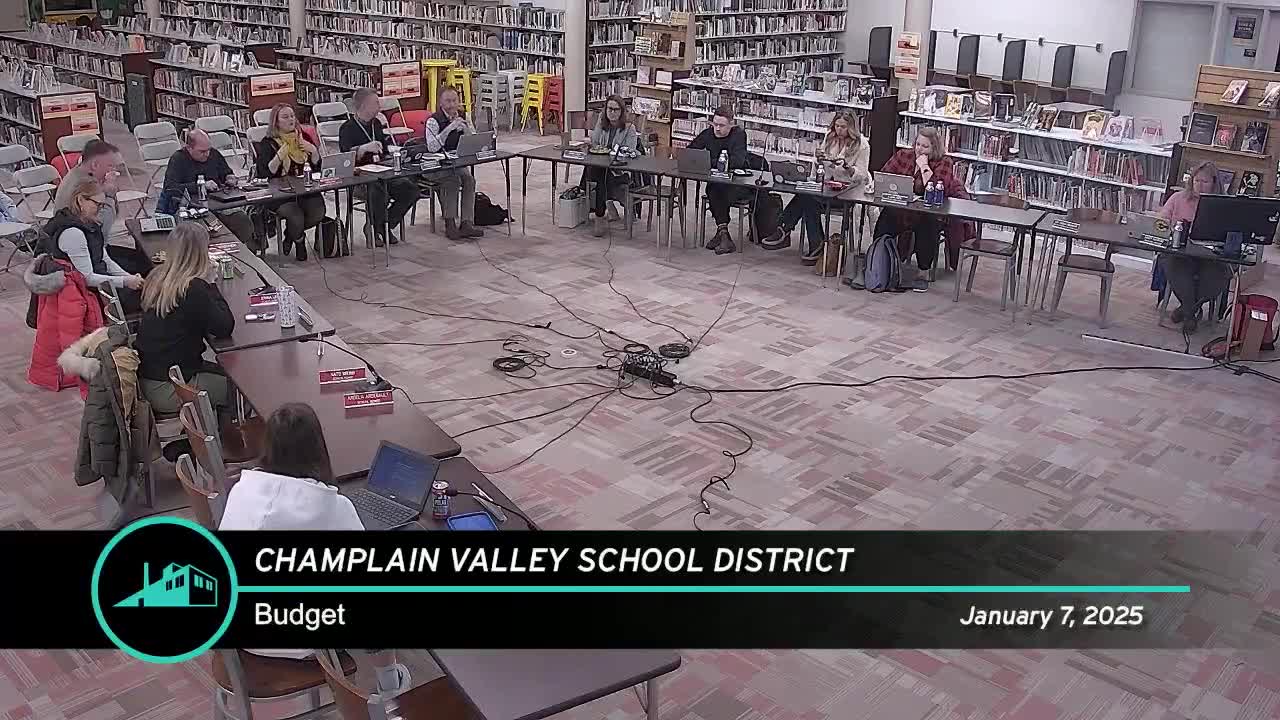
Champlain Valley School District officials on Tuesday presented an administrative FY 2026 general fund budget of $102,724,062, a 0.9% increase over the FY 2025 budget, and shared preliminary estimates that education tax rates will be slightly lower across the five towns in the district — subject to final state yield and appraisal calculations.
The presentation laid out revenue and expenditure drivers that produced the modest increase. The district attributed $3.2 million in increased salary costs, $1.4 million in higher health-insurance costs and $486,000 in other benefits as the main upward pressures. Personnel reductions accounted for $3.6 million in savings; additional reductions included $437,000 in tuition and professional services and $115,000 in other cuts.
Gary (staff member) said the district’s total instruction, student support and administration functions rose by small percentages when broken down by function and reiterated that only the general fund affects the education tax rate. The district reported that local revenue decreased by about $1.1 million and that grant revenue applied to the general fund declined roughly 27.6%, driven primarily by reductions in Medicaid and IDEA-B funding.
Enrollment and the state’s weighted-pupil counts also factored into the calculations. The district reported 5,726 weighted pupils in FY 2025 and 5,685 for FY 2026, a decline that exerts upward pressure on per‑pupil spending. Using the district’s net education spending, the net education spending per weighted pupil increased to $15,532, a 3.3% rise. Gary noted the district remains below the state’s excess‑spending threshold for FY 2026.
On property tax impacts, presenters showed preliminary per-town changes after the state’s common level of appraisal (CLA) adjustments and the December 1 tax-commissioner yield assumptions. The slides showed small reductions in the presented education tax rate across the five towns, averaging roughly 7 cents across the district; the estimated reduction per $100,000 of assessed value ranged from about $30 in Charlotte to about $100 in Hinesburg. District staff emphasized these are preliminary estimates tied to the yield in the tax commissioner’s December 1 letter and that the final yield and statewide actions by the legislature could change the outcome.
Board members discussed the district’s multi‑year approach to budgeting in light of Act 127 and the district’s multi‑year reductions. Several board members expressed support for the presented budget level, describing it as the product of difficult tradeoffs and multi‑year planning; others reiterated concern about the longer-term effects of state funding changes on programs and staffing.
The board has scheduled a vote to approve the budget and ballot articles at its next regular budget meeting (the board described that meeting as “in two weeks” and referenced the 20th on the calendar). District staff said they will continue to monitor legislative developments and update the board and community as the state finalizes yields and related calculations.
The presentation and supporting slides are available on the district’s posted agendas and the budget site; administrators said they will publish an executive summary and additional FAQs before the approval meeting.