Get Full Government Meeting Transcripts, Videos, & Alerts Forever!
Get email alerts on the Procurement Bidding topic
No spam. Unsubscribe anytime.
Committee advances bill letting DOTD consider A+B bidding to speed road projects
Summary
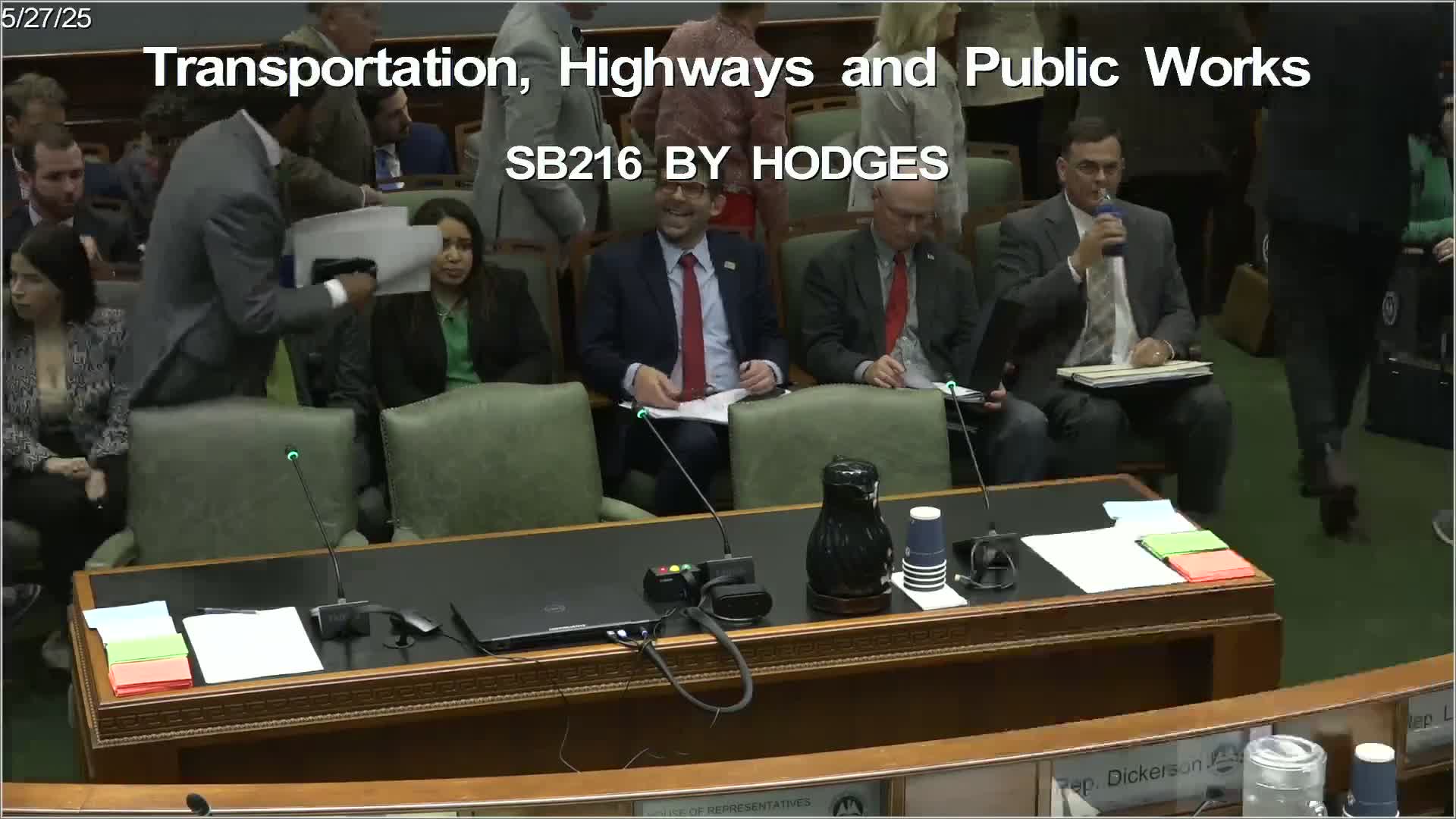
The House Transportation Committee on May 27 voted to report Senate Bill 216 favorably, a bill to allow the Department of Transportation and Development to consider A+B (cost plus time) bids when awarding contracts.
The House Transportation Committee on May 27 voted by unanimous consent to report Senate Bill 216 favorably, a measure that would add A+B bidding (cost plus time) into Title 48 procurement law and allow the Department of Transportation and Development to consider both price and time when awarding public-works contracts.
Sen. Troy Hodges, sponsor of SB216, told the committee A+B bidding would let contracting agencies tie payment to completion schedules. "A is cost, B is time," Hodges said. "When you use A plus bidding, you're using both factors to award that bid, not just ... low bid with liquidated damages." Hodges and supporters said the change is permissive — it "asks" DOTD to consider the method, not to require it.
Supporters included DOTD leadership and industry groups; the transcript notes the bill passed unanimously from the Senate. Representative Chasson moved to report the bill favorably in committee, and members raised no objections.
Committee members who spoke said the change could help reduce the lengthy timelines on some projects. Representative Chamblehorn said contractors’ schedules and workforce shortages have lengthened project completion, and argued shorter time incentives could improve throughput. Committee members thanked DOTD representatives for working on the bill language.
The committee record listed several organizations filing cards in support; one staff card from Secretary Donahue was entered "for information only." SB216 was reported favorably to the next legislative stage without recorded dissent.