Get Full Government Meeting Transcripts, Videos, & Alerts Forever!
Get email alerts on the Budget And‑transparency topic
No spam. Unsubscribe anytime.
House approves rules change to separate nongovernmental funding from government appropriations
Summary
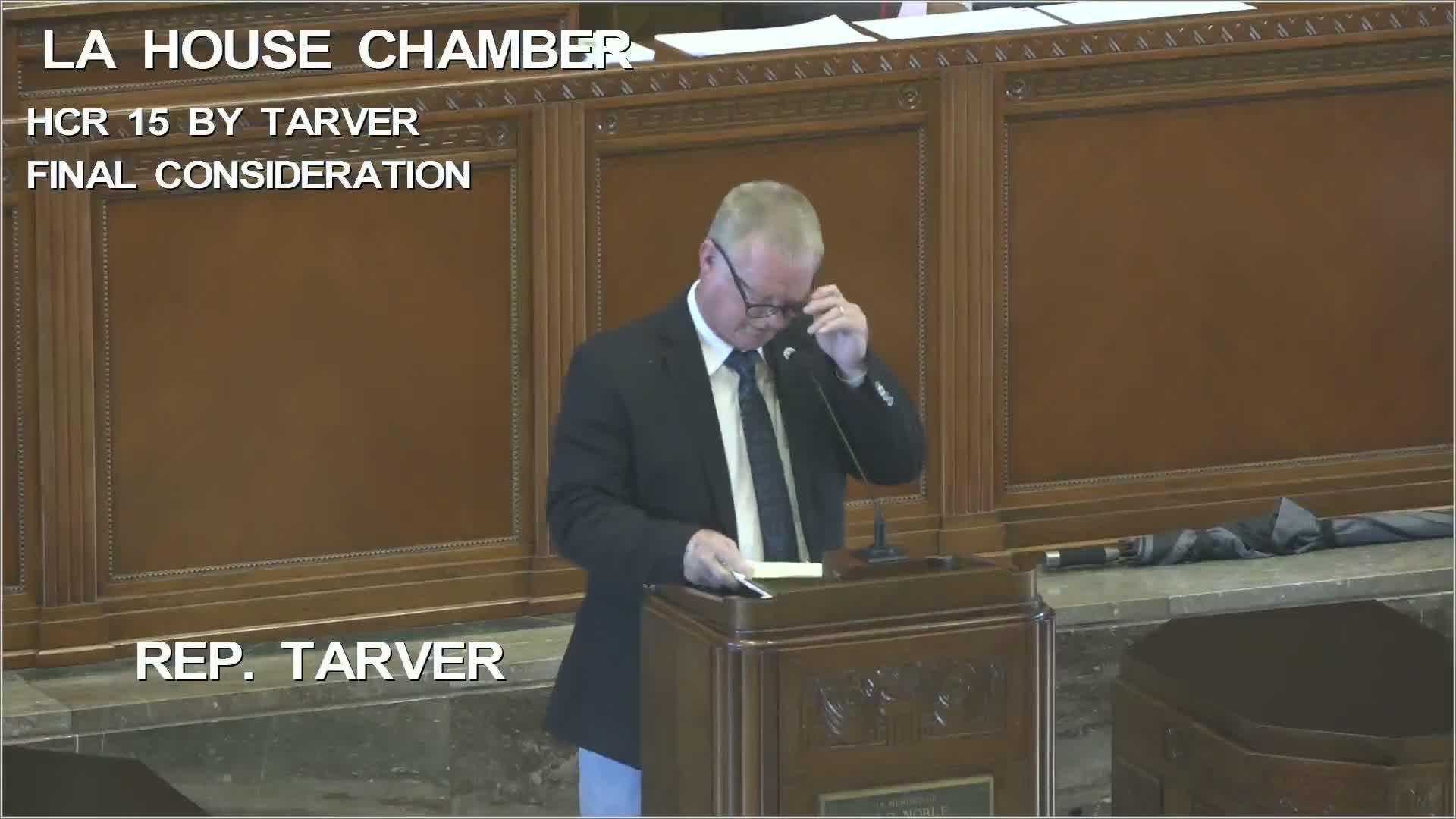
The House adopted HJR 15 on May 27, a joint‑rules change from Representative Tarver that requires nongovernmental entity funding requests be handled separately from bills that fund government agencies. Proponents described the change as a transparency measure; the resolution passed 74–24.
The Louisiana House on Tuesday approved HJR 15, a rules change proposed by Representative Tarver that would require funding requests for nongovernmental entities to be considered separately from bills that appropriate money to state government entities.
Tarver told members the amendment to the joint House‑Senate rules is intended to improve transparency by separating direct taxpayer funding for nongovernmental organizations from appropriations that fund government operations. “What it does not do is it does not limit the doing of nongovernmental funding,” Tarver said; “it’s about disclosing what the state is doing and where taxpayer dollars are going.”
Under the rule change, Tarver said, appropriations bills that include government agencies would not simultaneously include line items for nongovernmental organizations; NGOs would appear in separate bills so voters and other lawmakers could better see and evaluate those expenditures.
Members asked whether the change would bar NGOs from applying for state support. Tarver and supporters repeatedly answered that organizations could still apply and be awarded funds — the change is procedural and aimed at disclosure and separation of the two funding streams. Tarver said the rule would not affect fiscal year timing; it would take effect for the next budget cycle in July.
The House adopted the rule change 74 yays to 24 nays.
Supporters described the change as a straightforward transparency fix and said it would make it easier for local officials and constituents to track state support to private groups. Critics and questioners asked practical questions about logistics, including how many separate bills might be needed to carry NGO requests and how the rule would interact with supplemental bills and bond authorizations.
Tarver said the measure would give the legislature a clearer record of taxpayer‑funded grants and contracts while preserving the ability of NGOs to seek state funding.