Get Full Government Meeting Transcripts, Videos, & Alerts Forever!
Get email alerts on the Reproductive Health And Law topic
No spam. Unsubscribe anytime.
Long debate on Senate Bill 156 over legal status of in‑vitro embryos; major amendments adopted and rejected
Summary
Lawmakers spent more than an hour debating Senate Bill 156, a measure that would regulate legal rights and handling of in‑vitro fertilized embryos. Floor amendments to clarify definitions and transfer rules were adopted; a proposal to label an embryo a “biological human being” failed. Final disposition was not recorded in the transcript excerpt.
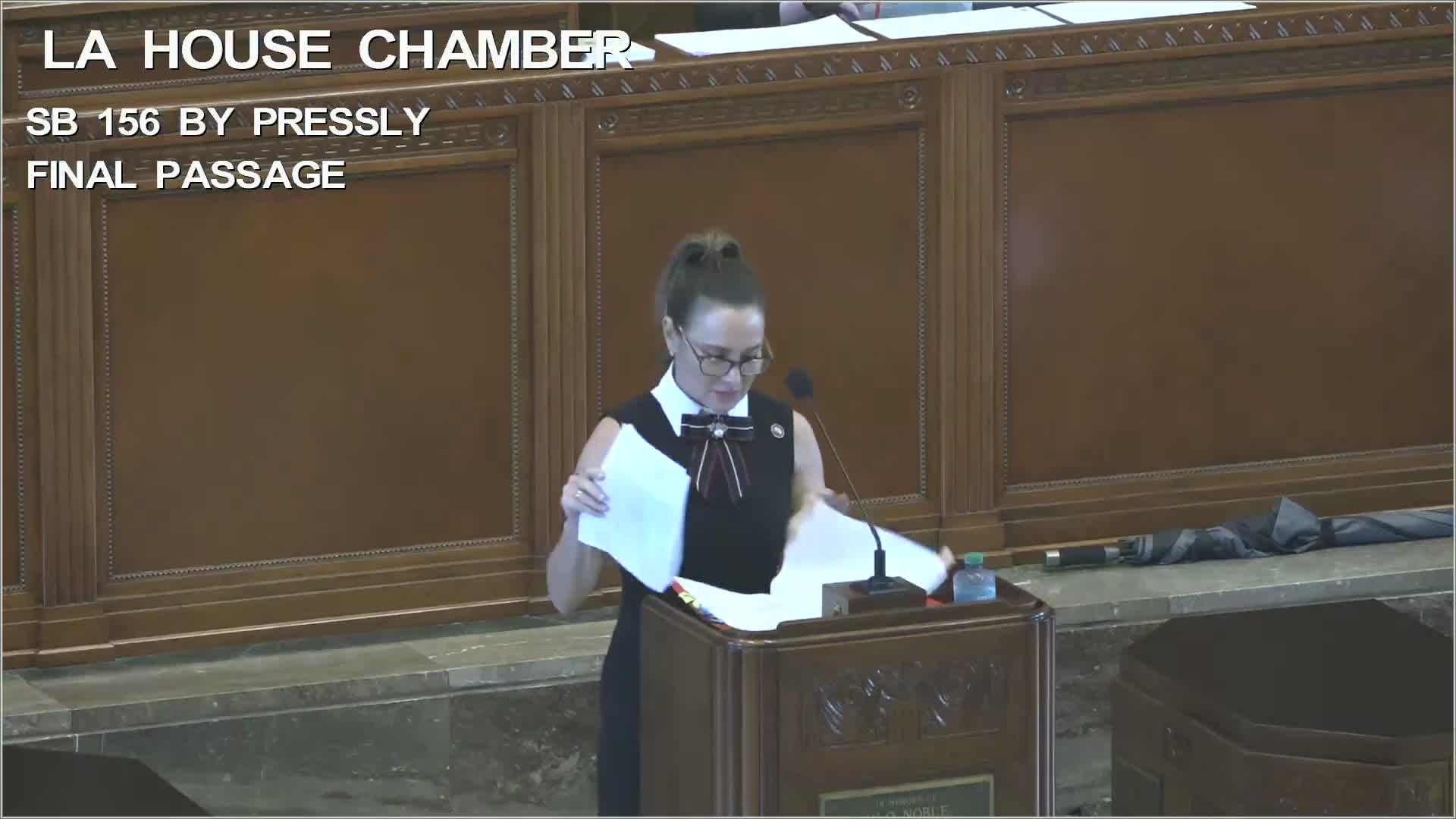
Senate Bill 156, a measure addressing the legal status, ownership and permitted uses of in‑vitro fertilized human embryos, drew extended floor debate in the Louisiana House on May 27.
Representative Dawn Davis, carrying the bill on the House floor, said the measure aims to “protect IVF in Louisiana” by aligning state law with medical practice and to prevent residents from needing to cross state lines to build families. Davis said the bill protects patients, providers and intended parents while reflecting medical standards.
During consideration the House adopted several technical and substantive amendments offered from the floor. Two amendments carried by Rep. Davis — including a change setting the definition window for non‑viability at 72 hours from fertilization and clarifying legal transfer protocols for donated eggs and embryos — were adopted without objection. Davis told members those changes came after stakeholder discussion.
Representative Amade offered an amendment that would have inserted the phrase “an in vitro fertilized human embryo is a biological human being not susceptible of ownership.” The amendment prompted extended debate. Supporters argued the change would give embryos clearer legal recognition; opponents and the bill sponsors said the proposed language risked creating criminal‑law exposure for providers and would conflict with other statutory frameworks. The Amade amendment failed on a roll call, 15 yays to 73 nays.
Representative Davis urged the House to move the bill forward, saying it “will go a long way and will protect IVF. We'll protect patients. We'll protect doctors and providers while also respecting the unborn.” The transcript shows floor action to advance the bill and the clerk recorded co‑authors, but the session excerpt does not include a final passage roll call for S.B. 156; the legislative action at the end of the segment shows votes on related motions and co‑author tallies.
The debate included repeated references to the children’s code, criminal law concerns and input from fertility‑provider advocates. Lawmakers raised practical questions about single parents, donor arrangements and whether the bill would unintentionally alter rights in probate or other civil contexts.
Because the transcript excerpt ends before a final roll call for the bill is recorded, the article does not report a final passage. The record does show which floor amendments were adopted and which failed, and it documents the depth of discussion and the statutory and medical issues at stake.