Get Full Government Meeting Transcripts, Videos, & Alerts Forever!
Get email alerts on the Healthcare Screening topic
No spam. Unsubscribe anytime.
House adopts resolution urging LDH to study lowering mammogram age to 30 after contentious floor debate
Summary
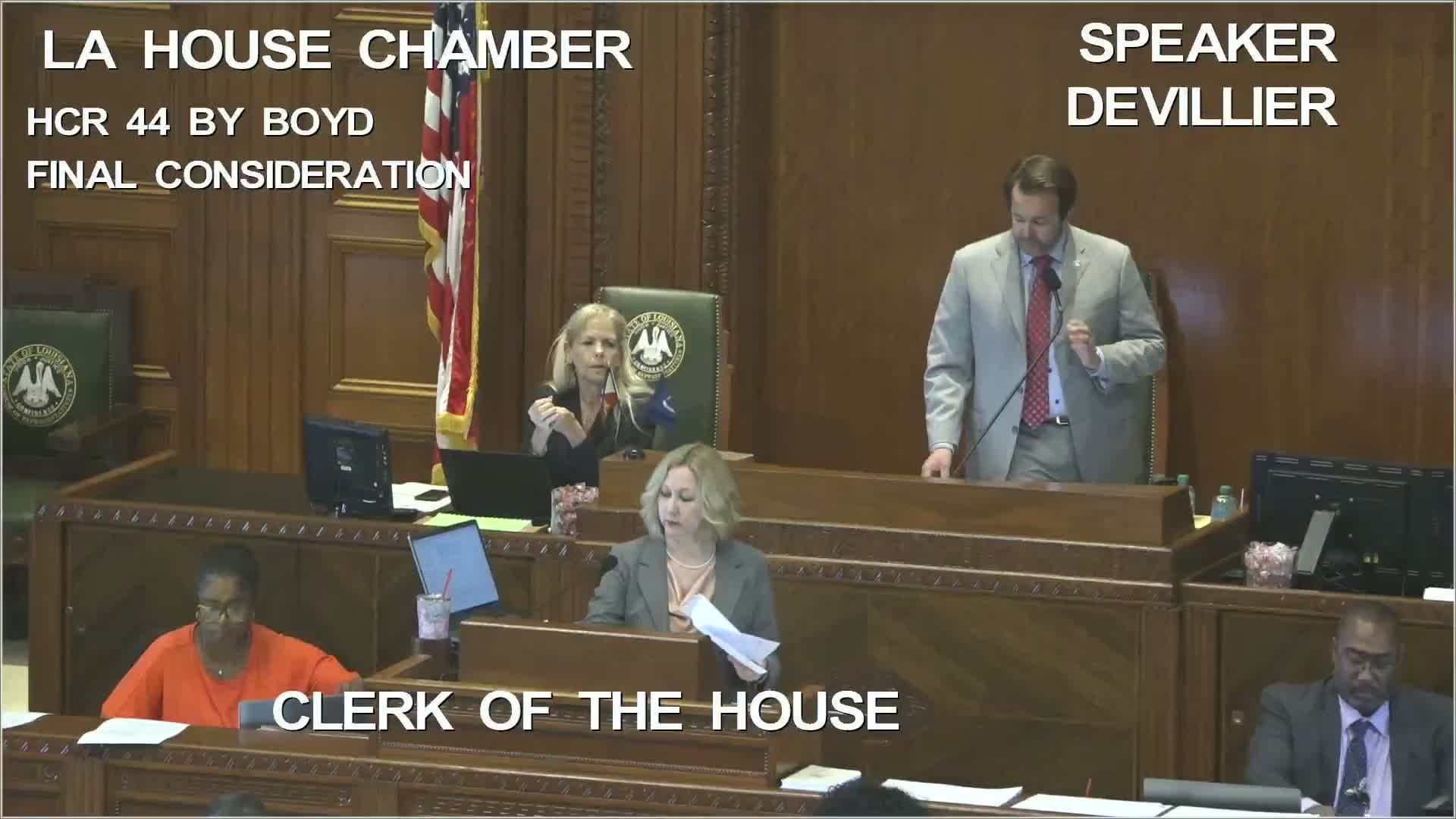
The Louisiana House on May 27 adopted HCR 44, a resolution asking the Department of Health to study lowering the recommended starting age for screening mammograms to 30. Lawmakers debated an amendment about alternative screening modalities; the amendment failed and the resolution passed 99–2.
The Louisiana House of Representatives adopted a resolution Tuesday asking the Louisiana Department of Health to study changing the recommended starting age for screening mammograms from 40 to 30.
Representative Frances Boyd, sponsor of HCR 44, told members on the floor the measure “is simply requesting LDH to lower the age for mammogram testing to 30.” The resolution does not change state law; it asks LDH to examine the feasibility and implications of an earlier screening age.
The floor debate focused on the tradeoffs of screening technologies. Representative Jordan Cruz offered multiple amendments that would have required LDH to consider alternative, lower‑radiation modalities such as MRI, ultrasound and thermography and to strengthen informed‑consent language about risks of screening. Cruz argued screening can cause false positives and urged informing patients of alternatives. Representative Crews countered that the Cochrane review of screening evidence shows benefits for some women and rejected Cruz’s changes.
The Cruz amendment failed on a roll‑call vote, 24 yays and 71 nays. The House then voted to adopt HCR 44, 99 yays and 2 nays. Representative Boyd moved for the resolution’s favorable passage; the record shows the body adopted it that same day.
Supporters said the resolution responds to reports of younger women being diagnosed with breast cancer and will push LDH to evaluate whether earlier screening could save lives. Opponents and questioning members raised concerns about radiation exposure, insurance coverage for alternate tests and the evidence base for changing screening guidelines.
The resolution directs LDH to study the practical, clinical and coverage issues around lowering the screening age; it does not itself change medical practice standards or insurance requirements. LDH would be the agency responsible for any recommendations coming out of the study.
Lawmakers also used the debate to urge constituents to talk with their doctors about screening options and to highlight local mammogram resources, including mobile mammography units.
HCR 44 now goes to LDH for the directed study; the resolution sets no binding requirement to adopt a new screening age.