Get Full Government Meeting Transcripts, Videos, & Alerts Forever!
Get email alerts on the Board Of Tax Appeals Per Diem topic
No spam. Unsubscribe anytime.
Board of Tax Appeals requests $29,200 to raise members’ per diem to $400; director cites caseload and training needs
Summary
The Board of Tax Appeals asked for $29,200 in ongoing general-fund dollars to raise a three-member board's per diem from $300 to $400; the agency said members average an 80-day work year, require extended prep and training, and the change would require amending Idaho Code 63-3804.
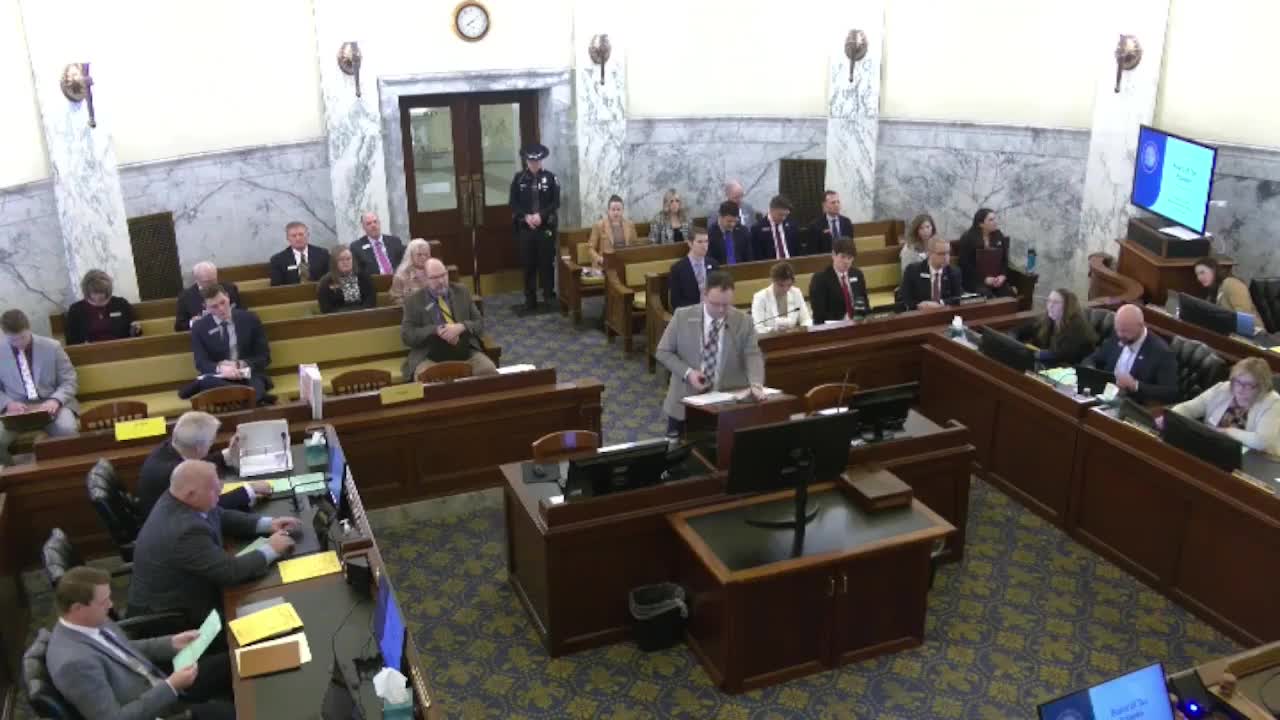
Legislative services analyst Christopher Lahoset presented the Board of Tax Appeals’ FY2026 enhancement seeking $29,200 in ongoing general-fund support to raise each board member’s per diem from $300 to $400.
Director Cindy Pollock told the Joint Finance-Appropriations Committee the board is a three-member quasi‑judicial body that hears tax appeals from the Idaho State Tax Commission and county boards of equalization and that the request would require legislation to amend Idaho Code section 63-3804. Pollock said the board currently operates under a model that funds members for about 80 work days per year; the agency’s calculations treat per diem as covering hearing days, preparation and decision-writing time.
Pollock described the workload and training required for members: the board typically handles about 300 appeals annually on average, though caseloads can spike (the agency previously sought supplemental funding when Bannock County generated an unusually large number of appeals). Pollock said members undergo extended training and preparation, including a two‑week judicial college course and roughly a year of mentoring before conducting hearings independently.
Committee members asked whether per diem pays preparation time and how reversion of unused funds works. Pollock said the 80‑day funding cap and the board’s internal scheduling assume prep and decision time are part of a board day; if members use fewer days, unused appropriation reverts to the general fund. Representative Tanner and other members pressed on whether the agency could absorb the increase given recent reversions; Pollock said the requested $29,200 is specifically to increase members’ pay rate and that reversion dynamics reflect actual days worked.
Pollock closed by describing the office’s workload and record‑keeping: staff are small and cross‑trained, decisions can be lengthy (she said some are 20 pages or more), and the office processes many cases statewide.
No formal action was taken during the hearing; the presentation was a budget request that, if adopted, would require consequential statutory change to the per‑diem statute.