Get Full Government Meeting Transcripts, Videos, & Alerts Forever!
Get email alerts on the Liquor Division Budget topic
No spam. Unsubscribe anytime.
Idaho Liquor Division outlines FY2024 revenue distribution, requests targeted IT and store upgrades
Summary
The Idaho State Liquor Division presented FY2024 financials showing $118.3 million in statutory distributions and requested one-time and ongoing appropriations for IT security, accessibility, store improvements and modest temp staff pay increases.
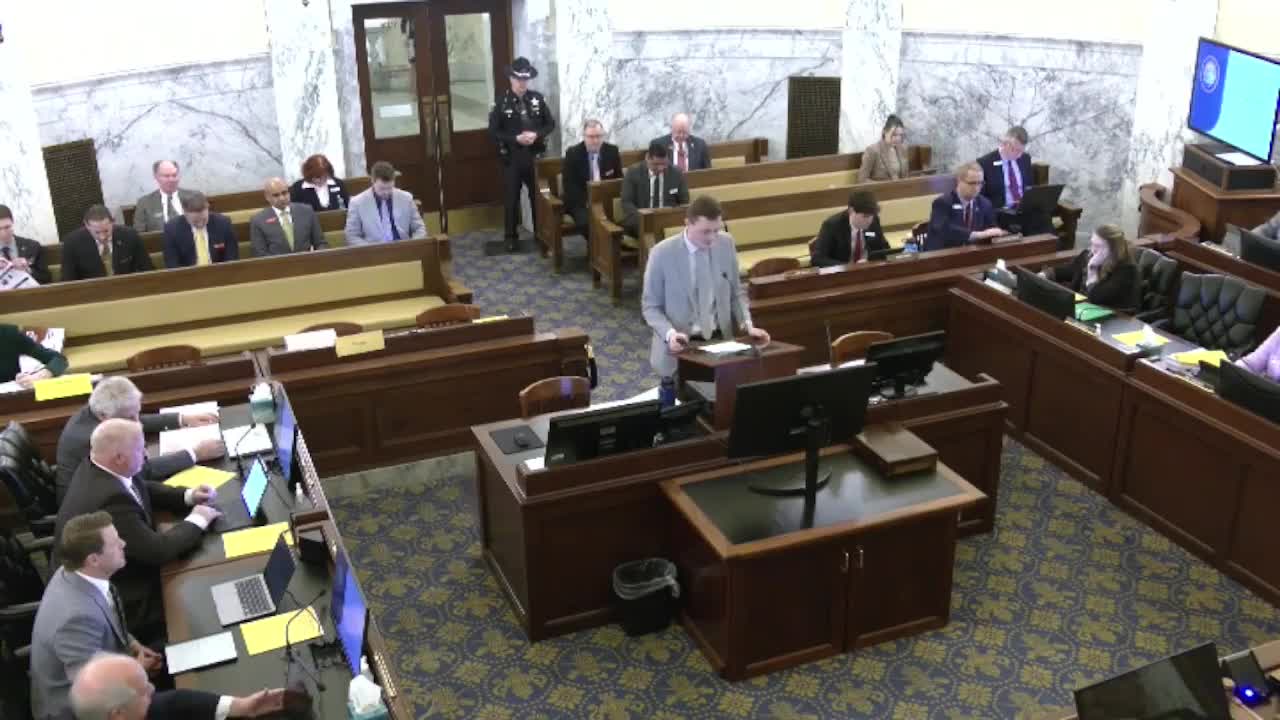
The Idaho State Liquor Division presented its FY2024 financial results and budget requests during the Joint Finance-Appropriations Committee hearing, outlining statutory distributions, staffing metrics and a package of IT, accessibility and store replacement requests.
The presentation matters because the division’s net income and statutory distributions flow to cities, counties, magistrate courts and the state general fund; committee members pressed the division about staffing costs and a $100,000 request to bring its website into compliance with web accessibility standards under the Americans with Disabilities Act.
Budget analyst Kellen McGurkin of the Legislative Services Office told the committee the division’s FY2024 total distributions were $118,300,000 and that total reported sales were about $319,100,000. He said a 2% surcharge on liquor sales generated roughly $6,700,000 for the court services fund and that statutory formulas and internal accounting determine the remainder distributed to cities, counties, magistrate courts and the general fund.
McGurkin described agency operations and staffing: the division has an FTP (full‑time position) cap of 257.25, about 210 full‑time retail positions, and roughly 185 part‑time store clerks not counted in the FTP total. He said the agency typically fills about 93% of its FTPs and spends about 96% of its appropriated personnel costs.
Director Andrew Arulanandam and agency staff answered committee questions about specific budget requests. Arulanandam said recent increases in revenue during the COVID‑19 pandemic produced higher direct‑to‑consumer sales that have since moderated and noted a decline in the agency’s free fund balance from about $38 million in FY2022 to $14 million in FY2024.
On enhancements, the division asked for $131,400 in ongoing dedicated funds including a $57,400 package to raise temporary retail staff hourly pay from $15 to $15.45 and $72,000 related to mandatory pallet shrink‑wrapping under a new freight contract. One‑time requests included $1.2 million for replacement items (shelving, lighting, flooring and signage), $980,300 in store replacements and $235,000 for IT/security replacements (servers, battery backups, security cameras).
Arulanandam told the committee the $100,000 website upgrade request reflects a consultant’s list of items needed to achieve compliance with accessibility standards and to reduce the risk of litigation, saying, “there are indeed other items. I don’t have the exact list. We did consult with an expert and he gave us a list of items that we would need to upgrade to be in full compliance.”
Committee members pressed on turnover and pay. Chief Deputy/CFO Tony Grama said temporary store clerks are state employees (not hired through private temp agencies) and are not eligible for automatic cost‑of‑living adjustments (CEC), so the division must request line‑item enhancements to change their pay. Director Arulanandam said turnover for those positions had improved—from roughly 140% annually before prior increases to about 84%—and the division is taking incremental pay steps rather than larger one‑time increases.
The division also presented an OITS (Office of Information Technology Services)‑recommended network modernization: a one‑time request for 70 firewalls and 70 managed switches and a prior investment in Cradlepoint routers to move stores from DSL/T1 connections to 4G/5G cellular networks; LSO’s review noted an expected hardware savings and monthly cost reductions versus a hardwired network solution.
The presentation closed with Arulanandam saying the agency “is a revenue‑generating agency” that serves as a public‑facing arm of state government and thanking the committee for the review.
Less critical detail: the analyst and director provided a multi‑slide breakout of operating versus merchandising costs, and noted that about 66% of appropriated expenditures in FY2024 were personnel and capital outlay (including lease costs for stores). The division said some unspent appropriations stem from a store that has not yet opened and ongoing staffing turnover.
Questions remain for the committee on which of the requested enhancements will be funded and at what level; the agency stood ready to follow up with documents and staff if the committee requires further information.