Get Full Government Meeting Transcripts, Videos, & Alerts Forever!
Get email alerts on the Water Resources Budget And Recharge topic
No spam. Unsubscribe anytime.
Idaho lawmakers question water projects, ARPA spending and staffing needs as department seeks 5 new positions and $30 million ongoing
Summary
The Idaho Department of Water Resources outlined project spending, ARPA-funded activity and a request for five water-administration staff as lawmakers pressed for detail on recharge plans, committed funds and how quickly projects can be delivered.
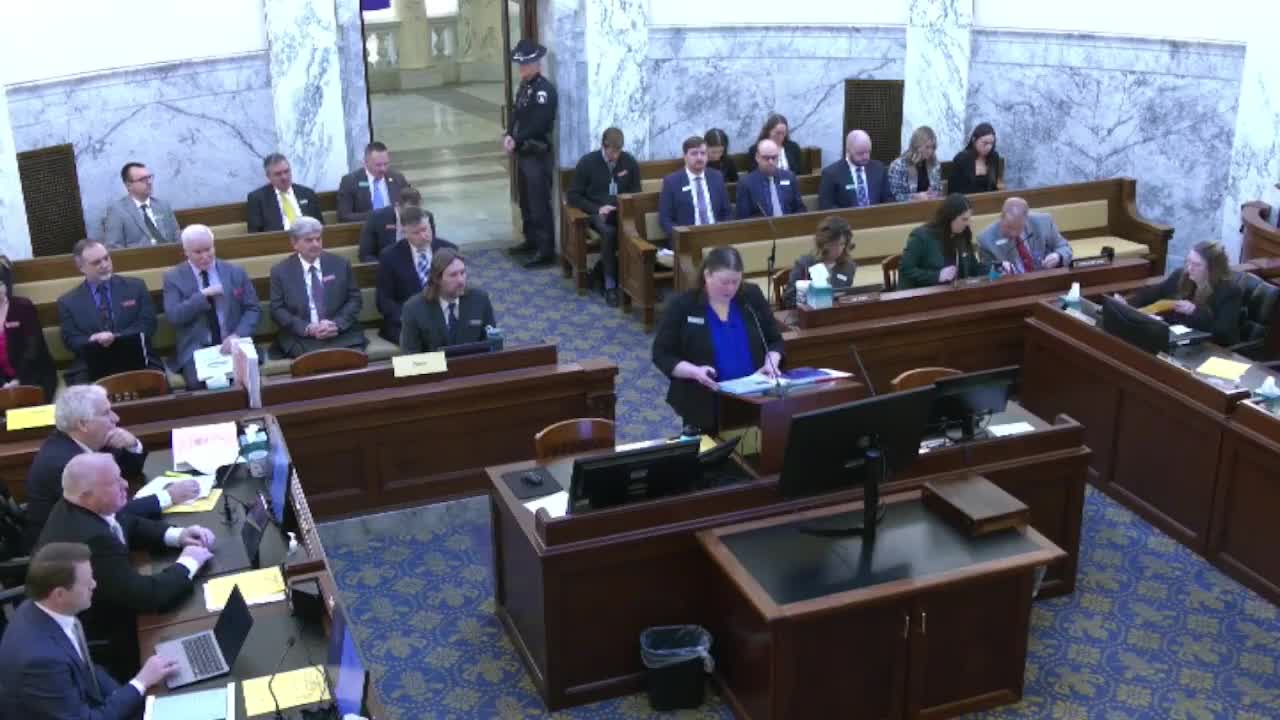
The Idaho Department of Water Resources told the Joint Finance-Appropriations Committee on March 1 that it has spent most of its personnel appropriation and is seeking staff and ongoing funding to support growing demands for water administration and recharge projects.
Budget analyst Janet Jessup summarized the agency's role and finances, saying the department “administer[s] water rights, approve and deny applications to appropriate water or change existing water rights” and highlighted the board-created water-project authorities. She told the committee that about 90% of the department’s personnel dollars were expended in 2024 and that the agency received a mix of general and dedicated funds, including ARPA state fiscal recovery funds that heavily increased operating expenditures in fiscal 2023 and 2024.
That ARPA infusion included $50 million treated as one-time and $50 million designated ongoing in FY2023, Jessup said. Director Matt Weaver and Idaho Water Resource Board Chairman Jeff Raybould described how those and other balances are committed to a long list of projects and loan programs across the state, and they laid out the department’s request to create a new Water Administration Bureau by adding five full‑time positions.
Why it matters: committee members sought clarity on whether existing fund balances are being spent efficiently and how quickly large capital projects can begin. Lawmakers pressed the department for specifics about uncommitted cash, project pipelines and how additional staff and ongoing general‑fund dollars would be used.
What the agency told the committee
Director Matt Weaver said demand for water-district creation and support has outpaced the department’s capacity. “Prior to this request, we had grown from 2 and a half FTEs, to about 11 FTEs department wide,” he said, describing the proposal to add five positions — including a bureau chief and technical records specialist — that would form a new Water Administration Bureau paired with the existing staff.
Weaver described the Eastern Snake Plain Aquifer (ESPA) settlement work and said administration and real-time measurement obligations will require substantial effort. He and Raybould estimated that fully meeting the settlement’s real-time measurement expectation could require more positions or cost-sharing with groundwater districts and water districts.
Raybould outlined where water-management account dollars have been committed, including projects and loan programs such as the Mountain Home Air Force Base supply pipeline, the Anderson Ranch dam raise, pipeline work for fish hatcheries, Bear Lake storage adjustments, Priest Lake water management, and loans or grants for canal conversions and groundwater-to-surface-water projects. He said some projects are in engineering and that the board “encouraging people to work as fast and quickly as they can.”
Key numbers and clarifications
- ARPA appropriations: $50 million one-time and $50 million ongoing added to the department’s budget in FY2023; much of recent operating spending reflects ARPA state fiscal recovery funds. - Governor’s recommendation: $30 million ongoing from the general fund proposed to be transferred annually into the Water Management Fund for water projects. - Water Management Fund (per director’s remarks): ending cash balance at end of FY2024 about $293 million; revenue since then about $38 million; expenditures to date about $11.2 million; committed funds roughly $290 million, leaving about $29 million uncommitted. - Loans outstanding (approx.): Revolving development account about $23 million; about $20 million of the water management account is out as loans. - Recharge targets and performance for ESPA: the department cited a proposed increase in the average annual recharge target from 250,000 to 350,000 acre‑feet; Weaver reported state‑sponsored recharge averaged about 268,000 acre‑feet a year (2016–2024), private actors recharged about 116,000 acre‑feet a year, and groundwater pumping reductions averaged about 212,000 acre‑feet — an aggregate of roughly 600,000 acre‑feet of aquifer management activity in that period. - Staff request: five new FTEs to pair with about 11 existing staff dedicated to water administration; director said a full real‑time measurement program for all wellheads on ESPA could require 12–15 positions without share‑the‑burden approaches. - Other requests: $58,500 ongoing to cover increased ArcGIS licensing costs; continuation of a one‑time Laserfiche conversion (department clarified part of that was a one‑time request).
Lawmakers’ concerns
Committee members repeatedly asked how quickly committed funds could be paid out and why some line items show large balances. Senator Cook and others were told that many projects require engineering, permitting and phased payouts; funds are paid as work is completed rather than disbursed all at once. Senator Winthrop and Representative Miller raised long‑term planning concerns for recharge infrastructure, urging a 50‑ to 100‑year perspective and noting the tension between capturing runoff for recharge and protecting existing water rights.
Representative Tanner and other members questioned whether an ongoing $30 million in the governor’s recommendation should be authorized without project‑level allocations now, and whether a one‑time approach would be more prudent. Director Weaver and Chairman Raybould said ongoing funding would support planning, operations and long‑term programs (including monitoring and potential cloud‑seeding), and argued that some ongoing commitments are needed to sustain administrative and O&M work.
Next steps and uncertainty
No formal committee vote was recorded during the hearing. Directors and the board were asked to provide additional detail to the committee: an up‑to‑date list of projects the department considers unfunded (Jessup said she would follow up with that list) and a breakdown of committed vs. expended funds in the Water Management Fund. Lawmakers also requested further detail on loan balances and timelines for specific major projects in engineering or procurement.
Ending
Weaver closed by stressing that growth in Idaho increases demands on water administration and projects. He said the department’s budget enhancements are intended to address water administration, water supply enhancements (including recharge), and water projects identified by water users.
Speakers