Get Full Government Meeting Transcripts, Videos, & Alerts Forever!
Get email alerts on the Budget Process Sales Tax Distribution topic
No spam. Unsubscribe anytime.
JFAC staff outlines program-maintenance bills and warns sales-tax distributions cut into general fund flexibility
Summary
Budget staff described how program maintenance bills will be organized and said statutory sales-tax distributions and earmarks have reduced the portion of sales tax that flows to the general fund, limiting flexibility in downturns.
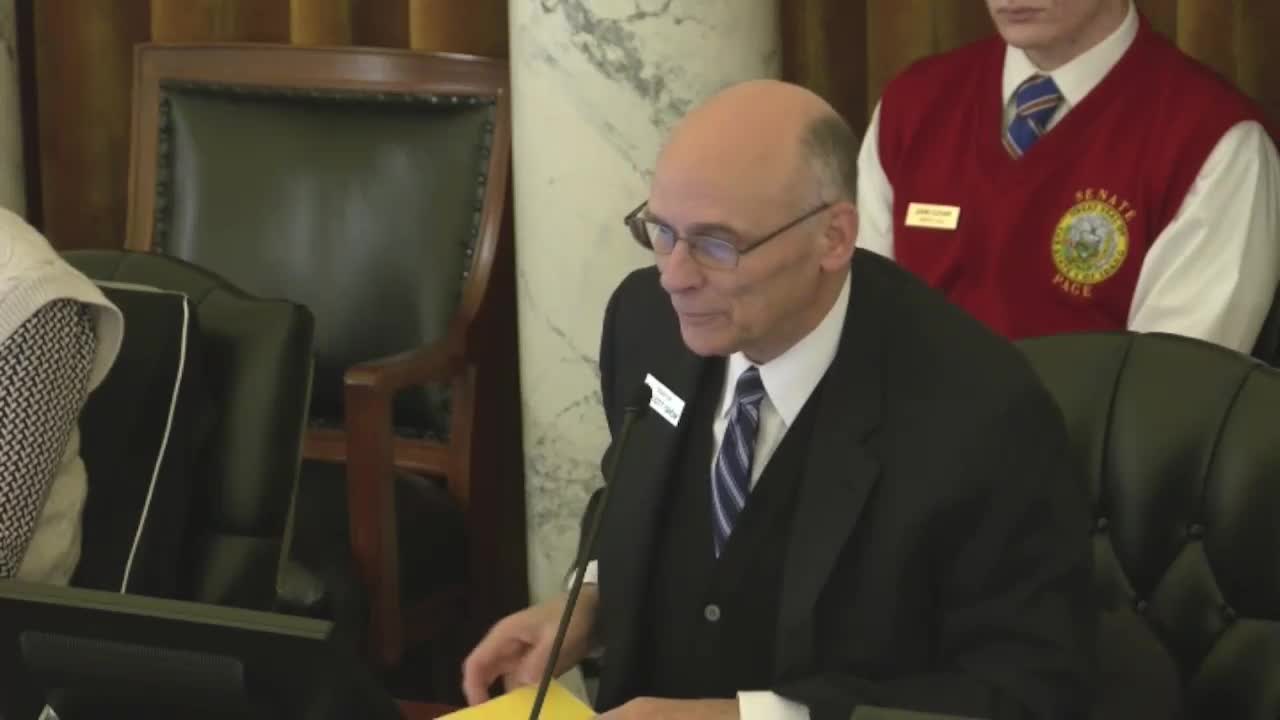
Keith Bybee, Division Manager of Budget Policy Analysis, briefed JFAC on the structure and timing of program maintenance appropriations bills and on recent trends in sales-tax distributions that constrain the general fund.
How maintenance bills are organized: Bybee said JFAC will group program maintenance work into 10 appropriation bills (for example, general government, judicial branch, public safety, health and human services, natural resources, public school support, and state Board of Education agencies). Program maintenance will incorporate the baseline budget plus cost adjustments that the committee considers recurring, including employee compensation (CEC adjustments), statewide cost allocation (SWCAP), contract inflation, and benefit-cost adjustments such as health insurance and PERSI changes. Enhancements — including replacement items, IT-specific replacements, population forecast adjustments (formerly labeled "non-discretionary"), Medicaid growth, and other new requests — will be considered in separate enhancement bills so the committee has time to review growth items and new spending.
Timing and process: Bybee said the committee will hold an initial hearing on program-maintenance adjustments and statewide impact, with decision-making slated for Friday of the week’s schedule; four functional areas will be discussed on Thursday ahead of Friday’s maintenance action so members who must leave early can hear key items. He emphasized that program-maintenance decisions do not preclude later additions or subtractions to those appropriations.
Sales-tax distributions and implications: Bybee walked members through the sales-tax distribution formula (Idaho Code citations in committee materials) and explained how statutory earmarks and new programs have reduced the share of gross sales-tax collections available to the general fund. He noted the state still collects growing sales-tax dollars overall but larger statutory distributions to revenue sharing, a tax relief fund, Techum (statutory program referenced in the distribution formula), school modernization, and other priorities mean the general fund in recent years has received a far smaller percentage of total sales-tax collections than it did before the Great Recession. Bybee warned that because sales tax is the state’s most reliable, least volatile revenue source, carving larger automatic outflows to other uses reduces JFAC’s flexibility in a downturn and could force deeper cuts or transfers if a recession reduces income and corporate tax receipts.
Other clarifications: Bybee and other members discussed that replacement items will be separated into general replacement and IT replacement decision units so the committee can examine IT/cybersecurity requests more transparently. He also noted the Legislative Budget Book tables showing product taxes and miscellaneous revenues, the Tax Relief Fund distribution mechanics, and the effect of statute-driven transfers on available general-fund balances.
The briefing closed with an overview of the general fund daily update worksheet staff will use to track the governor’s recommendations, legislative actions and bills that affect revenues or appropriations over multiple fiscal years.