Get Full Government Meeting Transcripts, Videos, & Alerts Forever!
Get email alerts on the Higher Education Budget topic
No spam. Unsubscribe anytime.
College of Western Idaho tells JFAC rapid enrollment is straining capacity; EWA boost limited by 3% cap
Summary
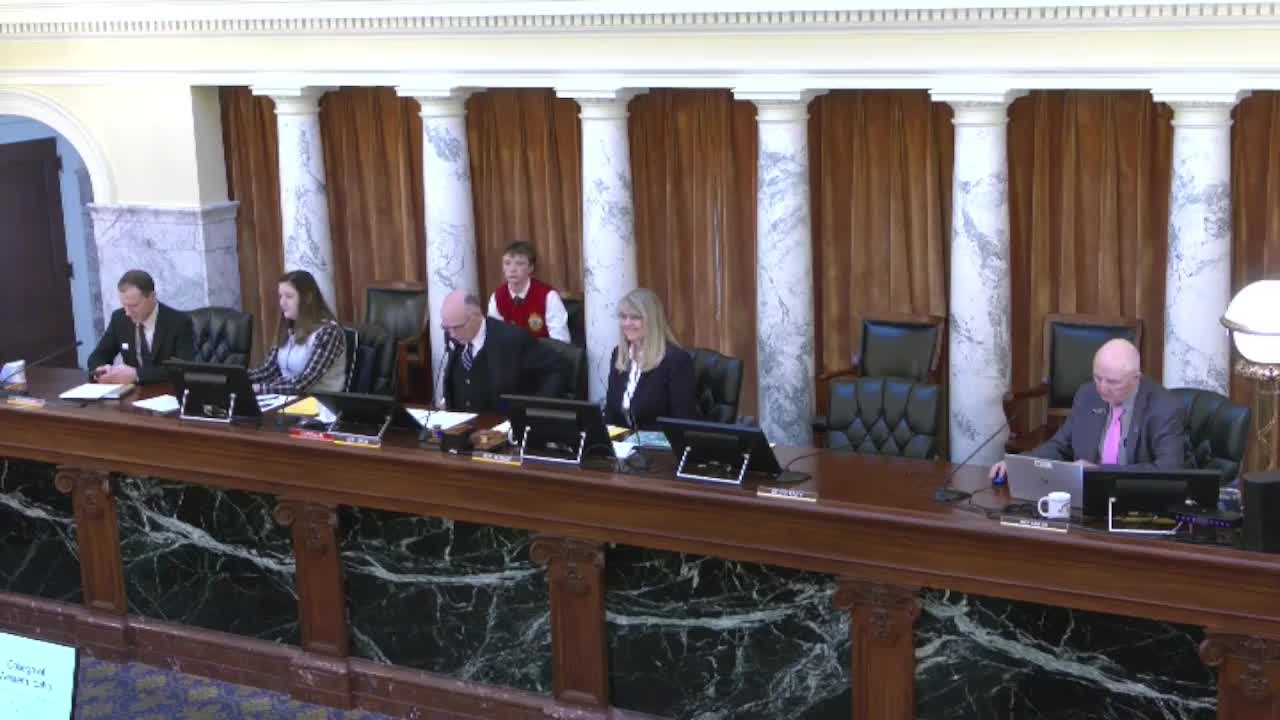
Gordon Jones, president of the College of Western Idaho, told the Joint Finance‑Appropriations Committee that the college is experiencing rapid enrollment growth — about 13% academic enrollment this year — and that limitations in facilities, faculty and student support have left nursing and several CTE programs with significant wait lists.
Gordon Jones, president of the College of Western Idaho, told the Joint Finance‑Appropriations Committee that the college is experiencing continued, rapid enrollment growth that is outpacing available classroom space, faculty and student‑support services.
"Growth continues ... we are up this year 13% in our academic enrollment," Jones said. He told the committee the college is "lean" and must prioritize which programs to expand as demand rises.
The College of Western Idaho (CWI) reported nearly 22,000 credit students and more than 30,000 students served in the 2023‑24 academic year in the Legislative Services Office budget book; Jones later described the college as serving roughly 31,000 individuals. At the hearing, he said the college is seeing capacity constraints in nursing, automotive technology, welding, cybersecurity and agricultural sciences and that those constraints fall into three categories: facilities, faculty (driven by program‑specific accreditation ratios) and student support services such as academic advising.
"We have, I believe it's almost a hundred people on our nursing waiting list. The statistic I have here is we have a 1,000 students total on wait lists across all of our programs," Jones said. He described nursing faculty limits as driven by accrediting standards that fix instructor‑to‑student ratios.
Kevin Campbell, a budget and policy analyst with the Legislative Services Office, presented CWI’s base budget history and the college’s FY2026 request. Campbell said appropriations to community colleges are made as trustee and benefit payments; they do not include personnel or operating line items and there is no FTP cap. He noted CWI’s FY2024 appropriation was $20,816,700 and that CWI typically spends 100% of its state appropriation.
Jones explained why the college’s enrollment workload adjustment (EWA) for FY2026 appears modest. "For us, it would have been $493,000 but, because of a 3 percent cap, you're seeing the amount that we were able to put in that allowed us to stay to that 3% cap," he said, referring to a State Board policy cap on year‑over‑year increases. The FY2026 EWA shown in the materials is $265,000.
Committee members pressed for more detail. Representative Petzke asked for a breakdown of the three categories of capacity constraints; Jones agreed to provide specifics through the Legislative Services Office. The committee also discussed that EWA is governed by State Board policy and that the cap can limit how much funding a rapidly growing institution receives in a single year.
Jones described how targeted state funds have supported career‑technical programs, citing examples such as an electric vehicle technician program that uses donated industry vehicles for hands‑on training. He also raised compensation pressures: CWI faculty hold master’s and terminal degrees, he said, but "on the pay scale, we are somewhere between $10 and $20,000 depending on the title below those comparable roles that are 4 year institutions." Jones noted CWI’s tuition has not changed for eight years and remains $139 per credit hour.
Why this matters: CWI leaders said the combination of rapid enrollment and program‑specific regulations (for example, nursing clinical ratios) requires more faculty, more modern facilities and expanded advising to convert applicants into graduates. Committee members requested additional data from the college and the Legislative Services Office to compare how EWA and caps have affected each community college.
The committee did not vote on any appropriation during the CWI presentation. Staff and college representatives were asked to provide further detail on capacity constraints and the EWA calculation for committee review.