Get Full Government Meeting Transcripts, Videos, & Alerts Forever!
Get email alerts on the State Pay And Benefits topic
No spam. Unsubscribe anytime.
Senate Finance committee agrees to print RS 32564 to raise three commissioners' salaries
Summary
Senate Finance voted by unanimous consent to print RS 32564, a proposed change to Idaho Code that would statutorily increase salaries for the Public Utilities Commission, State Tax Commission and Industrial Commission. Funding would be addressed later by the Joint Finance-Appropriations Committee (JFAC).
The Senate Finance Committee voted by unanimous consent to print routing slip RS 32564, a bill that would increase statutory salaries for three state commissioners.
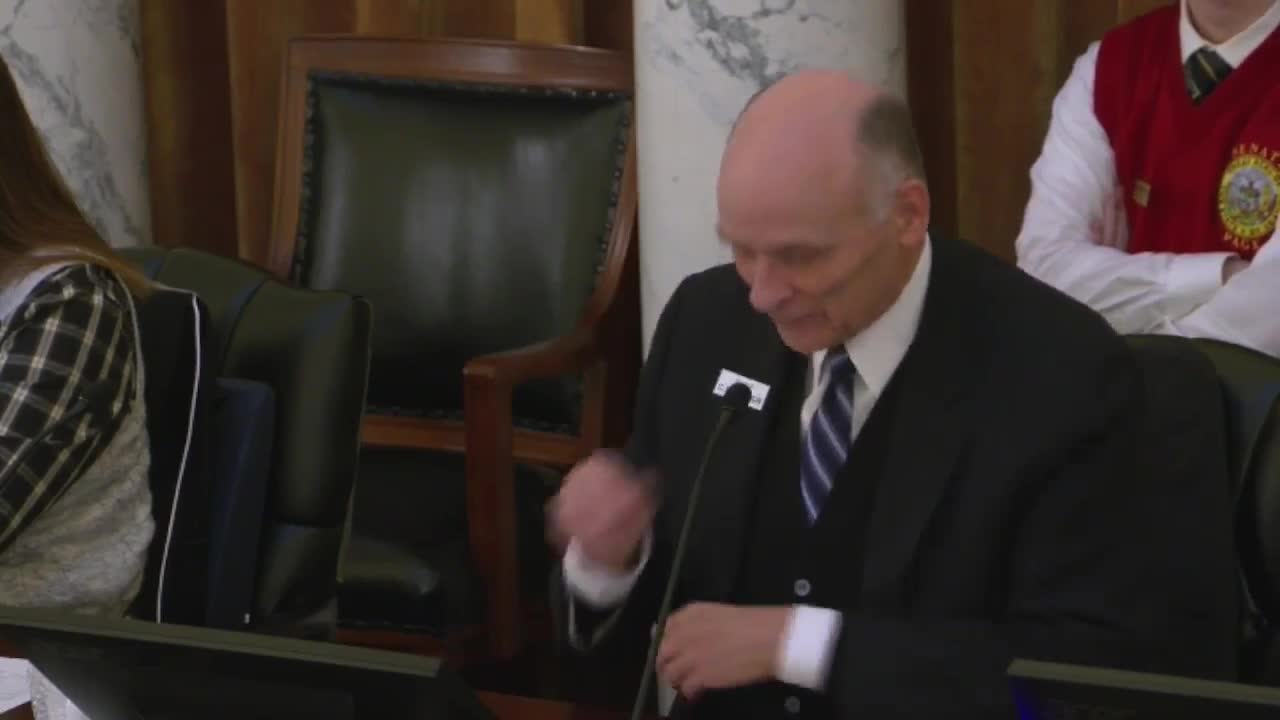
Keith Bybee, division manager of budget policy analysis, told the committee RS 32564 would amend Idaho Code to raise the salaries for the Public Utilities Commission, the State Tax Commission and the Industrial Commission by $1.55 per hour (as presented to the committee). Bybee reported the bill would increase the Public Utilities Commission salary from $126,424 to $129,648, the State Tax Commissioner from $117,396 to $120,620, and the Industrial Commissioner from $123,126 to $126,350.
The committee printed the routing slip by unanimous consent after a motion to print from Vice Chair Woodward and a second by Senator Carlson. Bybee and the chair explained that these commissioners are subject to separate statutory salary treatment and therefore are not included in the more general classified employee compensation adjustments; any funding to implement the increases would be addressed later by JFAC as part of the budget process.
No roll-call tally was recorded on the record for the print request; the committee proceeded by unanimous consent. The committee chair and staff explained the two-step process: the committee may introduce or “print” policy bills, and funding for statutory salary adjustments would be considered separately by the joint budget process.
The bill will be printed and, if introduced and advanced through the Senate, will return to JFAC or the appropriate budget process to secure funding before any salary changes would take effect.