Get Full Government Meeting Transcripts, Videos, & Alerts Forever!
Get email alerts on the Budget Process topic
No spam. Unsubscribe anytime.
Staff outline Idaho budget decision units, program‑maintenance process and budget book resources
Summary
Analysts walked JFAC through Idaho’s decision‑unit budgeting model, key benchmarks from current appropriation to next year’s base, and the structure of the legislative budget book and agency budget pages.
Committee members received a practical briefing on how Idaho’s budget is built, the decision units that structure adjustments and where members can find agency‑level detail in the legislative budget book.
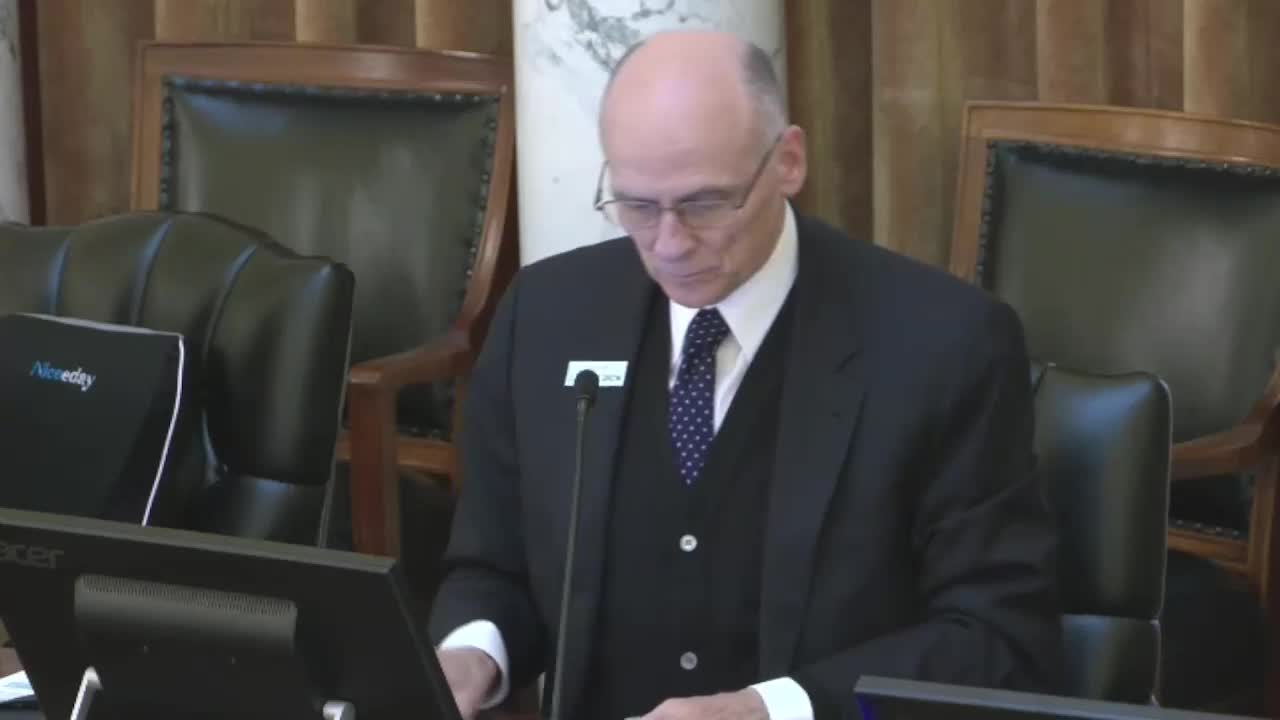
Jared Tetrault, deputy director and manager of budget and policy at the Legislative Services Office, told members Idaho budgets are assembled as decision units. He described six benchmarks that take an agency from its FY2025 original appropriation through executive adjustments, reappropriations and the creation of a FY2026 base that becomes the starting point for program‑maintenance proposals and later enhancement requests.
Tetrault outlined the typical progression: original appropriation (benchmark 1), executive and mid‑year adjustments (reappropriation, executive carry forward, deficiency warrants), estimated expenditures for the current year, base adjustments that remove one‑time items, program maintenance (benefit changes, contract inflation, statewide cost allocation, compensation), requested enhancements and the resulting next‑year original appropriation (benchmark 6).
Where to find details
Tetrault guided members to the front end of the legislative budget book and to agency pages that include division summaries, fund analysis reports, comparative request/recommendation matrices and decision‑unit detail. He noted the governor’s recommendation is shown side‑by‑side with agency requests in the book; staff will post the same materials on the committee SharePoint site.
Why it matters: understanding the decision‑unit framework helps members track what is one‑time versus ongoing, how reappropriations work and where to locate the documents needed to evaluate agency requests. Tetrault said staff will maintain the agency pages and encouraged members to ask for additional data early to allow time for staff research.
Next steps
Tetrault said the working groups and JFAC will use the decision‑unit presentation to frame program‑maintenance and enhancement discussions over the coming weeks and that staff would update the SharePoint budget book files to include the pages shown in his briefing.