Get Full Government Meeting Transcripts, Videos, & Alerts Forever!
Get email alerts on the School Safety Background Checks topic
No spam. Unsubscribe anytime.
Senate Education committee sends House Bill 224 to the floor with due‑pass recommendation
Summary
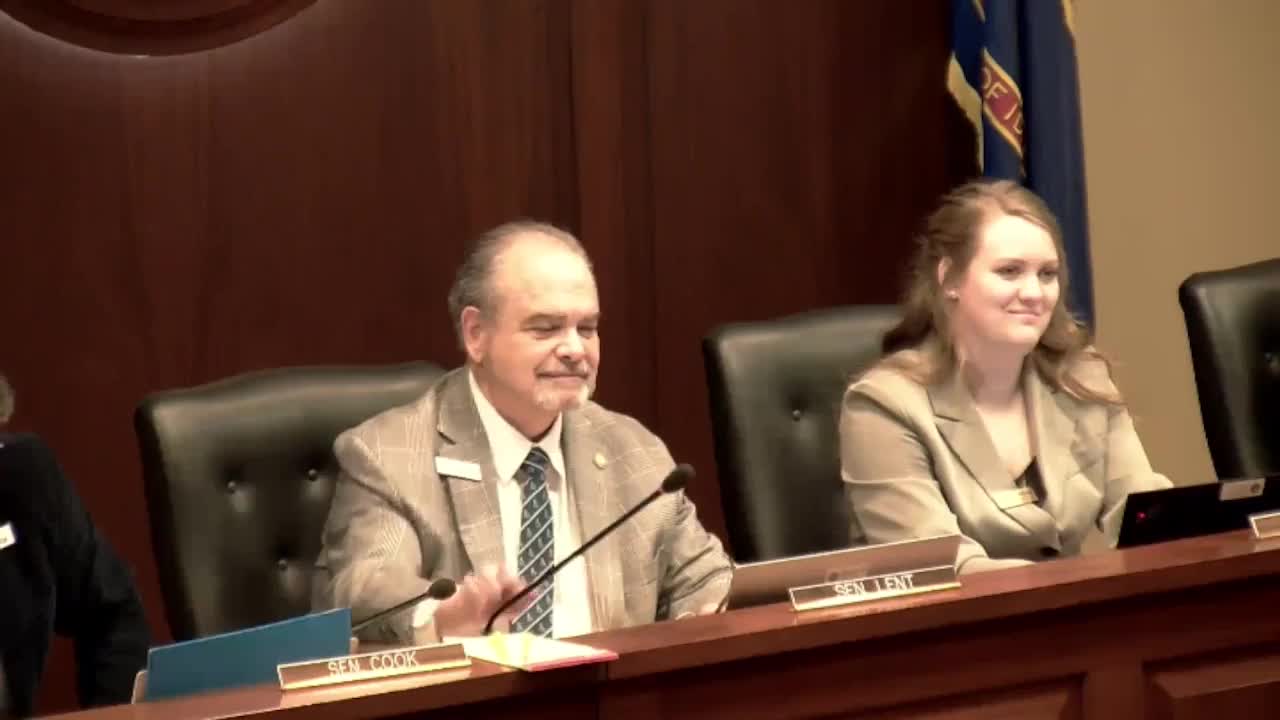
The Idaho Senate Education Committee voted to send House Bill 224 to the Senate floor with a due‑pass recommendation after the bill’s sponsor described it as a housekeeping measure to clarify background‑check and school‑safety plan requirements.
The Idaho Senate Education Committee voted to send House Bill 224 to the Senate floor with a due‑pass recommendation after Representative Chris Mathias described the bill as a housekeeping measure to clarify and modernize an existing subsection of law governing school safety and background checks.
Representative Chris Mathias (District 19) told the committee the bill revises the statute’s subsection 16 to focus on whether someone has unsupervised contact with students rather than how frequently their contact is. Mathias said the bill would require school districts to have a system of background checks for all persons who have unsupervised contact with students and would retain reference to the "*** offender central registry" for cross‑checks.
Mathias also said the bill clarifies that each school must create and maintain an emergency operations plan approved by the local school board, developed in coordination with local emergency response agencies and local school staff, and that the plans must meet guidelines adopted by the Idaho School Safety and Security Advisory Board. The bill further requires initial training for new hires and annual training for all staff on the emergency plans.
Senator Zito asked whether the bill would prevent individuals on the "*** offender registry" who perform occasional work in schools, such as a plumber, from entering school facilities; Mathias replied that school boards’ existing plans should already prevent unsupervised access but that if the bill passes it would cover “all people who have unsupervised access to children.”
Senator Ward Engelking moved that House Bill 224 be sent to the floor with a due‑pass recommendation; the motion was seconded and carried on a voice vote. The committee recorded no roll‑call tally in the transcript.