Get Full Government Meeting Transcripts, Videos, & Alerts Forever!
Get email alerts on the Audits topic
No spam. Unsubscribe anytime.
Legislative auditors report uncorrected findings, warn of delayed statewide audits
Summary
April Renfro of the Legislative Services Office told JFAC that many audit findings are newly issued and pending follow-up, cited examples in Fish and Game and Health & Welfare, and warned that delays in receiving statewide financial statements have pushed back the annual audit and single-audit timelines.
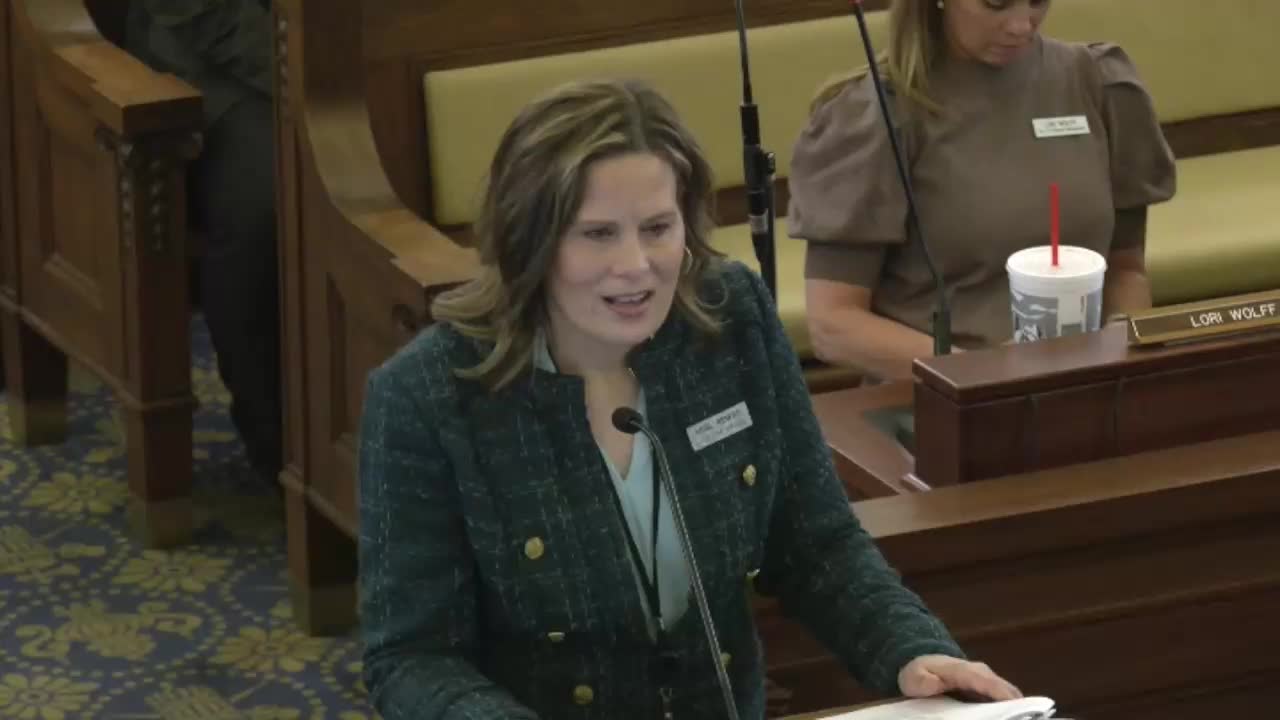
April Renfro, audit director in the Legislative Services Office, told the Joint Finance and Appropriations Committee on Jan. 7 that the legislative audit division has seen a mix of new findings and older, unresolved issues and that delays in agency financial reporting are slowing statewide audits.
Renfro said the audit division has 30 financial and IT auditor positions and one administrative assistant, and that it typically plans about 28 reports a year, including the annual audit of the state’s comprehensive financial report (ACFR) and the single-audit report that covers federal awards. "We are required to present a report, annually to the legislature of uncorrected findings," Renfro said, and the office provides an annual uncorrected-findings report to help lawmakers identify which agencies have open issues that may need budget or policy attention.
The audit director told the committee that 70% of the uncorrected findings listed in the office’s report are from the current reporting period and thus have not yet had follow-up testing; about 30% represent older findings that have not been corrected in a reasonable amount of time. She said accountability reports (which test internal controls and compliance at the agency level) are the source of many findings, while single-audit work — required for entities that spend at least $1,000,000 in federal funds — often surfaces more internal-control findings because federal audit standards place heavier reliance on internal controls.
Renfro gave specific examples to illustrate the types of problems auditors are finding. An older, unresolved finding at the Department of Fish and Game concerned noncompliance with the state travel policy and weaknesses in travel documentation and internal controls; follow-up visits showed partial corrective actions but not full resolution, and the office could not fully test some records after a move to the LUMA payroll/financial system on July 1, 2023. "They were unable to provide us with a sample to test and they still hadn't addressed all the policies," Renfro said, explaining why the finding reverted to uncorrected when audited again.
The office also identified deficiencies of qualitative significance in the Department of Health and Welfare’s foster-care oversight. For the fiscal 2023 accountability review, auditors tested 19 qualified residential treatment program (QRTP) placements and found shortcomings in required documentation and reviews: 10 of 19 lacked completed placement assessments; about 21% of cases tested lacked a retrievable court order; roughly 84% of the cases did not retain a required notice of placement with the court that identifies placement date and recommended level of care; and 42% lacked the required 30-day case consultations. Renfro said those lapses raise concerns because the documentation and reviews are intended to ensure appropriate placement and timely treatment for children in state care.
Renfro also described systemic and information-system control issues at larger programs. As an example from the 2023 single-audit report, she cited a lack of documented review and approval when the state updated the low-income home energy assistance program (LIHEAP) benefits matrix. Auditors found no direct payment errors in that instance, but the absence of a documented review increases the risk of undetected mistakes when benefit matrices are changed.
Committee members asked about agency disagreement with findings and about the audit office’s response. Renfro said disagreements are uncommon and most often occur in single-audit matters that are complex and may require federal grantor input; when the agency and auditors disagree, the federal cognizant agency (for Idaho, Health and Human Services) can be asked to weigh in. "That's about the only instance we would rescind the finding," Renfro said.
Committee members and co-chairs emphasized that persistent uncorrected findings can affect future appropriations. "If they can't correct them... then it questions how much more we're gonna give to them," one co-chair said.
Renfro warned that delays in receiving agency financial statements have postponed work on this year’s ACFR and single-audit reports. She said the state controller’s office normally provides draft financial statements in November for the audit office to complete the ACFR by the statutory target; this year the auditors did not receive them until Dec. 30, which makes it unlikely the office will meet the usual Dec. 31 and March 31 deadlines for the ACFR opinion and single-audit report, respectively. Renfro said the audit office planned to notify the federal cognizant agency to explain the late schedule and to estimate a March completion for the ACFR audit work.
The audit director concluded by noting the office’s follow-up process: for ACFR and single-audit findings, the audited entity must supply prior-audit responses and documentation; for accountability-findings the office typically schedules a 90-day follow-up and, if needed, annual follow-ups to test whether corrective actions both occurred and worked.
The committee will receive the audit office’s uncorrected-findings report and summary materials; lawmakers on JFAC were urged to review any open findings tied to agencies within their work-group portfolios during budget deliberations.