Get Full Government Meeting Transcripts, Videos, & Alerts Forever!
Get email alerts on the Teacher Unions Fiscal Restrictions topic
No spam. Unsubscribe anytime.
House State Affairs advances bill barring taxpayer‑funded support for teacher unions
Summary
Representative Judy Boyle, R‑District 9, presented House Bill 98 to the House State Affairs Committee, saying the measure would "ensure that taxpayer dollars do not go to fund teacher unions."
Representative Judy Boyle, R‑District 9, presented House Bill 98 to the House State Affairs Committee, saying the measure would "ensure that taxpayer dollars do not go to fund teacher unions." Boyle asked the committee to prohibit districts from using public payroll, paid release time, facilities or communications to facilitate union activity unless explicitly authorized by exception.
"They can still do whatever they want with their funds as long as they don't use them to support unions," Boyle said, identifying several exceptions in the draft: negotiated unpaid leave or benefits, personal leave, and union reimbursement of district costs.
What the bill would do: According to the sponsor's presentation, HB98 would bar districts from (among other items) withholding union dues via district payroll, providing paid release time for union duties at taxpayer expense, distributing membership solicitations, sharing personal contact information that the union could not access through public records, and increasing employee compensation "with the intent that the additional compensation ... be used to pay teacher union or affiliate dues." Boyle said the bill includes civil penalties for violations that begin at $250 and escalate to $2,500 for repeat offenses, and also forbids districts from contracting around the statute.
Committee testimony and positions: The committee heard extended testimony from a variety of education, labor and policy groups and private citizens.
- Chris Perry, Idaho Education Association (IEA): "This legislation has nothing to do with saving taxpayer funds," Perry said, arguing the IEA receives no taxpayer funds and warning the bill would damage educator workplace relationships and increase turnover. Perry said an $1,800,000 figure circulating about IEA taxpayer funding was a tax‑filing formatting error.
- Paul Stark, executive director, Idaho Education Association: Stark said the bill "singles out 1 Idaho business" and raised constitutional concerns about viewpoint discrimination, arguing the IEA is treated differently than other membership organizations.
- Sean Laughlin, Professional Fire Fighters of Idaho: Laughlin opposed HB98 and described the routine role of "release time" for union representatives as protecting due process and preventing claims and litigation.
- John Hughes, Idaho AFL‑CIO: Hughes warned the bill would add investigative and prosecutorial workload because the draft directs prosecuting authorities to investigate complaints and prosecute substantiated claims.
- Andy Grover, Idaho Association of School Administrators: Grover said HB98 would reduce local control, increase administrative burden, and create new compliance work for districts that already operate with small offices; he opposed the bill.
- Max Nielson, Freedom Foundation: Nielson supported HB98, saying his group's review of collective bargaining agreements showed paid union time and related practices that he estimated as costing taxpayers roughly $500,000 annually; he urged the committee to draw a line between district operations and union activities.
- Jason Mercier (Non‑State Policy Center), Rachel Gresler (Heritage Foundation), Jonathan Butcher (Heritage Foundation) and several private citizens testified in favor of the bill, arguing taxpayer dollars should not underwrite union political activity and that the bill protects teacher choice and taxpayer free speech.
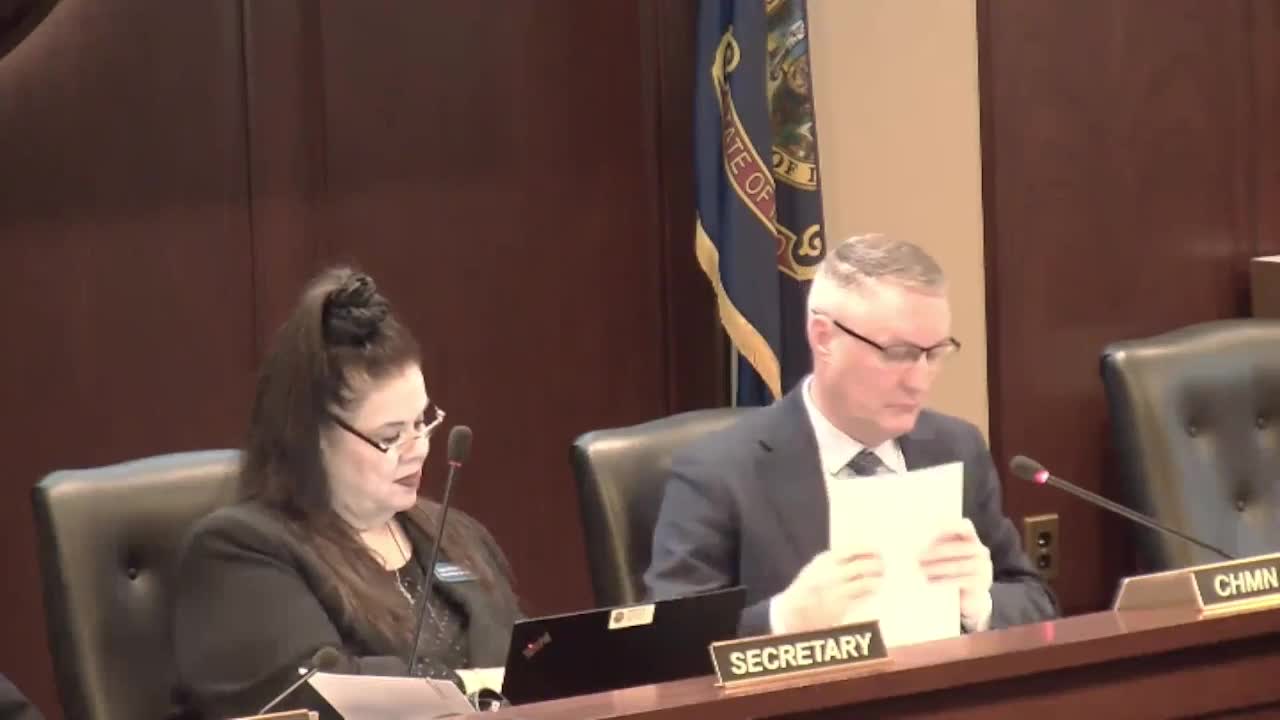
Committee debate: Republican and Democratic members expressed differing views on local control, administrative burden and constitutional risk. Representative Scott moved to send HB98 to the floor with a "do pass" recommendation. Representative Akiles and others cautioned the bill was advanced with significant outside advocacy and raised process concerns; defenders such as Representative Alfieri and Representative Hostetler said taxpayer support for union functions is inappropriate.
Procedural action and vote: Representative Scott moved to send House Bill 98 to the floor with a due‑pass recommendation. The committee voted to send HB98 to the floor; the chair announced the motion carried and recorded at least two no votes: Representative Todd Achilles and Representative Schubin (no further roll call recorded in the hearing record provided).
Clarifications and specifics cited in the hearing: Boyle said Idaho has 115 traditional public school districts, 83 of which have certified teacher unions; she said roughly 50 districts allow union activity using taxpayer funds. Boyle offered examples she said were drawn from district contracts: one district provides 25 days of paid release time for union members; another allows a one‑year paid leave for an association president with a paid substitute for the classroom; another permits a local president two days a week off with the first 38 days covered by the district.
Ending: With the committee vote the bill proceeds to the full House for consideration. Supporters said HB98 would protect taxpayers and teacher choice; opponents warned of unintended consequences for local bargaining, administrative burden, constitutional risk and possible chilling effects on teacher representation.