Get Full Government Meeting Transcripts, Videos, & Alerts Forever!
Get email alerts on the Public Health Budget topic
No spam. Unsubscribe anytime.
Joint finance committee approves Public Health Services enhancement package including rural physician incentive and immunization funding
Summary
The Joint Finance‑Appropriations Committee approved a package of enhancements for the Department of Health and Welfare's Division of Public Health Services, including funds for a rural physician incentive program, an immunization assessment request, program restorations and ARPA-funded multi‑year programs.
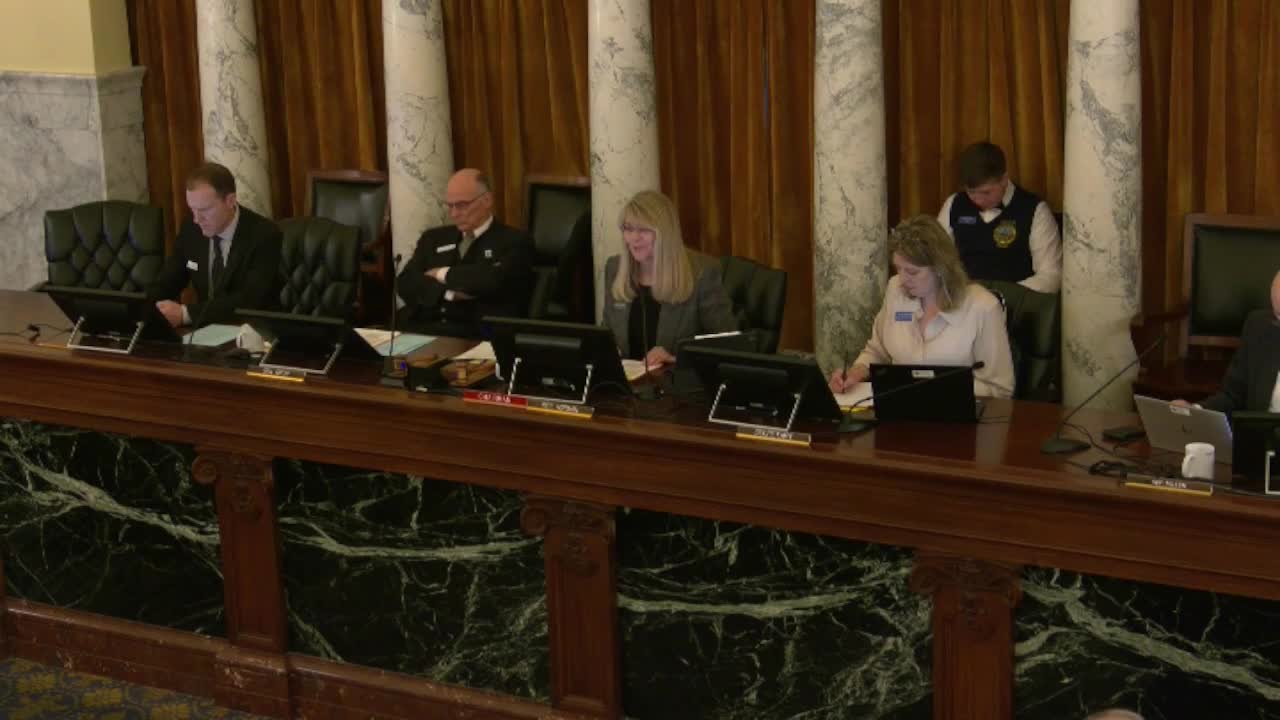
The Joint Finance‑Appropriations Committee on March 12 approved enhancements to the Department of Health and Welfare's Division of Public Health Services, adding staff and state, dedicated and federal dollars to restore programs and support immunizations and rural provider incentives.
Alex Williamson, budget policy analyst with the Legislative Services Office, told the committee the division oversees immunizations, chronic and communicable disease prevention, food safety, environmental health, maternal and child health, EMS, laboratory services, suicide prevention and other programs. Williamson walked members through six governor‑supported enhancement requests and an additional governor's initiative.
The enhancements approved by the committee add four full‑time equivalent positions and a mix of general fund, dedicated and federal dollars. The package includes program restoration funding for suicide prevention, drug overdose prevention, Alzheimer's and dementia services, Fit and Fall Proof, WIC food program support and other items; $6,085,700 (one time) for ARPA multi‑year grants; $2,041,800 (one time) for communicable disease prevention; a $2,500,000 immunization assessment request; and a governor's request of $500,000 ongoing from the general fund for a rural physician incentive program.
Representative Furness, who moved the motion, described the rural physician repayment program as an existing statutory program that helps repay physician loans up to $25,000 a year for four years in designated areas. Furness said the program has high retention rates and helps address provider shortages.
Senator Wintrow and other members discussed the committee's decision to treat some items as one‑time rather than ongoing funds. Wintrow cautioned that one‑time funding can undermine program predictability for hiring and long‑term planning, particularly for the home visiting program and the immunization assessment fund, which she described as important prevention and procurement tools. Representative Tanner, who offered a substitute motion that made some items one time to allow further committee review, said the approach gives JFAC an opportunity to examine program implementation and duplication.
The committee recorded the vote totals on the substitute motion as 14 ayes, 4 nays, 2 absent and excused; the chair announced the motion passed with a due‑pass recommendation.
The approved package also included smaller line items: $150,000 ongoing for a records receipt authority, $725,900 (one time) for home visiting (federal funds), and one‑time amounts for HIV and hepatitis prevention programs.
The committee attached several language directives to the appropriation, including notification requirements for federal grant applications and conditions limiting use of funds as described by staff. Several language items were considered individually by unanimous consent and recorded as ordered.
The committee flagged multiple items for additional oversight and review in the coming year, including ARPA‑funded programs and the immunization assessment fund.