Get Full Government Meeting Transcripts, Videos, & Alerts Forever!
Get email alerts on the Emergency Services topic
No spam. Unsubscribe anytime.
JFAC advances transfer of Emergency Medical Services program; steps require Senate action
Summary
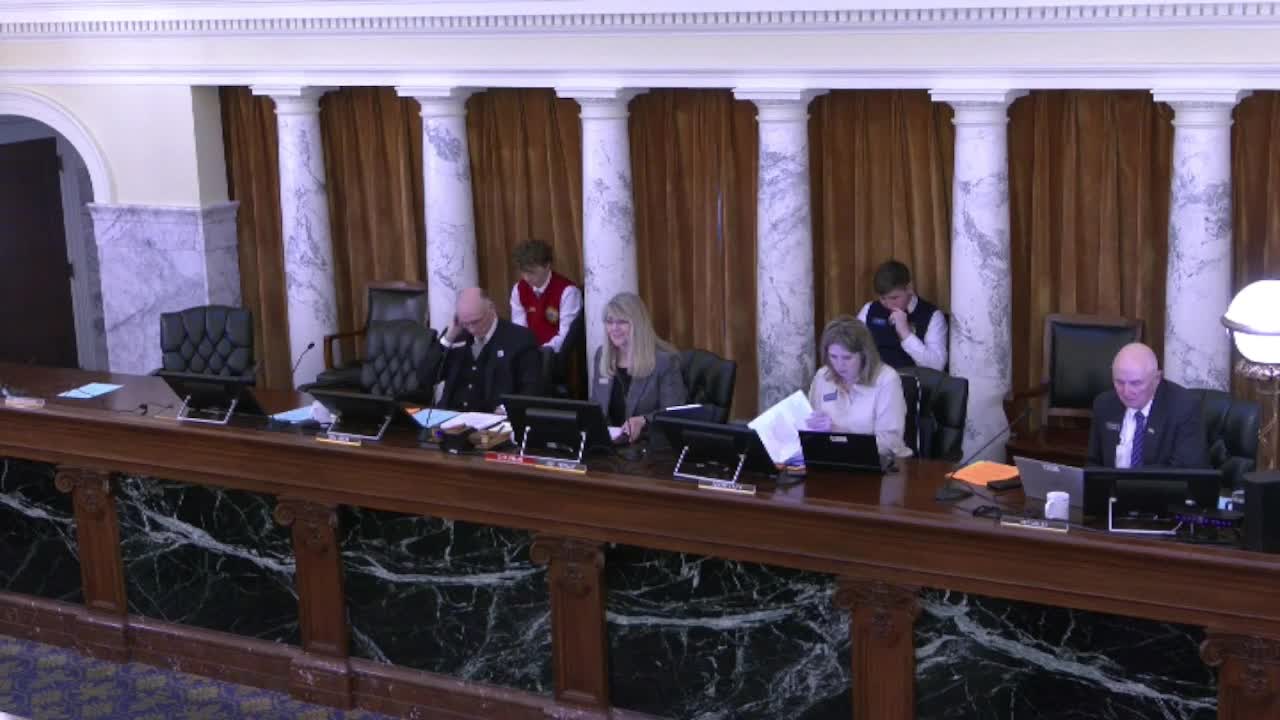
JFAC took multiple steps on March 12 toward moving Idaho's Emergency Medical Services program from Health and Welfare into the Military Division, approving some budget and staffing moves in committee but sending items to the Senate for further consideration after split votes.
The Joint Finance-Appropriations Committee on March 12 took multiple budget actions related to a statutory transfer of the Emergency Medical Services (EMS) program from the Department of Health and Welfare to the Idaho Military Division, consistent with policy direction in legislation under consideration (House Bill 206).
Legislative staff explained the transfer would move EMS operational functions to the Military Division where the Idaho Office of Emergency Management already manages related functions such as backup dispatch, HazMat programs and rural EMS support. The proposal reassigns personnel and related appropriations (including FT P and federal fund components) and funds a part-time medical director and transition costs.
The committee first moved to reduce the public health base appropriation by amounts corresponding to the EMS program and to transfer certain preparedness-and-response staff and funds into the Division's physical health program; that motion did not achieve a Senate majority in the joint roll and was sent to the Senate for handling. Subsequent motions created a new EMS budgeted program in the Military Division and proposed ongoing funding of roughly $7.2 million ($156,400 general fund, $6,866,500 dedicated funds, $180,000 federal funds) and an additional ~30.84 FTP; on the joint roll the motion passed in the House but the Senate failed to reach affirmative majority and the motion was placed on a transmittal to the Senate for action.
Committee members who supported the move said the Military Division would provide a more operational, mission-oriented home for EMS under the Adjutant General and the Office of Emergency Management. "This is the beginning stages of a lot of other changes," said Senator Bierke, noting potential future rule and statute work to align training and credentialing "and putting us on more parity with some of our neighboring states." The committee also approved a separate motion funding a part-time medical director ($60,000 ongoing general fund and $150,000 one-time dedicated) to provide direct medical oversight and standard field treatment protocols.
Because several key motions did not achieve the Senate majority in the joint committee votes, JFAC sent those items to the Senate for further consideration; the committee recorded the differing procedural handling between chambers and agreed to forward letters and motions accordingly. Committee staff said they would "deal with instances as they arise" where one chamber's action diverges from the other.
The transfer remains contingent on final action and bill implementation; staff will execute the appropriation changes if the enabling statute and the companion motions are ultimately reconciled in both chambers.