Get Full Government Meeting Transcripts, Videos, & Alerts Forever!
Get email alerts on the Education Funding topic
No spam. Unsubscribe anytime.
House education chair urges sustained funding, warns rural schools face greatest risk
Summary
Representative Doug Pickett told the Joint Finance-Appropriations Committee that Idaho has doubled K-12 spending over the last decade but must protect rural schools, expand career and technical education capacity and target funds for special education, transportation and literacy.
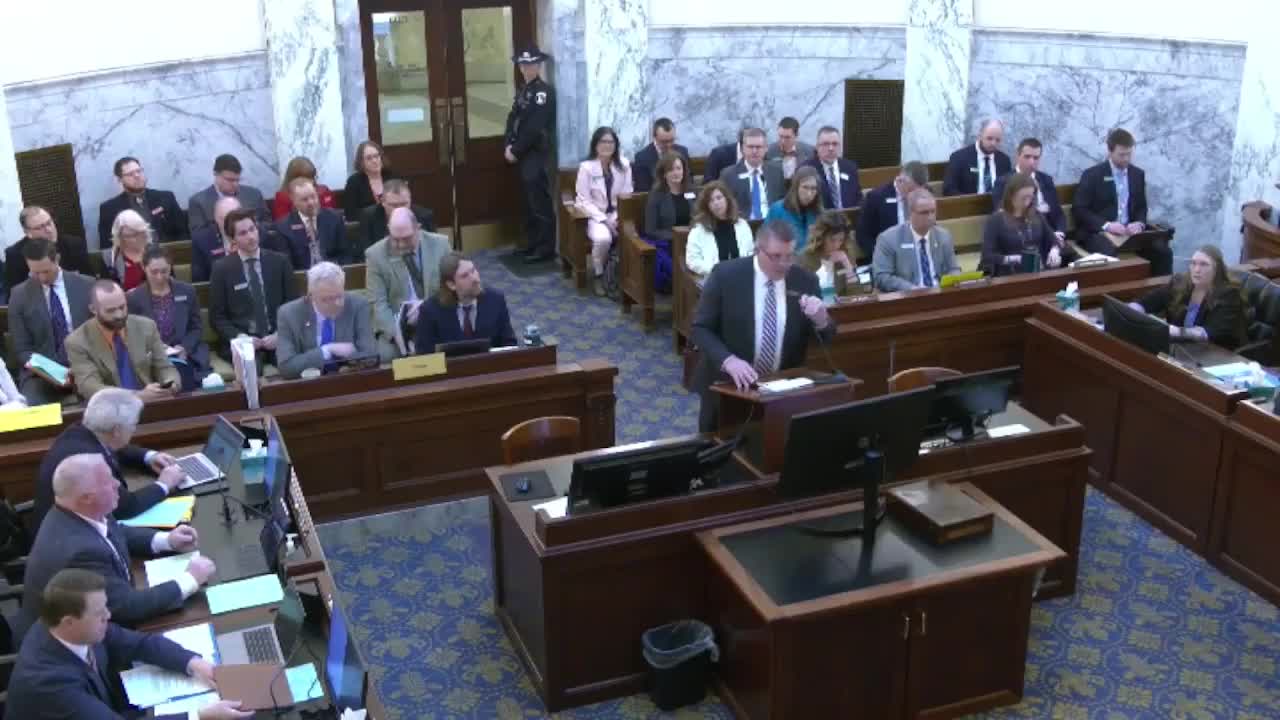
Representative Doug Pickett, chair of the House Education Committee, told the Joint Finance-Appropriations Committee on March 7 that Idaho has increased K-12 funding substantially over the past decade but still faces major structural needs, particularly in rural districts.
"Over the past 10 years, the public education K-twelve budget has doubled from 1,400,000,000.0 to 2,800,000,000.0," Pickett said, and he noted Idaho teacher pay "has increased to nearly $63,000 this school year, representing a 42% increase over the past decade." He thanked JFAC for recent salary increases and for allowing districts to enroll teachers in the state health insurance plan.
Pickett said policymakers should pursue both classical academic foundations and expanded career and technical education (CTE). "We must be proactive and respond to in demand careers in educating our kids without them losing the opportunity to have a classical education," he said. He added that CTE demand is highest at the postsecondary level, where community colleges face capacity limits and competition with the private sector for instructors.
Why it matters: Pickett framed the budget debate as one of balancing rising overall funding with persistent distributional gaps. He warned that rural districts — which he said constitute the majority of Idaho districts under the state's rural definition — are at the most risk if funding shifts to per-student formulas without additional rural weightings.
Pickett listed several estimated shortfalls he said state policy makers should address: a roughly $3 billion statewide facilities gap, an $83 million shortfall for special education, $5 million to retrain teachers on phonics-based early literacy instruction, and $35 million for outcome-based funding. He urged that federal education funds, if delivered as block grants, be preserved for their intended K-12 purposes.
The remarks were delivered at the start of JFAC's budget review; Pickett did not present formal legislation at the hearing but provided priorities for the committee to consider during budget negotiations.
Ending: Pickett concluded by urging continued attention to rural funding, teacher recruitment and postsecondary CTE capacity as the committee prepares final FY2026 budget recommendations.