Get Full Government Meeting Transcripts, Videos, & Alerts Forever!
Get email alerts on the Public Health topic
No spam. Unsubscribe anytime.
JFAC approves public health services enhancements, directs several program reviews
Summary
The Joint Finance-Appropriations Committee voted to add staffing and funding for the Department of Health and Welfare's Division of Public Health Services and approved language directing reviews and potential transitions for several programs, including immunizations, home visiting, overdose prevention and 988 operations.
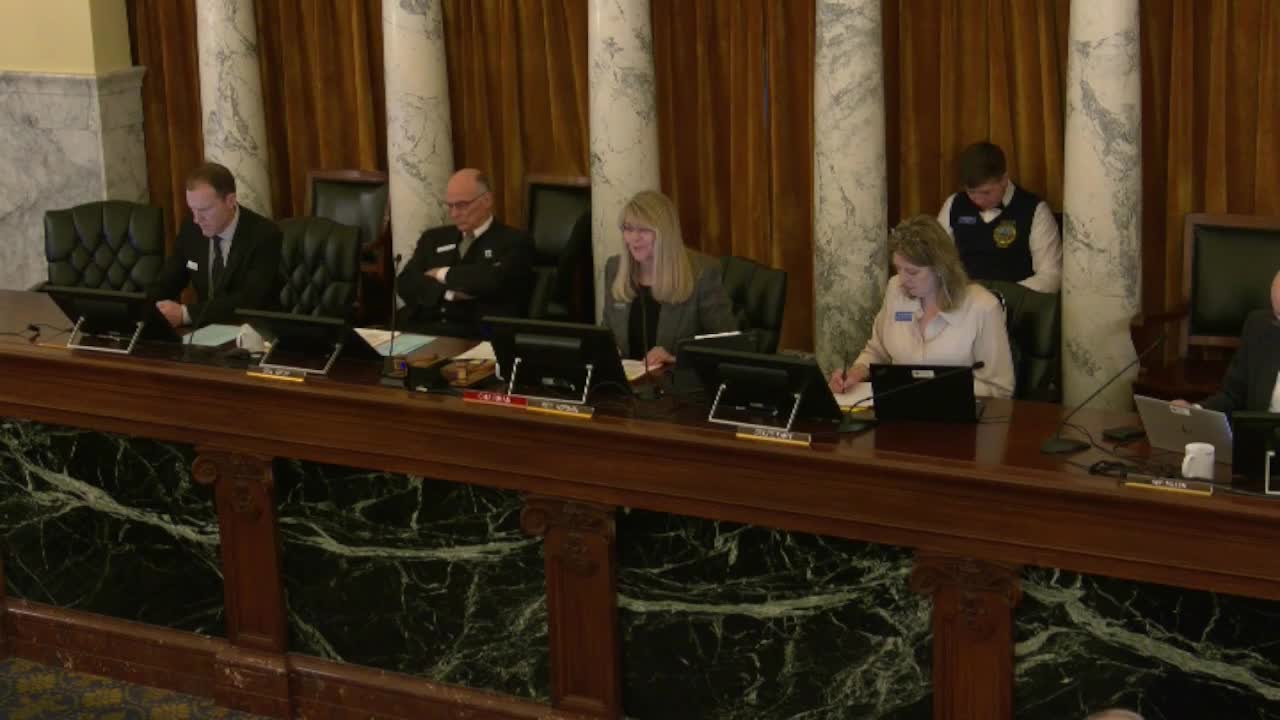
The Joint Finance-Appropriations Committee on March 12 approved enhancements to the Department of Health and Welfare's Division of Public Health Services, adding four full-time equivalent positions and a mix of general, federal and dedicated fund increases while directing staff to report back on several program transitions and cost-benefit studies.
The committee approved a substitute motion that added 4 FTE and $2,236,300 ongoing from the general fund, $2,650,000 from dedicated funds (moved largely to one-time in the substitute), and $20,196,700 from federal funds for a combined total in the motion of roughly $25.1 million. Representative Furness moved the original package; Representative Tanner offered the substitute motion and Senator Wintrow seconded the substitute. The substitute motion carried with a combined committee vote of 14 ayes, 4 nays, 2 absent/excused, and the package will carry a due-pass recommendation.
The enhancements and restorations covered a suite of programs listed in the packet: office of accreditation and planning; suicide prevention; drug overdose prevention; refugee health screening; Alzheimer's and dementia services; Fit and Fall Proof; immunization programs; communicable disease prevention; home visiting; HIV and hepatitis prevention; WIC and related block grants; and a rural physician incentive program (the governor's initiative for $500,000 ongoing was included in the discussion and motion). The immunization assessment fund request was described as $2,500,000 dedicated to expand capacity to provide free immunizations to children (up to age 18 as described in the packet). The motion also included ARPA-funded multi-year grant expenditures rolled into the restoration line.
Committee members debated whether some funds should be moved to one-time authority to allow JFAC to review program operations before committing ongoing authority. Representative Tanner and others argued moving items such as the home visiting program and immunization assessment to one-time funding in the substitute motion gives the committee an opportunity to "go back and look" at program structure; Senator Sandra Wintrow and other members cautioned that one-time designations reduce budget predictability for prevention programs that rely on consistent multi-year staffing and service delivery.
The committee also approved several sections of language that direct the department to study or report on program transitions and potential duplicative billing. Key language items approved (by unanimous consent in most cases, with a few recorded objections handled by roll call) include: - A requirement that the department notify legislative health committee chairs and JFAC co-chairs when applying or reapplying for federal grants (reintroduced language from last session). - A review of transitioning pass-through clinical service grants from the seven local public health districts to federally qualified health centers and other safety-net providers, and a directive to identify and plan to end any instances of double billing between federal grants and Medicaid. (Approved by unanimous consent.) - A directive to study steps necessary to transition the drug overdose prevention program from the Division of Public Health to the Office of Drug Policy (approved by unanimous consent). - Studies and transition plans to move the Alzheimer's disease and related dementia program and the Fit and Fall Proof program from the Division of Public Health to the Commission on Aging (each approved by unanimous consent). - A cost-benefit analysis of transitioning the 988 crisis line contract from the current vendor to Magellan Health or another qualified vendor (the request drew an objection from Senator Wintrow and was then taken up by roll call and approved). - A cost-benefit analysis of bringing the cancer data registry in-house rather than keeping it with the current contracted vendor (approved by unanimous consent).
Speakers repeatedly emphasized the public health division's role in routing federal grants to local public health districts and the importance of preserving prevention programs. "This is an overlooked budget, but it's really important to get into those local parts of our state," said Senator Wintrow during the debate. Representative Tanner explained that moving some items to one-time authority was intended to give the committee the ability to scrutinize program structure and eliminate duplication.
The committee recorded objections and formal roll calls on several language items; where a member objected, the committee either held a roll-call vote or advanced with a recorded objection followed by a vote. The committee's actions carry due-pass recommendations and will be handled through the JFAC process and subsequent appropriation bills.
The committee's action leaves program-level implementation details and any statutory changes to later policy or trailer-bill work. The Department of Health and Welfare and Legislative Services Office staff remain the lead contacts for the reporting requirements spelled out in the adopted language.