Get Full Government Meeting Transcripts, Videos, & Alerts Forever!
Get email alerts on the Workforce Development topic
No spam. Unsubscribe anytime.
College of Eastern Idaho urges funding to expand CTE capacity; cites faculty pay and industry partnerships
Summary
New CEI President Laurie Barber and Legislative Services Office staff told JFAC that CEI has grown rapidly from 700 students to about 3,600 degree‑seeking students and more than 14,000 workforce‑training participants and that CTE waitlists and facility constraints limit its ability to meet local employer demand.
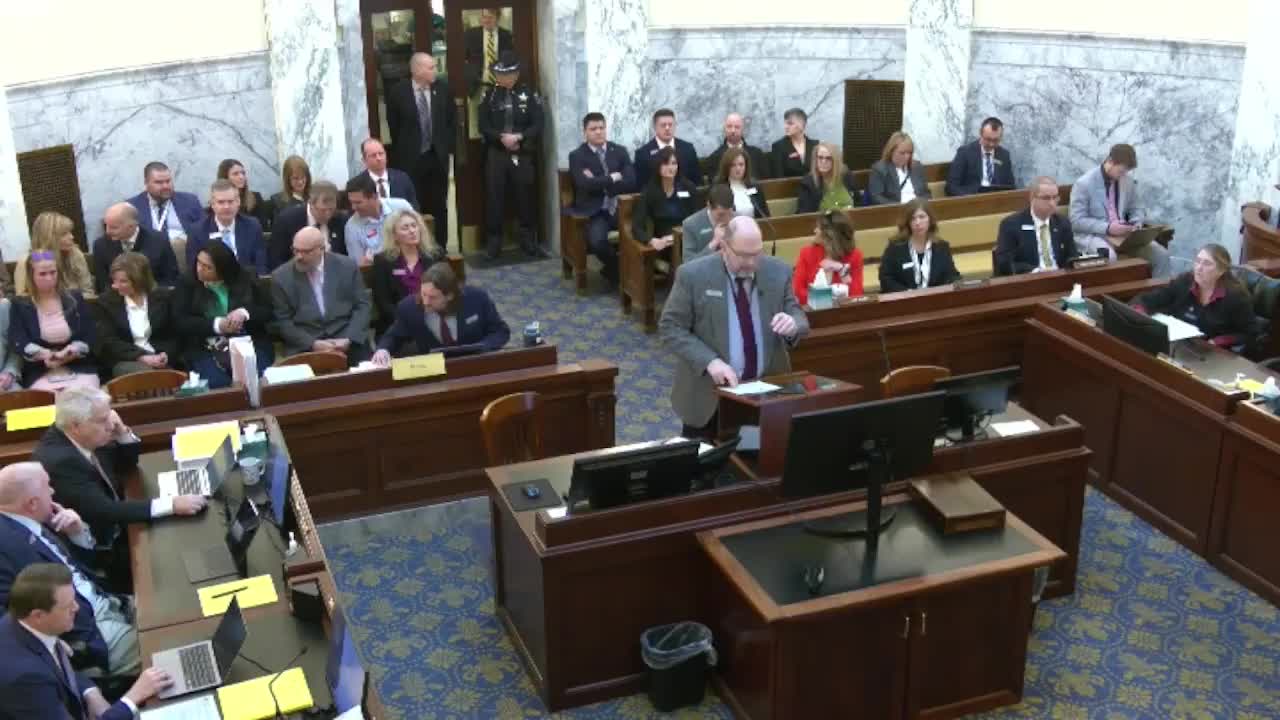
College of Eastern Idaho President Laurie Barber told the Joint Finance‑Appropriations Committee that CEI has seen sharp enrollment growth since converting from a technical college and that the college needs funding to expand career and technical education capacity, upgrade equipment and raise staff compensation.
Kevin Campbell, Legislative Services Office analyst, summarized CEI’s budget history and said the FY 2024 appropriation to CEI was $7,003,700 and that CEI typically spends all of its state appropriation. Barber told the committee CEI grew from about 700 students when it was Eastern Idaho Technical College to roughly 3,600 degree‑seeking students and more than 14,000 workforce‑training participants.
Barber said CEI is capacity constrained across faculty, facilities and equipment. She told JFAC that in fall 2024 there were roughly “465 students” who wanted space in a CTE program but could not be placed because the college lacked chairs, instructors or up‑to‑date equipment. She said the college has partnered with local employers — for example, the Idaho National Laboratory (INL) provided instructors that allowed CEI to nearly double cybersecurity enrollment, and local employers such as Teton Toyota participate in micro‑credential or apprenticeship‑style training tied to pay increases.
Barber described compensation pressures: CEI’s analysis identified 20 full‑time faculty earning below the local K‑12 average (about $62,000), and Barber said raising adjunct and full‑time faculty to that average would require about $2.26 million. She also said CEI lost staff (for example, a graphic designer) to local employers offering as much as $30,000 more.
On state funding, Barber urged support for the Legislature’s set‑aside for postsecondary CTE expansion. She said the $25 million the governor proposed for postsecondary institutions (with $10 million designated for community and technical college CTE expansions) would help CEI; Barber said “an increase in our general fund allocation from that $10,000,000 of at least $2,000,000 ongoing would be absolutely transformational.”
Barber asked the committee for ongoing funding to hire faculty (including science and math instructors who teach prerequisites for health and CTE fields), upgrade lab and training equipment and expand student support services. Committee members asked for more detail; Barber and staff said they would provide specific budget and program plans to staff analysts. No formal committee action or vote was recorded during the presentation.
Notes: Direct quotes and figures come from the transcript of the CEI presentation by Kevin Campbell and President Laurie Barber and committee questioning; specific numbers (student counts, dollar estimates) were stated in testimony and are recorded as reported.