Get Full Government Meeting Transcripts, Videos, & Alerts Forever!
Get email alerts on the Public Education Fund topic
No spam. Unsubscribe anytime.
JFAC briefed on Public Education Stabilization Fund status; gap to 15% cap remains
Summary
Legislative analysts told the Joint Finance-Appropriations Committee (JFAC) the Public Education Stabilization Fund (PSIF) holds about $250.9 million and could accept roughly $189.6 million more before reaching a 15% cap established under recent law; the presentation outlined past withdrawals, deposits and a governor-recommended transfer.
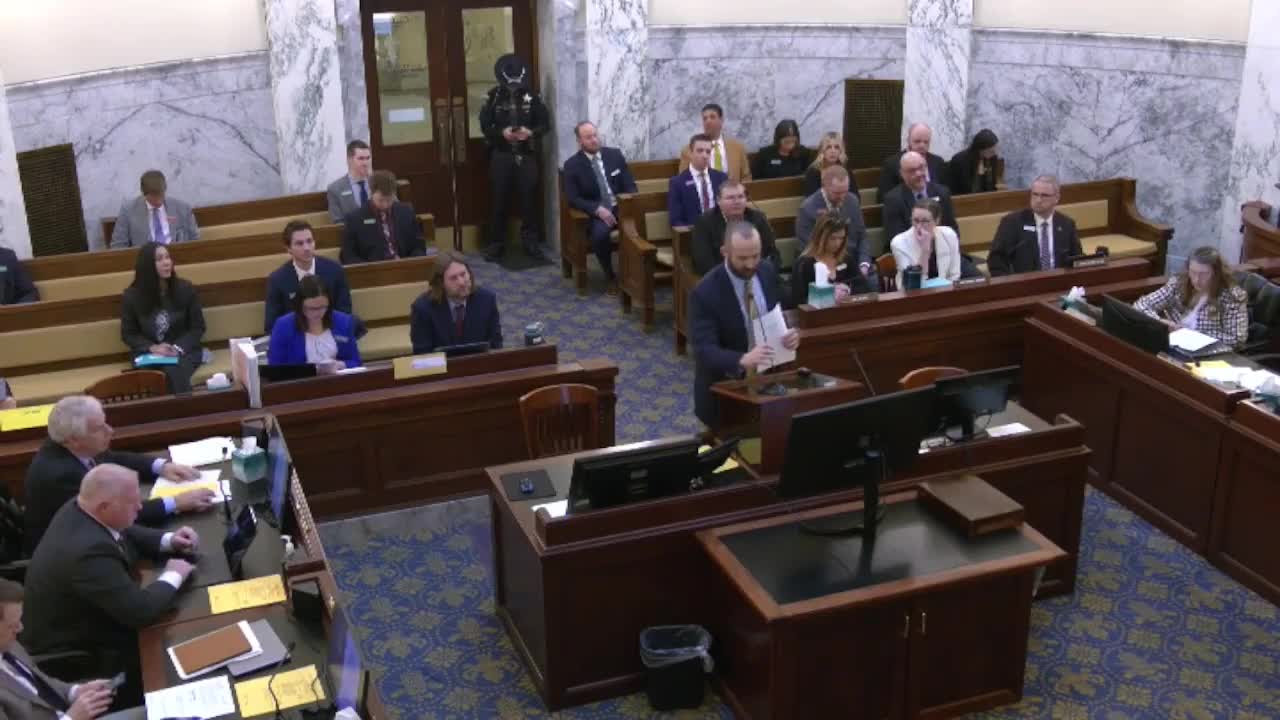
BOISE — During a Wednesday meeting of the Joint Finance-Appropriations Committee, Jared Tedrow, Deputy Division Manager in the Budget Policy Analysis Division of the Legislative Services Office, reviewed the status of the Public Education Stabilization Fund (PSIF), describing its purpose and current balance.
Tedrow told the committee PSIF “acts as a safety net for the public school support program appropriations” and that the fund receives deposits when appropriations exceed the statutory cap and supplies withdrawals when appropriations fall short of formula-driven distributions to school districts. He said the fund held a cash balance of $250,880,000 as of July 1, 2024.
The presentation noted past activity in the account: the fund experienced withdrawals from roughly 2015 through 2021 during years of rising support units and appropriations, and the legislature subsequently made deposits in later years. Tedrow said the statutory cap historically was 8.334% of state funds appropriated to public schools but was increased to 15% by House Bill 521.
At current statewide state funds of about $2.94 billion, Tedrow said 15% of that total would be $440,390,000, leaving a variance of approximately $189,600,000 before PSIF reaches the cap. He said the PSIF currently generates about $8.9 million per month in interest. Tedrow also noted the governor had recommended a $50 million transfer to the fund on July 1, 2026, and that, absent further action, an additional “rough” $35–40 million could be deposited at the end of the fiscal year based on fewer support units unappropriated.
Tedrow referenced statutory language governing the fund and its allowable sources and uses and closed by offering committee members statutory citations for further review. No formal committee action was taken during the presentation; the briefing was given to satisfy JFAC’s statutory responsibility to review PSIF and consider transfers if withdrawals have occurred.