Get Full Government Meeting Transcripts, Videos, & Alerts Forever!
Idaho Water Officials ask for 5 new FTEs and $30 million ongoing to expand recharge, meet Eastern Snake Plain obligations
Summary
Department of Water Resources and Idaho Water Resource Board described ARPA-funded projects, a roughly $320 million cash balance largely committed to projects, and requested new staff and ongoing general funds to expand water administration and recharge capacity tied to the Eastern Snake Plain settlement.
The Idaho Department of Water Resources asked the Joint Finance-Appropriations Committee for new staff and an ongoing $30 million general-fund transfer as it manages a wave of state and federal water projects.
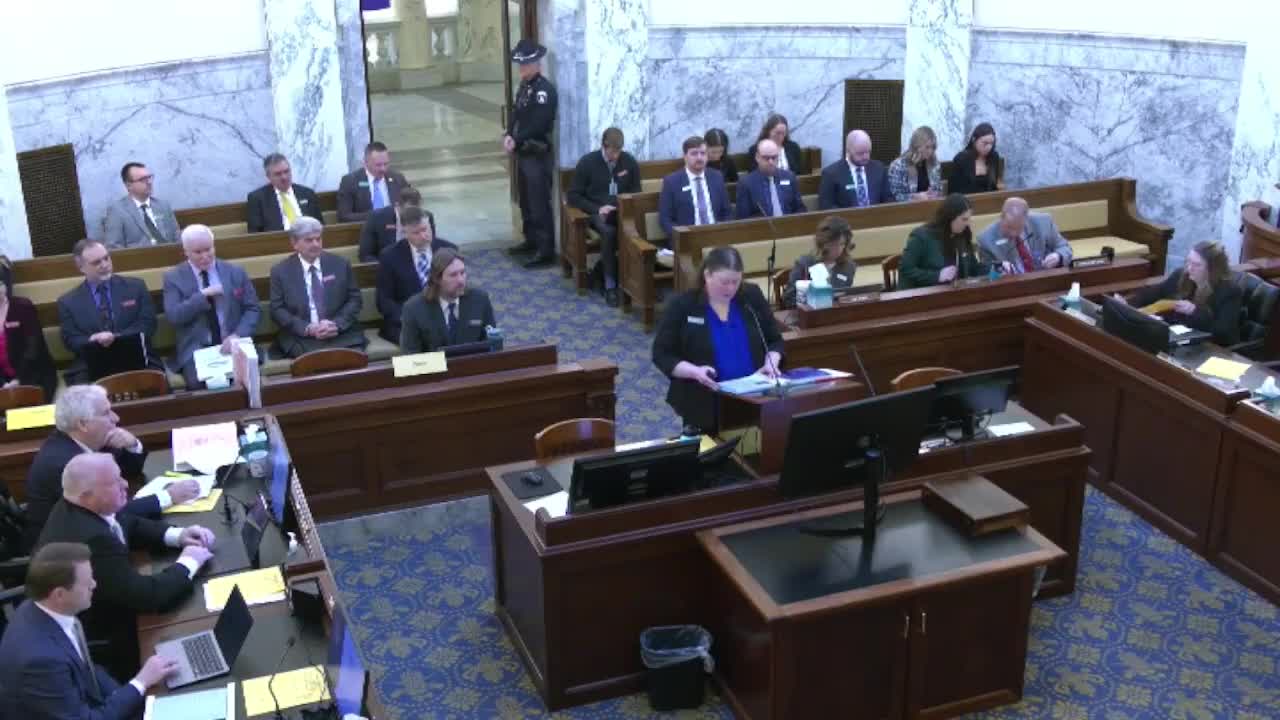
The Department’s director, Matt Weaver, and Idaho Water Resource Board Chairman Jeff Raybould told the committee March 1 that the department recently received large infusions of ARPA State Fiscal Recovery funds and other federal dollars and is carrying dozens of projects across the state. Weaver and Raybould said the agency needs additional personnel to administer growing groundwater and surface-water programs and continued funding to build recharge and other infrastructure to meet obligations under the Eastern Snake Plain aquifer settlement.
Why it matters: committee analysts and agency leaders said most of the department’s cash — roughly $320 million in the water management account as of the end of calendar 2024 — is already committed to projects. Raybould listed projects that have either received funding or are in engineering, including a Mountain Home Air Force Base supply pipeline, Anderson Ranch dam raise work, fish-hatchery pipeline work at Dworsha Dam, Bear Lake carryover/storage work, and grants and loans for canal efficiency and groundwater-to-surface-water conversions. Agency leaders said additional ongoing money and more staff will be needed to convert committed money into completed projects and to meet new administrative requirements.
Major details and context
- Staffing and administration: Director Matt Weaver asked the committee to approve 5 new full-time positions to create a Water Administration Bureau that would be paired with about 11 existing positions now in the department’s water distribution section. Weaver said the new bureau would include a bureau chief and technical-records support to manage an increasing workload around water districts, watermasters and real-time measurement requirements created by recent settlement agreements.
- Eastern Snake Plain aquifer (ESPA): Weaver and Raybould discussed an ongoing management strategy for the ESPA that combines state-sponsored recharge, private recharge, and pumping reductions. Weaver said state-sponsored recharge averaged about 268,000 acre-feet per year from 2016–2024; private (district/junior pumper) recharge averaged about 116,000 acre-feet per year; and pumping was reduced by roughly 212,000 acre-feet per year in the same period — “about 600,000 acre-feet of aquifer management activities occurred,” Weaver said. The department and board are working to increase annual recharge goals in parts of the ESPA from 250,000 to 350,000 acre-feet to help balance the aquifer.
- Fund balances and commitments: Janet Jessup, budget and policy analyst with Legislative Services, walked the committee through the agency’s fund sheets. Weaver summarized the water management account: an ending balance of about $293 million for FY 2024, roughly $38 million in revenue through December 2024, and about $11.2 million in expenditures, giving an approximate cash balance of $320 million. Raybould said roughly $290 million of that balance is committed by board resolutions, leaving roughly $29 million uncommitted.
- How projects are funded and paid: Raybould described a mix of grants, loans and direct funding. The board has used loans and regional sustainability grants; some large federal-authority projects used the Win Act cost-share approach; ARPA and other federal funds were cited as major recent inputs. Raybould said loan balances outstanding include roughly $23 million in the revolving development account and about $20 million in loans from the water management account.
- Project timing and delivery: Both Raybould and Weaver told the committee that large projects require multi-year engineering and phased disbursement; the board typically releases funds as applicants complete…
Already have an account? Log in
Subscribe to keep reading
Unlock the rest of this article — and every article on Citizen Portal.
- Unlimited articles
- AI-powered breakdowns of topics, speakers, decisions, and budgets
- Instant alerts when your location has a new meeting
- Follow topics and more locations
- 1,000 AI Insights / month, plus AI Chat