Get Full Government Meeting Transcripts, Videos, & Alerts Forever!
Get email alerts on the Water Management topic
No spam. Unsubscribe anytime.
Idaho Water Officials ask for 5 new FTEs and $30 million ongoing to expand recharge, meet Eastern Snake Plain obligations
Summary
Department of Water Resources and Idaho Water Resource Board described ARPA-funded projects, a roughly $320 million cash balance largely committed to projects, and requested new staff and ongoing general funds to expand water administration and recharge capacity tied to the Eastern Snake Plain settlement.
The Idaho Department of Water Resources asked the Joint Finance-Appropriations Committee for new staff and an ongoing $30 million general-fund transfer as it manages a wave of state and federal water projects.
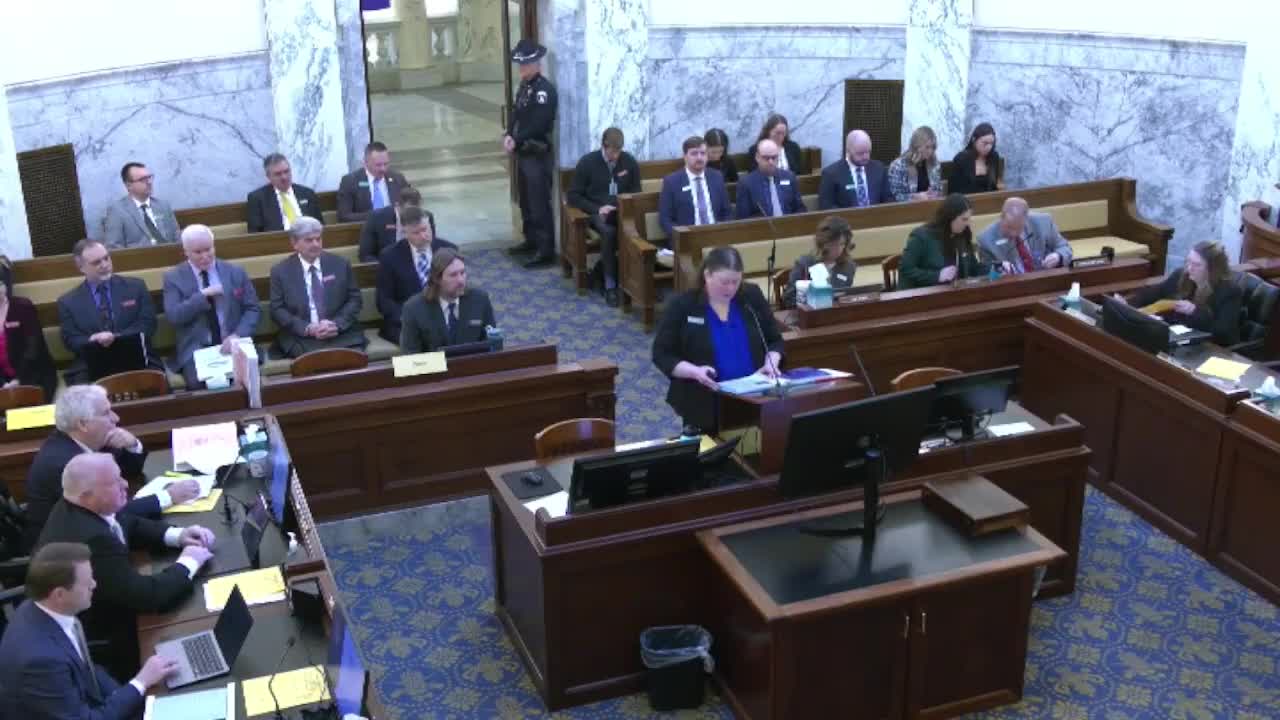
The Department’s director, Matt Weaver, and Idaho Water Resource Board Chairman Jeff Raybould told the committee March 1 that the department recently received large infusions of ARPA State Fiscal Recovery funds and other federal dollars and is carrying dozens of projects across the state. Weaver and Raybould said the agency needs additional personnel to administer growing groundwater and surface-water programs and continued funding to build recharge and other infrastructure to meet obligations under the Eastern Snake Plain aquifer settlement.
Why it matters: committee analysts and agency leaders said most of the department’s cash — roughly $320 million in the water management account as of the end of calendar 2024 — is already committed to projects. Raybould listed projects that have either received funding or are in engineering, including a Mountain Home Air Force Base supply pipeline, Anderson Ranch dam raise work, fish-hatchery pipeline work at Dworsha Dam, Bear Lake carryover/storage work, and grants and loans for canal efficiency and groundwater-to-surface-water conversions. Agency leaders said additional ongoing money and more staff will be needed to convert committed money into completed projects and to meet new administrative requirements.
Major details and context
- Staffing and administration: Director Matt Weaver asked the committee to approve 5 new full-time positions to create a Water Administration Bureau that would be paired with about 11 existing positions now in the department’s water distribution section. Weaver said the new bureau would include a bureau chief and technical-records support to manage an increasing workload around water districts, watermasters and real-time measurement requirements created by recent settlement agreements.
- Eastern Snake Plain aquifer (ESPA): Weaver and Raybould discussed an ongoing management strategy for the ESPA that combines state-sponsored recharge, private recharge, and pumping reductions. Weaver said state-sponsored recharge averaged about 268,000 acre-feet per year from 2016–2024; private (district/junior pumper) recharge averaged about 116,000 acre-feet per year; and pumping was reduced by roughly 212,000 acre-feet per year in the same period — “about 600,000 acre-feet of aquifer management activities occurred,” Weaver said. The department and board are working to increase annual recharge goals in parts of the ESPA from 250,000 to 350,000 acre-feet to help balance the aquifer.
- Fund balances and commitments: Janet Jessup, budget and policy analyst with Legislative Services, walked the committee through the agency’s fund sheets. Weaver summarized the water management account: an ending balance of about $293 million for FY 2024, roughly $38 million in revenue through December 2024, and about $11.2 million in expenditures, giving an approximate cash balance of $320 million. Raybould said roughly $290 million of that balance is committed by board resolutions, leaving roughly $29 million uncommitted.
- How projects are funded and paid: Raybould described a mix of grants, loans and direct funding. The board has used loans and regional sustainability grants; some large federal-authority projects used the Win Act cost-share approach; ARPA and other federal funds were cited as major recent inputs. Raybould said loan balances outstanding include roughly $23 million in the revolving development account and about $20 million in loans from the water management account.
- Project timing and delivery: Both Raybould and Weaver told the committee that large projects require multi-year engineering and phased disbursement; the board typically releases funds as applicants complete engineering and submit progress reports. Raybould said some projects remain in engineering for years before funds are drawn.
- Technology and operating costs: The department requested ongoing funds for license costs (ArcGIS licensing increase estimated around $58,500) and a multi-year Laserfiche form-conversion project (agency last year requested conversion funds; agency clarified one-time vs. ongoing placement). The department also requested and expects to repurpose an unfilled position to hire a public information officer.
Committee concerns and discussion
Committee members pressed the department on three recurring themes: (1) whether adding staff is an appropriate response to program growth and how to avoid uncontrolled growth in agency payroll; (2) the size and oversight of the proposed ongoing $30 million appropriation; and (3) the pace at which committed project money is being spent.
- On staffing, Representative Tanner and others questioned whether the requested 5 FTEs would be a near 50% increase in a small program and whether the committee should demand greater justification. Weaver and Raybould said the requested FTEs respond to statutory obligations — including administration of water districts and new real-time measurement requirements tied to the ESPA settlement — and that fully meeting those administrative obligations could ultimately require more positions shared between districts and the department.
- On the $30 million ongoing proposal, several legislators, including Representative Tanner and Representative Miller, said they preferred one-time allocations tied to a clear project list rather than an unspecified ongoing appropriation. Chairman Raybould defended ongoing funding, saying some activities (monitoring, operation and maintenance, and ongoing programs) will require a revenue stream rather than repeated one-time transfers.
- On spending timelines, Raybould said some major projects (for example, a pipeline to supply Mountain Home AFB) are now completing construction but others remain in multi-year engineering phases; the board disburses funds as projects advance.
Direct quotes (selected)
- Director Matt Weaver: “If this request were to be granted, I think it would give us the resources that we would be better able to meet those demands.”
- Chairman Jeff Raybould: “It’s going in lots of different places,” listing Mountain Home AFB, Anderson Ranch work, Bear Lake storage adjustments and regional projects; and later, “We want to see this stuff done yesterday.”
Actions and requests recorded
- Department request: add 5 FTE to create a Water Administration Bureau (request; no committee action recorded in transcript). - Department request: ongoing general-fund transfer of $30,000,000 to be added to the agency base for future water projects (request; no committee action recorded in transcript). - Technology/operations asks: ongoing funds for increased ArcGIS licensing (~$58,500 noted) and continued Laserfiche (one-time) conversion completion.
Discussion vs. decision
- Discussion: department and board described projects, balances, recharge goals, and administrative needs; committee members raised concerns about oversight and prioritization. - Direction/assignment: Janet Jessup said she would follow up with the committee on the board’s statewide list of identified but unfunded projects. - Decision/formal action: none recorded in the transcript for these requests; budget and appropriation decisions were not taken during this hearing segment.
Clarifying details (from the hearing)
- ARPA funds: the department received two ARPA allocations described as $50 million one-time and $50 million ongoing (per analyst presentation); those federal funds drove big FY 2023 appropriations increases. - Water management account: ending balance ~$293 million (FY 2024), ~$38 million revenue through Dec. 2024, ~$11.2 million expenditures; committed funds ~$290 million; uncommitted ~$29 million. - Loans: about $23 million in the revolving development account and about $20 million from the water management account were reported outstanding in loans. - Recharge numbers: state-sponsored recharge averaged ~268,000 acre-feet/year (2016–2024); private recharge ~116,000 acre-feet/year; pumping reductions ~212,000 acre-feet/year; combined ~600,000 acre-feet of management activity. - Proposed administrative requirement: by April 1 (one year after the settlement), the department expects to measure and report in real time 5,000–6,000 wells on the Eastern Snake Plain; Weaver said doing all measurement and reporting at the department alone would require 12–15 FTEs but the burden will be shared.
Proper names
[{"name":"Idaho Department of Water Resources","type":"agency"},{"name":"Idaho Water Resource Board","type":"agency"},{"name":"Matt Weaver","type":"person"},{"name":"Jeff Raybould","type":"person"},{"name":"Janet Jessup","type":"person"},{"name":"Mountain Home Air Force Base","type":"location"},{"name":"Anderson Ranch","type":"location"},{"name":"Bear Lake","type":"location"},{"name":"Eastern Snake Plain Aquifer","type":"other"},{"name":"Win Act","type":"other"}]
Community relevance
- Geographies affected: Eastern Snake Plain, Treasure Valley, Bear Lake, Dworsha Dam region, Palouse Basin (Moscow/Pullman area). - Impact groups: irrigation districts and canal companies, groundwater users, municipal water suppliers, federal facilities (Mountain Home AFB). - Funding sources referenced: ARPA State Fiscal Recovery funds, state general fund, loans and grants from the water management account, Bureau of Reclamation participation.
Meeting context
- Engagement: detailed questioning by multiple legislators (Senators and Representatives) and extended responses from director and board chairman; roughly an hour of discussion on water before moving to the next agency. - Implementation risk: medium — many projects require multi-year engineering, interagency coordination, and local project proponents to complete steps before funds are released. - History: agency is executing multi-year projects funded by ARPA and other sources; the ESPA settlement reached the prior fall was a recurring reference point.
Searchable_tags:["water","recharge","Eastern Snake Plain","ARPA","water management fund","Idaho Department of Water Resources","water districts","laserfiche","ArcGIS"],
provenance:{"transcript_segments":[{"block_id":"s_65.03","local_start":0,"local_end":115,"evidence_excerpt":"On this morning, first, budget session of March, we'll be starting off with the Department of Water Resources. This presentation in its entirety is available on your SharePoint and we're gonna begin beginning on LBB page four-fifty 9.","tc_start":"00:01:05.03","tc_end":"00:01:51.94","reason_code":"topicintro"},{"block_id":"s_3796.945","local_start":0,"local_end":46,"evidence_excerpt":"Thanks for coming. Let's move ahead now to, Miss Jessup again, please.","tc_start":"01:03:16.945","tc_end":"01:03:22.405","reason_code":"topicfinish"}]},
salience:{"overall":0.78,"overall_justification":"Large state funding, ARPA inflows, and a high-impact regional resource (Eastern Snake Plain aquifer) make this session significant to Idaho water policy and budgets.","impact_scope":"state","impact_scope_justification":"Projects and administrative changes will affect multiple basins across Idaho, including major population centers and federal facilities.","attention_level":"high","attention_level_justification":"Funding requests and long-term aquifer management are ongoing legislative priorities.","novelty":0.45,"novelty_justification":"Discussion updated prior settlement actions and ARPA allocations but did not introduce a novel legal mechanism.","timeliness_urgency":0.80,"timeliness_urgency_justification":"Appropriation timing and settlement deadlines require near-term legislative decisions.","legal_significance":0.50,"legal_significance_justification":"Matters touch on statutory administration of water rights and commitments under recent settlement agreements.","budgetary_significance":0.85,"budgetary_significance_justification":"Large fund balances and a $30 million ongoing request have notable budget implications.","public_safety_risk":0.10,"public_safety_risk_justification":"Most items concern resource management, not immediate public-safety threats.","environmental_impact":0.60,"environmental_impact_justification":"Recharge and storage projects affect hydrology and aquatic habitats.","affected_population_estimate":500000,"affected_population_estimate_justification":"Projects and policies impact broad agricultural and municipal users across multiple basins; estimate reflects regional population potentially influenced.","affected_population_confidence":0.6,"affected_population_confidence_justification":"Estimate is broad and derived from basin populations rather than a precise accounting.","budget_total_usd":320000000.0,"budget_total_usd_justification":"Approximate cash balance in water management account (FY 2024) cited during the hearing.","decision_deadline":"not specified","decision_deadline_justification":"Committee discussion but no formal vote or deadline recorded in the transcript.","policy_stage":"proposal","policy_stage_justification":"Agency presented budget requests and enhancements; legislative decisions pending.","follow_up_priority":9,"follow_up_priority_justification":"High fiscal and operational consequences warrant legislative follow-up and project list review.","fact_check_risk":0.15,"fact_check_risk_justification":"Most numbers were provided by agency staff; some figures (loan totals) were given as estimates.","uncertainty":0.25,"uncertainty_justification":"Several items (project costs, timelines) are described as estimates or in-progress engineering.","source_diversity":0.65,"source_diversity_justification":"Discussion included agency staff, board chairman, and multiple legislators.","stakeholder_balance":0.60,"stakeholder_balance_justification":"Conversation included state officials and legislative oversight; local project proponents referenced but not present.","alert_flags":["large_budget","decision_deadline_soon"]},
engagement_forecast:{"newsworthiness":{"national":0.05,"regional":0.35,"local":0.85,"justification":"Primarily of local/state interest with regional significance for air force base and interstate basin issues."},"notify_recommendation":{"audience":"state","reason":"High budgetary and operational significance within Idaho and potential impacts to major basins and federal facilities.","audience_regions":["US-ID"]},"notify_thresholds":{"local_min":0.3,"regional_min":0.6,"national_min":0.8},"predicted_interest":{"national":0.05,"regional":0.30,"local":0.80,"justification":"Local water users and Idaho media are the likeliest audience."},"predicted_click_through":0.22,"predicted_click_through_justification":"Specialized policy coverage with moderate public interest.","predicted_read_time_minutes":6.5,"predicted_read_time_minutes_justification":"Technical material and multiple budget figures encourage a longer read.","predicted_shares":45,"predicted_shares_justification":"Likely to be shared among stakeholder groups and local outlets."},
graph_signals:{"jurisdictions":["US-ID"],"jurisdictions_justification":"State agencies and state budget committee considered.","ontology_topics":["water_supply","infrastructure","budget"],"ontology_topics_justification":"Topics described in the hearing.","entities":[{"id":"idaho-dwr","name":"Idaho Department of Water Resources","type":"agency"},{"id":"idaho-wrb","name":"Idaho Water Resource Board","type":"agency"}],"entities_justification":"Primary presenters and subjects of the hearing."}
},{