
Joint finance committee hears overview of public school support budget; fewer "support units," end of federal COVID funds cited as drivers
Get AI-powered insights, summaries, and transcripts
Sign Up Free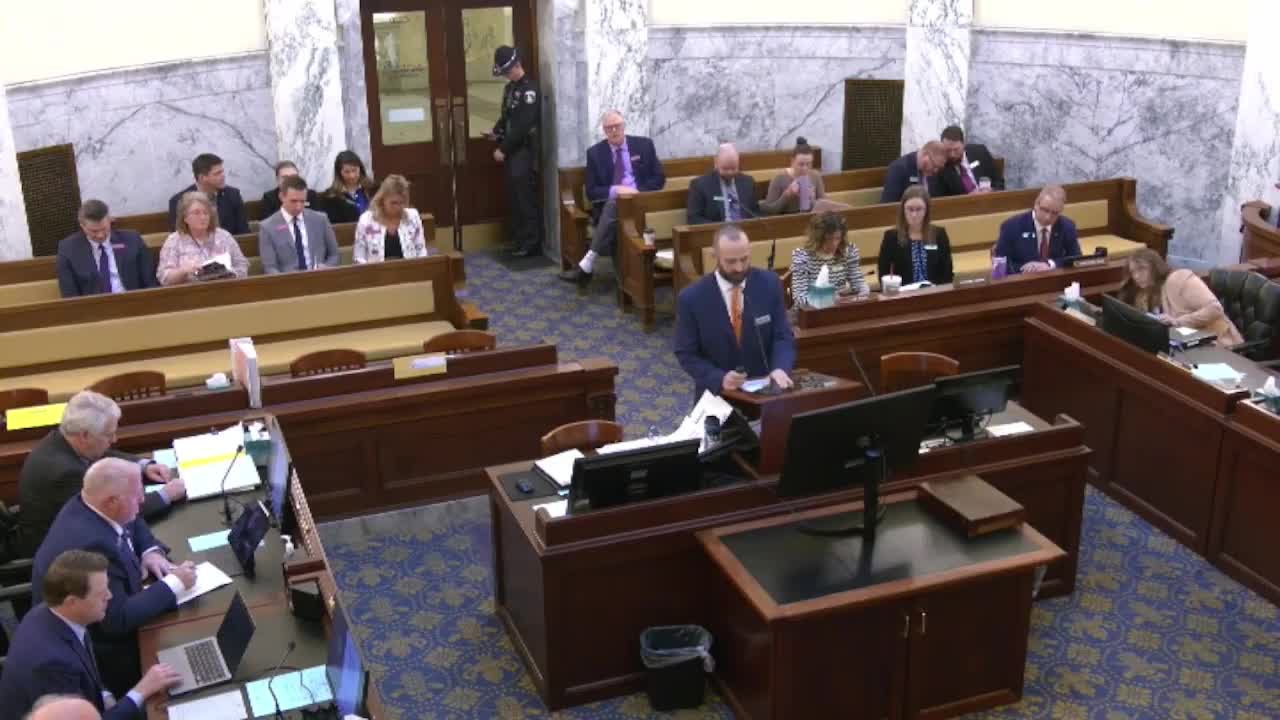
Summary
The Joint Finance‑Appropriations Committee heard an overview of Idaho’s public school support budget on March 4, with Legislative Services Office analyst Jared Tetrault and State Superintendent Debbie Critchfield identifying fewer state “support units,” changes to attendance counting and the end of federal COVID relief as primary drivers of year‑to‑year funding changes.
Jared Tetrault, deputy division manager with the Legislative Services Office’s Budget and Policy Analysis Division, and State Superintendent Debbie Critchfield told the Joint Finance‑Appropriations Committee on March 4 that Idaho’s public school support appropriation is being shaped by fewer state funding “support units,” shifts from enrollment to attendance in state counting, changes to career‑ladder calculations and recent reductions in federal COVID relief money.
Tetrault described the public school support program as the state’s funding mechanism for roughly 115 local school districts and about 75 charter schools and said the program operates under the state constitution and Idaho Code Title 33. He summarized the program into divisions that include teachers, student support (a new division), facilities, central services and specialty programs such as the Idaho Digital Learning Academy and services for the deaf and blind.
Why it matters: support units drive most state K‑12 distributions. Tetrault said a support unit funds 1.55 full‑time equivalent positions for staffing allocation purposes and that the state’s per‑support‑unit allocation is roughly $147,000. He told committee members that an estimated drop of about 200 support units next year reduces required appropriations even where enrollment is flat because Idaho now uses average daily attendance (state law) rather than raw enrollment to determine unit counts.
Committee members heard that the state general fund portion of public school support is roughly $2.7 billion in the current year, with about $277 million in dedicated funds and roughly $260.6 million in federal funds. Tetrault said roughly $99.9 million represented the last of COVID/ARPA federal dollars in the public schools budget. He summarized recent legislative actions that reshaped funding: a 1 percent maintenance CEC (change in employee compensation), a later 2 percent additional CEC for certain staff, and other targeted enhancements. He also noted that last year the committee repurposed approximately $105 million that otherwise could have gone to the Public Education Stabilization Fund (PSIF) and instead distributed it to districts as discretionary funding.
On facilities, Tetrault and others described the school district facilities fund created by House Bill 292 (2024) and the separate one‑time billion‑dollar distribution in House Bill 521. Those facility allocations go to districts on a per‑student basis and may be used to pay existing bonds, levies or for maintenance and construction depending on local circumstances.
Policy and pending bills: Tetrault outlined several items the committee could act on if corresponding legislation is approved: a weighted student funding formula; a pupil transportation funding formula (the transportation bill was held for a later hearing); and a special needs student fund (with a hearing scheduled in House Education). He said some central services requests — a statewide student transportation routing software, professional learning communities, an Idaho Reading Indicator replacement and a data dashboard/report card — would require separate approvals.
Transportation routing software was presented as optional statewide contracting the Department of Education could make available to districts that lack cost‑effective routing tools. Superintendent Critchfield and department staff told the committee that many small districts cannot afford commercial routing systems and that better routing could improve accuracy of reported miles and ridership, potentially saving state dollars; the department had not released an RFP and said such procurement would be contingent on legislative action and appropriation.
Professional development and literacy: the committee heard a proposal that would move some current state professional development dollars into discretionary funds so districts have local control over how they use them. The superintendent said a related legislative proposal would fund statewide literacy coaches for K‑3 phonics and that federal funds also support local professional development in many districts.
Federal COVID dollars: Superintendent Critchfield said about 80 percent of districts used some federal ESSER/ARPA funds for personnel or salaries and that the Department of Education notified districts in 2023 that the period of use for those funds was ending. She said the state did not seek authorization to extend ESSER spending timelines and discouraged districts from planning ongoing personnel expenses that depended on one‑time federal dollars. "I did not do that. I sent a letter back saying we would not extend the period, for usage of those dollars," she told the committee about a federal request for extension.
Other budget details presented to the committee included an endowment fund shift request ($5.2 million) and a proposed increase in Idaho Digital Learning Academy funding tied to enrollment. Tetrault noted the committee will consider whether to continue funding the school district facilities fund as a line‑item appropriation or leave it as a continuous appropriation if House Bill 374 is enacted.
What’s next: committee members asked for more district‑level detail (facility distributions, use plans, and counts of employees covered by state health insurance vs. local plans). Tetrault and department staff agreed to provide additional breakdowns and referenced forthcoming hearings for the bills that would change funding formulas.
Ending: the committee did not vote on any items during the presentation. Members indicated they would review the detailed district distributions and pending bills and return for subsequent hearings on the weighted student funding, transportation formula and special needs fund.