Get Full Government Meeting Transcripts, Videos, & Alerts Forever!
Get email alerts on the Higher Education Finance topic
No spam. Unsubscribe anytime.
College of Western Idaho reports rapid enrollment growth, cites capacity and funding limits
Summary
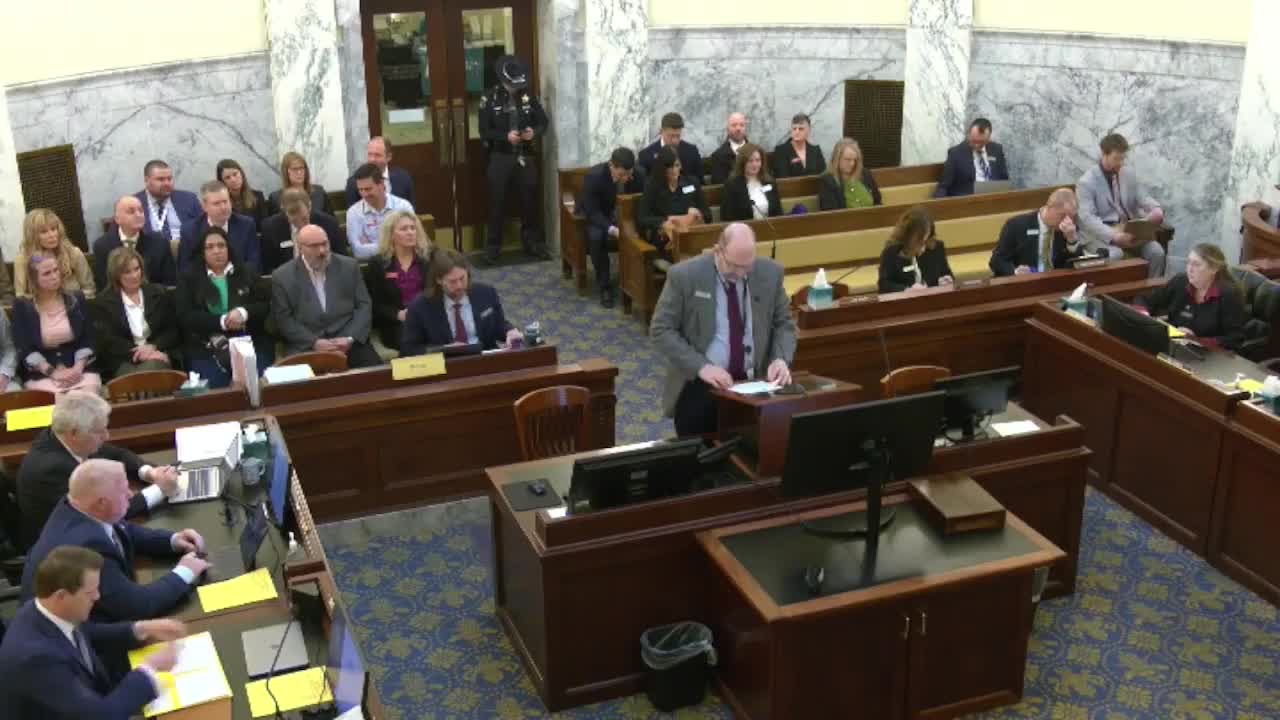
College of Western Idaho President Gordon Jones and Legislative Services Office analyst Kevin Campbell told the Joint Finance‑Appropriations Committee that CWI’s enrollment has surged and the college faces facility, faculty and support‑service bottlenecks.
College of Western Idaho President Gordon Jones and Legislative Services Office analyst Kevin Campbell told the Joint Finance‑Appropriations Committee that CWI has experienced rapid growth and is constrained by facilities, instructor ratios and student support capacity.
Jones said the college’s academic enrollment rose about 13% this year and that CWI serves “nearly 22,000 for‑credit students and more than 30,000 students” in the 2023–24 academic year. Kevin Campbell told the committee the FY 2024 state appropriation to CWI was $20,816,700 and that the college “typically spends 100% of its state appropriation.”
The college described three principal capacity constraints: facility space, limits tied to accreditation or program ratios (for example, clinical nursing ratios), and support services such as academic advising. Jones told the committee he had “almost a hundred people on our nursing waiting list” and “1,000 students total on wait lists across all of our programs,” with the largest demand in nursing, automotive technology, welding, cybersecurity and agricultural sciences.
Why this matters: Committee members pressed for detail about how state formulae and caps affect community college funding. Jones and Campbell explained the enrollment workload adjustment (EWA) mechanism and how a State Board 3% cap reduced the EWA amount CWI could receive this year. Jones said the formula would have produced roughly $493,000 for CWI but the cap produced the $265,000 figure shown in the college’s request.
Committee members also questioned CWI about how enhancement and EWA funds are used. Campbell summarized recent enhancements: FY 2024 enhancements included $1.1 million for expanded nursing capacity, STEM student capacity, outreach and compensation equity (CEC). For FY 2026 CWI requested $265,000 ongoing in the enrollment workload adjustment; Campbell said FY 2025 included $476,900 in ongoing enhancements and a one‑time $50,000 allocation for peace officer standards and training.
On salaries and affordability, Jones said most two‑year programs at CWI cost no more than $10,000 and that tuition has remained comparatively low. He also said CWI faculty hold graduate or terminal degrees but earn “somewhere between $10,000 and $20,000” less than comparable four‑year faculty and that community college faculty typically teach five classes per semester versus two or three at many universities. Jones described academic advisors as essential “primary care physicians of higher ed” who help students persist.
Several committee members asked for follow‑up detail. Co‑Chair Grow asked CWI to provide a breakdown of the three constraint categories (facility, faculty, support services). Representative Petzke and others requested a clearer, institution‑by‑institution accounting of how the EWA cap and formula produced differing EWA amounts across community colleges.
The presenters did not request or record any formal committee action or vote during the CWI presentation. The committee moved to the next agenda item after concluding questions and hearing brief concluding remarks from Jones.
Notes: All direct quotes and numerical figures in this article are drawn from the committee transcript of the presentation by Kevin Campbell (Legislative Services Office) and remarks by College of Western Idaho President Gordon Jones, as indicated in the provenance.