Get Full Government Meeting Transcripts, Videos, & Alerts Forever!
Get email alerts on the Family Life Curriculum topic
No spam. Unsubscribe anytime.
Panel advances controversial ‘success sequence’ curriculum proposal after extended debate
Summary
House Bill 178, which would add the so-called 'success sequence' (education → employment → marriage → children) to family-life instruction, advanced amid heated debate and a 15–4 committee vote of approval.
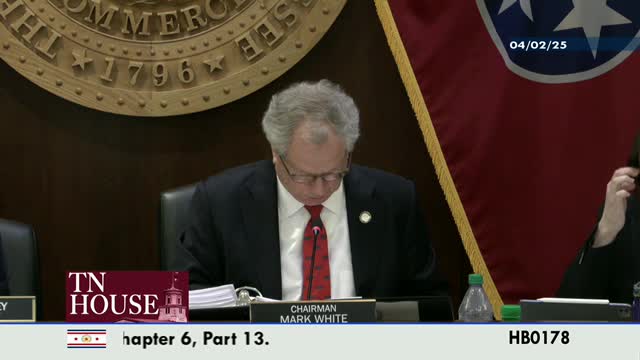
House Bill 178, an effort to add the “success sequence” to Tennessee’s family-life curriculum, generated some of the committee’s most sustained debate before the committee voted to advance the bill to Calendar and Rules.
Representative Ben Boso, sponsor of HB 178, described the measure as a data-driven, poverty-avoidance teaching module based on federal analyses and other studies. "This is a bill that seeks to add a requirement to our family life curriculum," Boso said, and his presentation cited a Department of Health and Human Services analysis showing high poverty-avoidance rates among people who follow the sequence the report identifies.
Opponents said the proposal risks stigmatizing students who come from non-nuclear families and that it oversimplifies the complex factors that contribute to economic mobility. Representative McKenzie said the bill "forces" a single narrative and could shame students raised by grandparents or other family arrangements. Representative Johnson and others urged instruction emphasizing resilience, grit and multiple pathways to success.
Why it matters: The measure would change what is taught in family-life classes across Tennessee, touching on values, social science and guidance content. Because family-life curricula reach students in K–12 settings, additions to the standards can shape classroom conversations and parent-school interactions.
What happened in committee: After extensive back-and-forth between sponsors and critics, committee members voted to move the bill to Calendar and Rules; clerk summary recorded 15 ayes and 4 nays. An amendment delaying the effective date to the 2026–27 school year appeared on the committee calendar earlier in the discussion (amendment 4415); sponsors discussed the bill’s reliance on federal reports and research.
Representative Boso said the content would be factual and data-based: "This bill...is simply going to be taking data that our federal Department of Health and Human Services has put together that shows how to avoid poverty." Detractors said data do not justify presenting a single prescriptive pathway to adolescents in a classroom.
Provenance: sponsor presentation begins at s=4781.12; extended debate recorded throughout the transcript; final tally at s=5822.7.