Get Full Government Meeting Transcripts, Videos, & Alerts Forever!
Get email alerts on the Insurance Regulation Wildfire topic
No spam. Unsubscribe anytime.
Idaho Department of Insurance seeks staff increases, warns of wildfire insurance stress; PBM enforcement ongoing
Summary
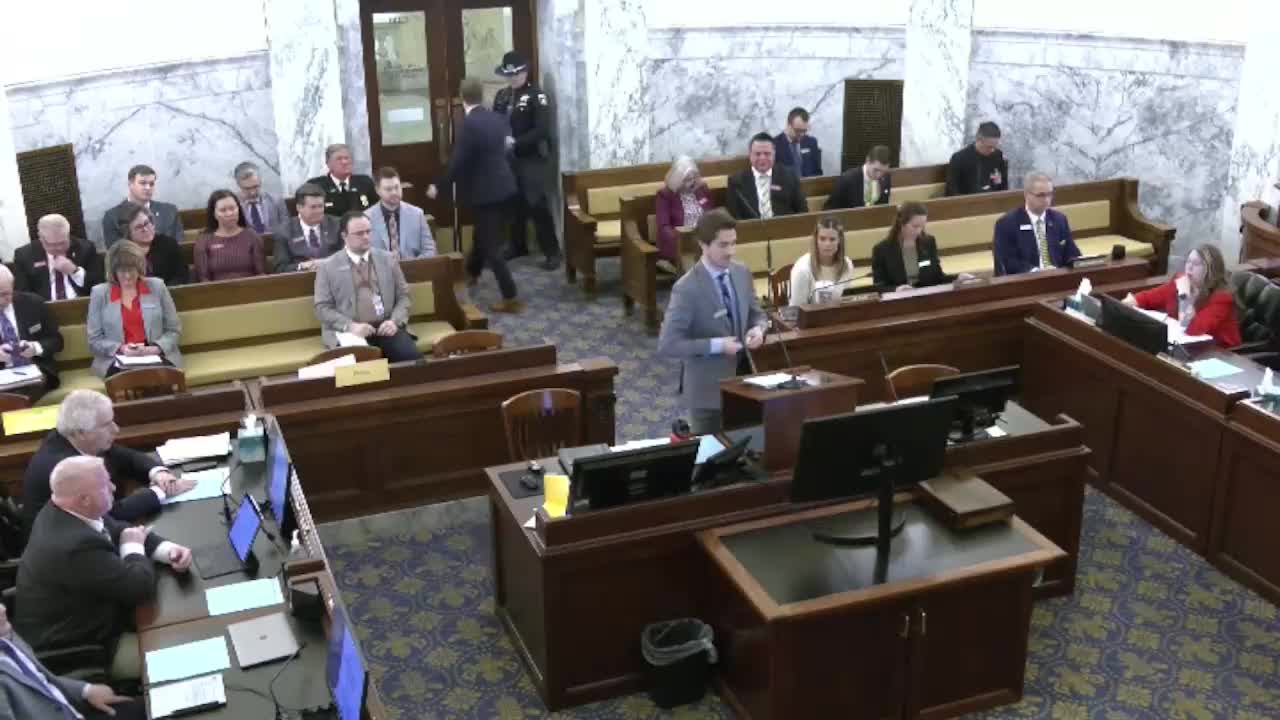
The Idaho Department of Insurance presented its 2026 budget requests to the Joint Finance‑Appropriations Committee on Jan. 21, proposing a staff actuary, a regulatory compliance specialist, compensation increases for the state fire marshal staff, and one‑time capital outlay for replacement equipment and vehicles.
The Idaho Department of Insurance presented its 2026 budget requests to the Joint Finance‑Appropriations Committee on Jan. 21, proposing a staff actuary, a regulatory compliance specialist, compensation increases for the state fire marshal staff, and one‑time capital outlay for replacement equipment and vehicles.
Director Dean Cameron said the agency is collecting data under last year’s PBM (pharmacy benefit manager) reform and has received numerous complaints; the department added one staff member to handle PBM work but said the workload is substantial. "She's receiving numerous complaints. I can't tell you the exact number right now," Cameron said, adding the department is still collecting required data submissions from PBMs and will provide a fuller report as it assembles the information.
Why it matters: the department oversees insurance company solvency, premium filings and consumer complaints. Cameron warned that nationwide wildfire claims, inflation and tightening reinsurance markets have tightened property insurance availability and driven some carriers to restrict or withdraw coverage in parts of Idaho. He described draft legislation to create a pool that would help homeowners harden properties against wildfire and provide a risk‑mitigation mechanism for carriers.
Key budget items presented by analyst Noah Peterson included a request for 1 FTP and $201,900 from the insurance administrative fund for a staff actuary (95% of policy for salary grade R) and a regulatory compliance specialist at a reduced salary assumption (80% of policy for pay grade O). The department also requested an ongoing $48,100 increase from the Arson, Fire and Fraud Prevention Fund to raise compensation for the state fire marshal and deputies and $162,200 in one‑time capital outlay for replacement equipment including $10,000 for turnout gear, $16,200 for cameras and $136,000 for two medium‑duty pickup trucks with canopies and bed slides.
Cameron outlined how Idaho’s high‑risk reinsurance pool and a federal Section 1332 waiver helped expand the individual market and lower age‑to‑age premiums. "We instituted that 3 years ago … We have doubled the number of carriers participating on the health insurance exchange," he said, describing the high‑risk pool as a disease‑specific reinsurance mechanism that spreads expensive claims and helps hold rates down.
On wildfire and property insurance, Cameron said Idaho has seen growth in the surplus‑lines market and in nonrenewals in certain areas, which he linked to national catastrophe losses and higher reinsurance costs. "We had a homeowner call us a couple weeks ago from Pocatello … whose insurance company decided not to renew them. When asked the insurance company said it's because of wildfires in the region," Cameron said, noting the company’s decision did not align with local fire activity. He said the department will propose legislation to help homeowners harden properties and to provide a mechanism to help carriers manage risk.
On PBMs, Cameron said implementation of last year’s reform (enacted as House Bill 596 and codified in Idaho Code, including reporting requirements in Section 41‑349) required PBMs to submit data in a specified format and the department has received most but not all required submissions. The agency was appropriated 1 FTP and $132,400 as a trailer appropriation to implement HB 596. Cameron said the complaints range from dispensing‑fee disputes to contractual and responsiveness issues and that the department will provide a detailed breakdown as the work progresses.
Background: the Department of Insurance has 75.5 approved full‑time positions; for fiscal 2024 the agency reverted just under $2.2 million of its appropriation split between personnel and operating expenditures. Premium tax collections are redistributed by statute to the insurance administrative fund, the arson/fire/fraud prevention fund, the firemen’s retirement fund and the high‑risk reinsurance pool, with net distributions to the general fund after statutory allocations.
Next steps: Cameron said the department will continue collecting PBM data and expects to provide a fuller progress report to the committee. He also said the agency plans to advance legislation to address wildfire risk mitigation and market stability for homeowners insurance.
Ending: No formal committee action was taken Jan. 21. Lawmakers asked the Department of Insurance for follow‑up data on PBM complaints, premium impacts and details on the proposed homeowner mitigation pool.