Get Full Government Meeting Transcripts, Videos, & Alerts Forever!
Get email alerts on the Health And Welfare Appointment topic
No spam. Unsubscribe anytime.
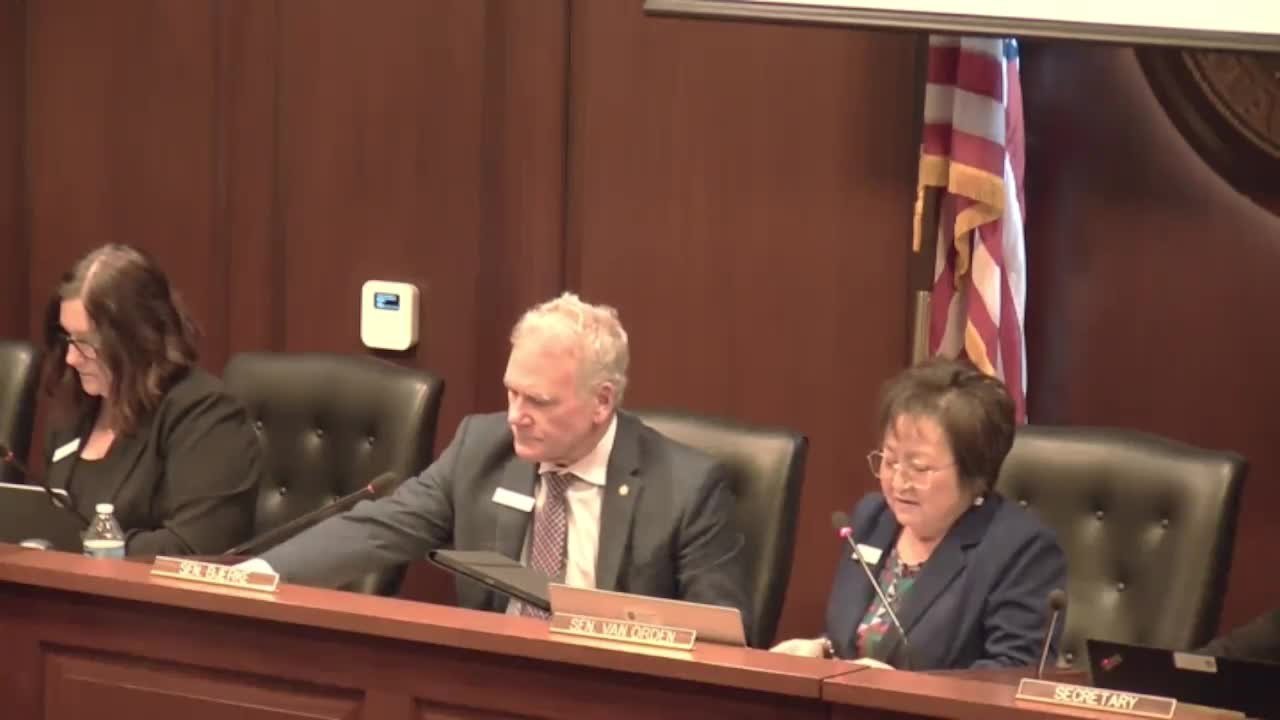
Idaho health director nominee Alex Adams outlines statutory cuts, integrity office and child-welfare focus at confirmation hearing
Summary
Alex Adams, the governor's nominee to lead the Idaho Department of Health and Welfare, told the Senate Health and Welfare Committee that since taking the helm in June he has focused the agency on fewer priorities, tighter financial controls and a concentrated effort to improve outcomes for children in foster care.
Alex Adams, the governor’s nominee to lead the Idaho Department of Health and Welfare, told the Senate Health and Welfare Committee that since taking the helm in June he has focused the agency on fewer priorities, tighter financial controls and a concentrated effort to improve outcomes for children in foster care. The committee did not vote on the appointment; members said a vote is expected at a subsequent meeting.
Adams said he has been trimming the department’s obligations and internal regulations and has reorganized leadership to place finance and program integrity closer to the director’s office. “Less is more—results, not intentions,” he told senators, saying his leadership team is pursuing “quality over quantity” and is “laser focused on child welfare.”
The director told the committee the department employs about 3,000 people, occupies 74 buildings in 37 locations and manages a broad portfolio that includes hospitals, Medicaid, food assistance and child-welfare services. He said he has removed about 2,300 pages of internal regulations and plans legislation to eliminate roughly 150 statutory sections he described as “zombie” programs. He also said the department will cut about 200 pages of regulations this year.
Adams described administrative changes intended to reduce the risk of improper spending and improve oversight. He said he implemented a new internal approval workflow—“1 Department”—requiring sign-off by the division administrator, the deputy director overseeing a program and the director before an agency seeks federal grants, sponsorships, procurement actions or rule changes. He also said he moved the chief financial officer to report directly to him to provide earlier fiscal warnings and hired staff for a newly created Office of Program Integrity (OPI); job postings had recently closed, he said.
Senators raised past financial-control issues. Senator Lenny detailed several prior problems reported to the committee and asked what Adams would do to prevent recurrence, citing (1) the community partners grant that auditors found included ineligible expenses and oversight gaps; (2) duplicate welfare payments reported in November 2023 totaling about $32 million; (3) an audit showing $2.5 million misallocated from welfare programs to salaries; and (4) an internal investigation from June 2023 that flagged potential reimbursements for harm-reduction materials.
Adams said the department is executing a corrective-action plan on the community partners grant that includes updated conflict-of-interest disclosure rules, federal-grants training for staff and a transparency team to handle public-records requests. He said the OPI will provide “boots on the ground” to surface issues earlier and that transparency is a central tenet of his approach. “The budget is a law, not a suggestion,” Adams said, noting about 64% of the agency’s budget comes from federal sources but that the department must follow state law.
On child welfare, Adams said the leadership team set a measurable target: to roughly double the rate of foster families relative to the number of children entering care. He reported progress from a ratio of about 0.74 families per 100 children to 0.94 families per 100 children and said the department has completed more than 160 adoption consents since he started. To ease burdens on foster parents and caseworkers, the department has proposed reduced regulatory red tape, a 24/7 call center for foster families and budget requests to lower caseloads.
Senator Wintrow applauded the child-welfare emphasis but pressed Adams on stakeholder input and services for people with intellectual and developmental disabilities, a population she and other senators said remains vulnerable. Adams said that narrowing the department’s top priority does not mean other programs will be neglected and that developmental-disabilities services are part of the agency’s budget and planning work. He said he wanted to finish the child-welfare work before shifting focus to the “next big thing.”
Several lawmakers, including Senator Shippey, who identified himself as a licensed foster parent and adopter, praised the department’s adoption efforts and the shift in emphasis. Committee members thanked Adams for bringing family to the hearing; his daughter Emerson and his wife were in the gallery.
The committee did not take a vote on Adams’s gubernatorial appointment during the session. The chair said as with other gubernatorial appointments the committee will vote on the nominee at a later meeting, likely the next day.
What was discussed versus decided: The hearing was a confirmation-style presentation and question-and-answer session; no formal committee action or vote occurred. Adams described both completed steps (organizational changes, regulatory pruning, adoption fee waivers, creating the OPI and moving the CFO) and proposed legislation he said the department would bring forward to eliminate outdated statutory language. Several senators pressed for details and affirmed continued legislative oversight.
Looking ahead, Adams said the department will present rule changes and statutory clean-up in coming weeks and will appear before committees for rule review and budget oversight. Senators indicated they would review those materials in the committee’s rule-review session scheduled the following day.
(Reporting note: This account reflects statements made at the committee meeting; instances described as planned or proposed in the hearing—such as pending legislation, the OPI hires and the timing of rule changes—are actions described by Adams and have not yet been enacted.)