Get Full Government Meeting Transcripts, Videos, & Alerts Forever!
Get email alerts on the Personnel Benefits topic
No spam. Unsubscribe anytime.
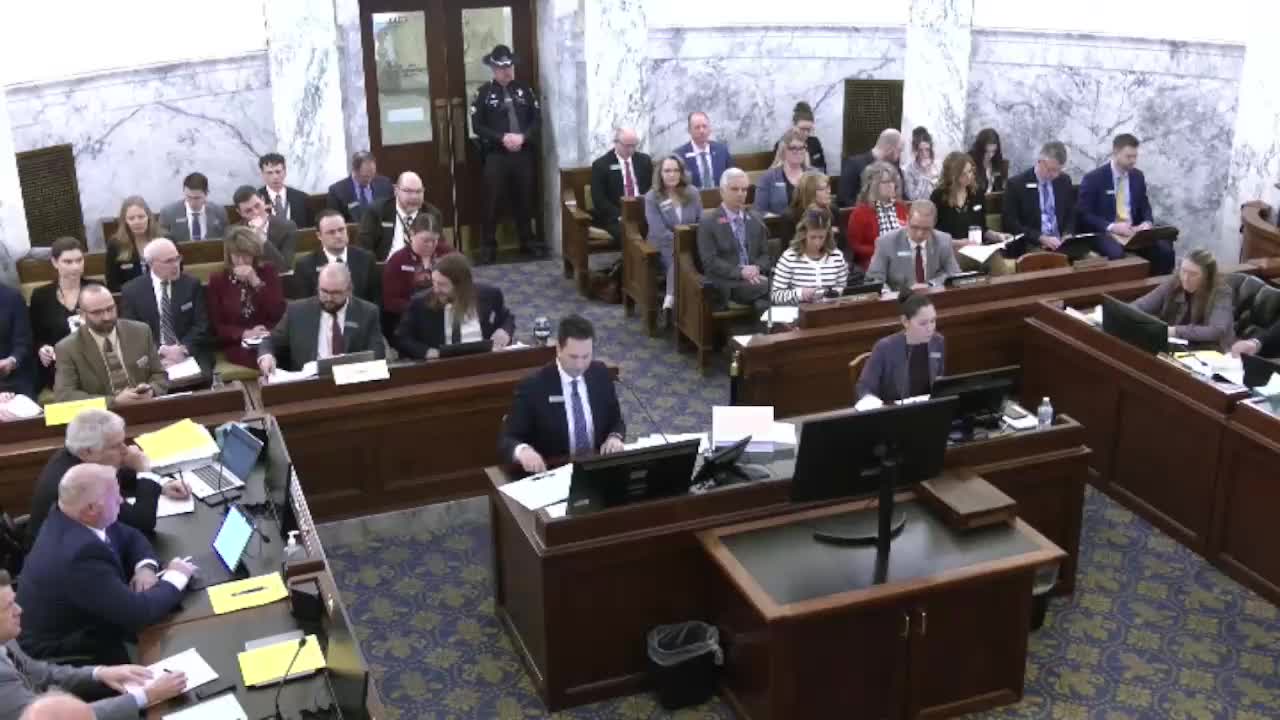
JFAC debate on state employee health insurance ends without decision after split votes
Summary
Committee members debated competing health insurance assumptions for FY2026 — a CEC-recommended $13,960 base or the governor's $14,300 — but neither motion secured the required majorities; staff and officials warned of reserve risks and possible risk charges if contingency falls below contractual minimums.
Lawmakers at the Joint Finance-Appropriations Committee debated whether to set the FY2026 health insurance base at $13,960 per eligible full-time position as recommended by the Change in Employee Compensation (CEC) committee or to adopt the governor's recommendation of $14,300.
Keith Bybee, the committee analyst, explained the two options and the projected dollar impacts to the general fund and other state funds. He said the CEC recommendation would raise the per-eligible-employee health insurance base to $13,960, a $960 increase, and that the governor's alternative would increase the base to $14,300, a $1,300 increase. Milliman actuarial projections factored into the discussion.
Officials warned the committee about reserve risks tied to the state's group insurance contingency reserve. Laurie Wolf, administrator for the Division of Financial Management, told the committee that the 10% contingency reserve is a contractual minimum and that falling below it could expose the state to consequences. "There are contractual obligations that the state has within that contract that we cannot drop below that 10% minimum," she said.
Faith Knowlton, administrator for the Office of Group Insurance, added: "If we fall below the 10% contingency reserve, then a risk charge can be assessed to the state." Analysts cited current and projected reserve balances: the reserve balance was reported around $80.5 million; Milliman projections estimated that adopting the governor's recommendation would leave a projected balance of about $61.4 million and adopting the CEC recommendation would leave about $51.6 million. The total projected cost of the plan for FY2026 was discussed at roughly $482 million.
The committee first considered a motion to adopt the governor's recommended $14,300 per eligible position; Representative Miller moved and Senator Woodward seconded. Representative Furness offered a substitute motion to adopt the CEC's $13,960 number. The substitute motion failed on a combined committee vote (grand total 9 yes, 11 no), with the Senate delegation split and the House delegation rejecting the substitute. The original motion then failed because it did not secure a majority from both the Senate and House delegations in JFAC (the Senate vote was against the motion although the House recorded a majority in favor). Committee leadership said the health insurance decision did not pass and will be revisited at a future session.
Why it matters: the health insurance base feeds into agency maintenance budgets. The committee's decision would have adjusted employer health insurance funding across nearly all state agencies and materially affect the contingency reserve balance and potential future premium changes.
Key votes - Substitute motion (CEC $13,960): motion by Representative Furness; second by Senator Cook. Vote: failed (grand total 9 yes, 11 no). Outcome: failed. - Original motion (Governor $14,300): motion by Representative Miller; second by Senator Woodward. Vote: failed to win a majority in both delegations; outcome: failed/postponed.
Officials asked the committee to weigh the trade-off between preserving a larger reserve cushion against reducing employer budget pressures this year; staff noted a lower adoption this year could increase the risk of a larger increase next year to rebuild reserves.