Get Full Government Meeting Transcripts, Videos, & Alerts Forever!
Get email alerts on the Medicaid Expansion topic
No spam. Unsubscribe anytime.
House committee advances bill to impose waivers, limits on Medicaid expansion amid heated public testimony
Summary
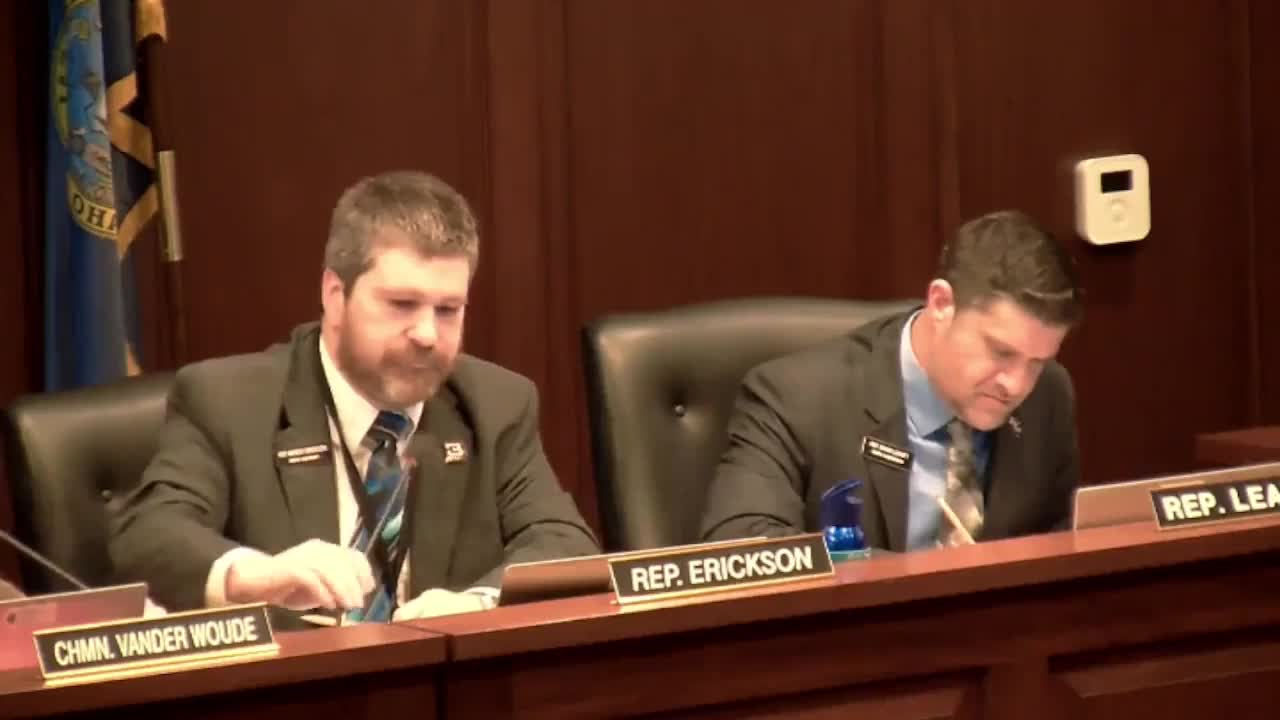
BOISE — The House Health and Welfare Committee voted 8-7 on Feb. 12 to send House Bill 138 to the full House with a due-pass recommendation after more than three hours of testimony and debate.
BOISE — The House Health and Welfare Committee voted 8-7 on Feb. 12 to send House Bill 138 to the full House with a due-pass recommendation after more than three hours of testimony and debate.
Rep. Jordan Redmond, the bill sponsor, told the committee the proposal aims to “restore integrity, fiscal responsibility, and self-sufficiency back into our Medicaid program.” Rep. Jordan Redmond (Representative, District 3, Kootenai County) said the bill is intended to keep Medicaid expansion in place while imposing “safeguards” meant to control growth and reduce improper payments.
Why it matters: The bill would require Idaho to secure a package of federal waivers (discussed in testimony as Section 1115 demonstration waivers and options sometimes described as "1332/1332-like" mechanisms) and put state-side limits on enrollment and duration for able-bodied adults in the Medicaid expansion population. If the listed waivers or conditions are not obtained, the bill as drafted triggers termination of the expansion program, a consequence opponents described repeatedly as an effective repeal.
What the committee heard: More than 50 people testified in person and virtually. Supporters framed the bill as a fiscally responsible reform. Michael Sandvik (self-identified, Idaho Falls) said the bill addresses long-term costs tied to untreated severe mental illness. An advocate from a conservative policy group argued the measure would “rescue Idaho's budget, reprioritize the truly needy, and restore faith in Idaho's institutions,” (Paige Terryberry, FGA Action).
Opponents — including hospital leaders, physicians, patient advocates and social-service organizations — said the bill would remove coverage from tens of thousands of Idahoans, damage rural hospitals and shift costs to counties, law enforcement and emergency care.
- Brandon Mickelson, program director at ISU Medicine Residency representing the Idaho Academy of Family Physicians, told the committee: “A vote yes on Health Bill 138 means a vote to increase cost to hospitals, many of which, especially in rural communities, are already struggling.” - Several physicians and mental-health providers described individual patients who, they said, would lose timely care without expansion and might later require much more costly emergency or inpatient services.
Key bill provisions and points of contention: Representative Redmond described several components discussed in the bill and in committee questioning: - An enrollment cap for able-bodied adults: the sponsor described a cap set at “the lower of 50,000 or the aggregate number of elderly and disabled enrollees,” a limit that multiple questioners said would cut enrollment well below current expansion levels (committee discussion put the elderly/disabled aggregate at roughly 35,000 in current forecasts). - A 36-month time limit for able-bodied adults on expansion, plus work, training, volunteering or study requirements (the bill text and sponsor’s answers referenced roughly “20 hours a week” as the work threshold). - A prohibition on using state Medicaid funds for gender-affirming surgeries for minors and a stated restriction for adults. - A requirement that the Department of Health and Welfare seek multiple federal waivers and reduce the state’s improper-payment rate, with one witness and the sponsor noting Utah and South Dakota as reference points.
Committee procedure and votes: After public testimony, Representative Levitt moved to send the bill to the floor with a due-pass recommendation. Representative Haley offered an amended substitute motion to hold the bill in committee subject to the chair; that motion (the amended substitute) failed on a voice/roll-call split (7 ayes, 8 noes). The final roll call on sending the bill to the floor with a due-pass recommendation recorded 8 ayes and 7 noes.
Discussion and unanswered questions: Committee members and witnesses repeatedly flagged uncertainties the committee had not resolved in the hearing record: - Which specific federal waiver authorities will be sought and which are legally available (witnesses noted prior rejections of similar waivers in other states and cautioned that 1115 and 1332 waiver requirements differ). - The fiscal modeling of state net cost after accounting for federal funds, upper payment limits, hospital taxes and local cost shifts (several witnesses cited different numbers and studies; committee members asked for clearer reconciled estimates). - Operational costs to implement and administer work or eligibility-verification requirements; estimates provided in testimony ranged from about $3 million to $4 million in one-time implementation costs and several million dollars in ongoing staff and contract costs.
What’s next: The committee’s due-pass recommendation sends House Bill 138 to the full Idaho House for further debate and possible amendment. Sponsors and opponents both said they expect additional work on waiver strategy and fiscal details before final action.
Ending: Supporters called the bill a chance to “take control back” of expansion; opponents warned the bill’s “trigger” language could leave tens of thousands without coverage, raise costs elsewhere in the system and harm rural providers. The record from Feb. 12 leaves open whether the state can secure the necessary federal approvals the bill requires before its triggers would take effect.