Get Full Government Meeting Transcripts, Videos, & Alerts Forever!
Get email alerts on the Nutrition And Food Assistance topic
No spam. Unsubscribe anytime.
Debate intensifies over banning soda and candy from SNAP; committee sets bill for return after amendments
Summary
Representative Jordan Redmond introduced House Bill 109 directing Idaho to request a USDA waiver to prohibit soda and candy purchases with SNAP benefits; testimony ranged from public‑health advocates urging the change to retailers warning of major operational burdens.
Representative Jordan Redmond (R., District 3) introduced House Bill 109, which would direct Idaho’s Department of Health and Welfare to request a USDA waiver to prohibit purchases of soda and candy using SNAP (Supplemental Nutrition Assistance Program) benefits. Redmond said the proposal follows the WIC model, which already excludes soda and candy, and argued that limiting taxpayer funds for those items would help address obesity and other diet‑related chronic illnesses.
The committee heard lengthy public testimony from both sides. Supporters included Paige Terryberry (FGA Action), who cited research linking sugar‑sweetened beverages to obesity and chronic disease and argued that taxpayers “pay twice” (first for junk food with SNAP benefits and again for Medicaid care). Terryberry and others said soda ranks as the top commodity purchased on SNAP and called the proposal fiscally responsible and health‑promoting. Additional testimony in support came from Don Pierce (Hunger Free America / Idaho Hunger Relief Task Force) and Mike Baker (individual, health‑care professional), who emphasized the link between diet and health outcomes and urged policy changes.
Opponents included Pam Eaton (Idaho Retailers Association), Melinda Merrill (Northwest Grocery Retail Association), Steve Thomas (Idaho Soft Drink Association) and other grocery representatives. Retailers said the SNAP program functions under federal law and interoperability standards that make state‑specific product restrictions operationally burdensome. They argued implementation would require retailers to identify thousands of SKUs, label shelves, and police purchases at checkout, imposing large compliance costs and raising the risk that customers would cross state lines. The ISDA representative said the beverage industry has already reduced calories substantially over decades and disputed that soda alone is the root cause of obesity.
Committee members asked detailed questions about implementation, waiver costs, and whether the state could simply match WIC definitions to reduce retailer burden. Representative Redmond said the waiver he envisions would be a simple email request from the state director to USDA (not an 1115/1332 demonstration that requires actuarial analysis), and he offered to work with retailers and committee members on amendments. Retail groups disputed the availability and legality of a straightforward waiver and pointed to a 2004 USDA FNS denial to Minnesota that cautioned states cannot redefine SNAP‑eligible foods without federal action.
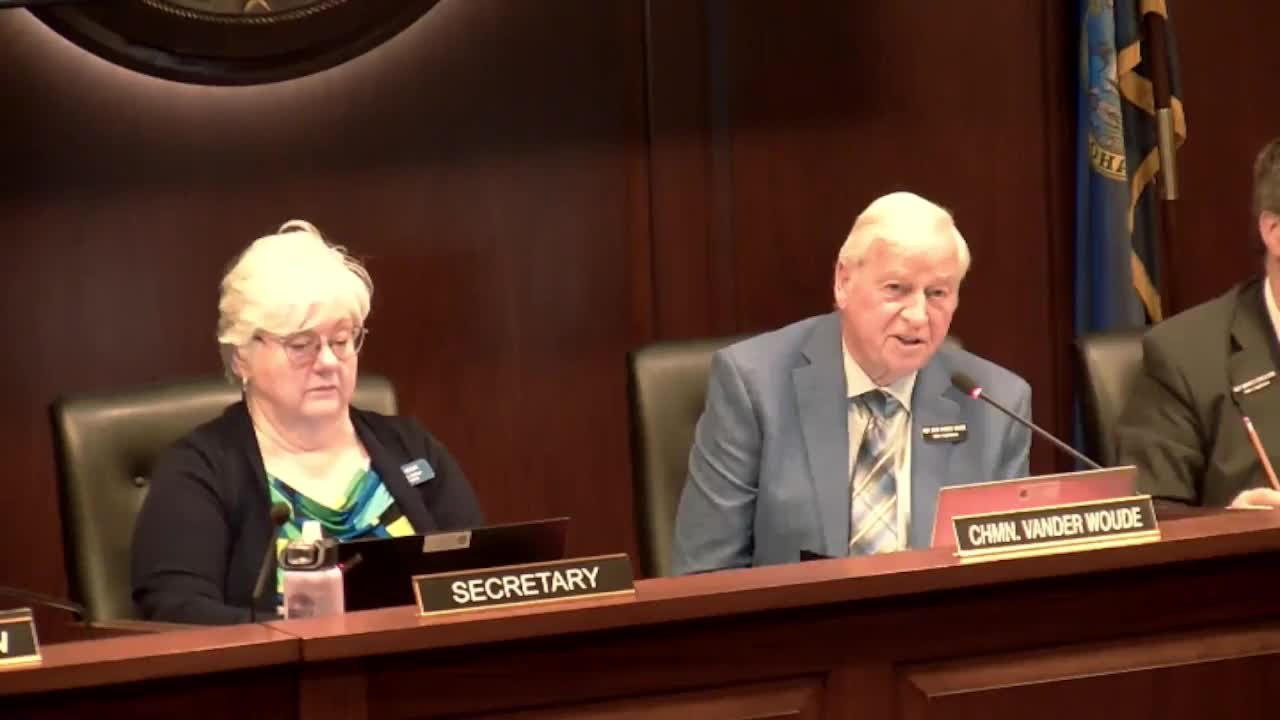
Multiple procedural motions followed. Representative Kaler moved to hold the bill for approximately two weeks to reconvene with more stakeholder discussion; other substitute motions sought to send the bill to general orders (the floor amending process) or to hold the bill in committee. After successive votes on substitute and alternate motions, the committee approved the sponsor’s request to set a time certain for the bill to return to committee (the transcript records the final vote as passing by a narrow margin). The chair announced that House Bill 109 will be set for a return in roughly two weeks for further consideration and possible amendment.
The record includes detailed testimony from public‑health advocates, grocers, and industry groups; the committee’s action preserves the bill for further drafting and the sponsor indicated he will meet with retailers and interested members before the next appearance.