Get Full Government Meeting Transcripts, Videos, & Alerts Forever!
Get email alerts on the Occupational Licensing topic
No spam. Unsubscribe anytime.
Committee advances broad occupational‑licensing bill aimed at limiting board‑created licenses and fees
Summary
House Bill 107 would require new licensing and many fees to be authorized by statute and codify a "universal practice" provision allowing licensed professionals to perform tasks within their education, training and experience; the committee voted to send the bill to the House floor with a due‑pass recommendation.
Representative Jeff Ehlers (R., District 21) presented House Bill 107, which would limit licensing boards’ ability to create new licenses or new fees solely by rule, require certain fees to be established by statute or public rule‑making, and create a new statutory provision clarifying that licensed professionals may perform acts consistent with their education, training and experience (a "universal occupation and professional licensing practice authority").
Ehlers and co‑sponsor Representative Jordan Redmond said the bill is intended to increase legislative oversight of new licensure and fee creation and to provide clarity about scope‑of‑practice questions by relying on licensing boards’ existing review of education, training and experience. Supporters argued the proposal would improve transparency, curb unchecked regulatory expansion, and modernize rules across boards.
Testimony for the bill included Kate Haas (Kestrel West / Cicero Action), who said the measure provides clarity for practitioners and boards and codifies standards tied to education, training and experience; and Greg Pfister (FGA Action), who framed HB 107 as enhancing legislative oversight and protecting taxpayers from board‑driven expansions. Both testified in favor. Committee members questioned enforcement mechanics and whether the legislature would be the ultimate arbiter if a board acted outside the statute; supporters said statute would render unauthorized board rules invalid and the legislature could address noncompliance.
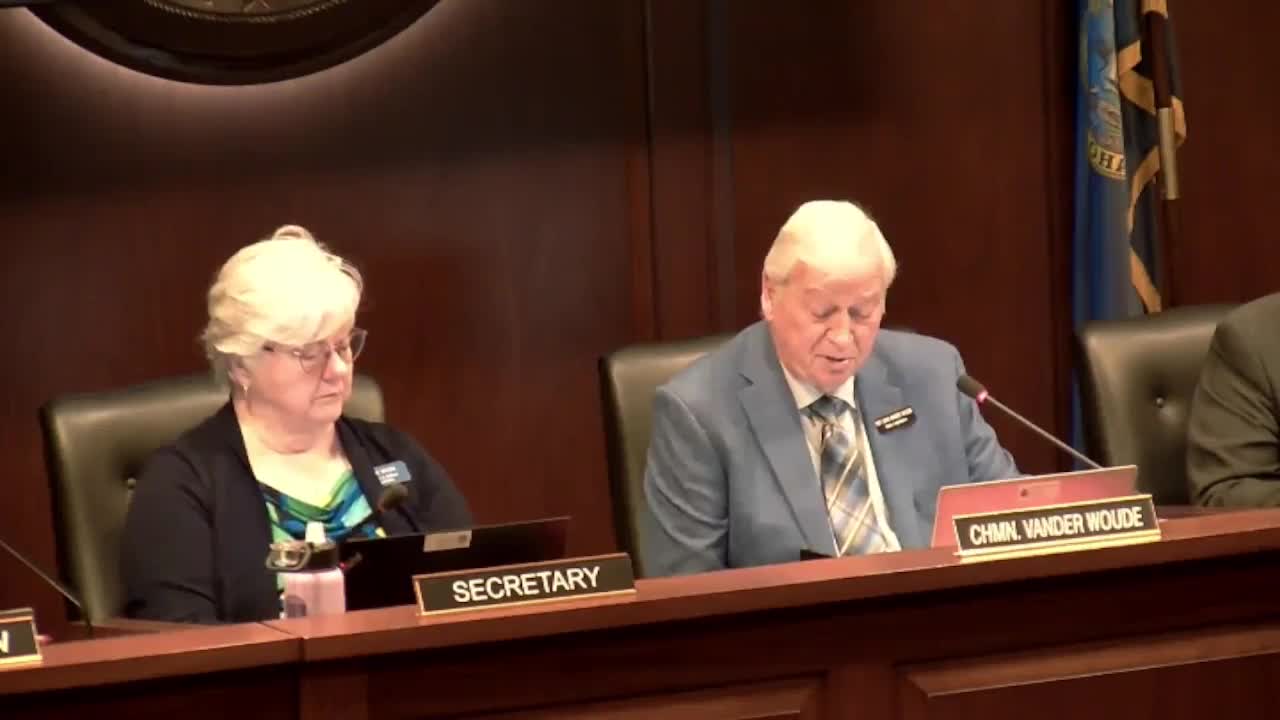
Representative Healy moved to send House Bill 107 to the House floor with a due‑pass recommendation. The motion passed in committee; several members recorded no votes and the chair announced the motion carried. The transcript includes a roll‑call sequence in which multiple members were recorded as "no," though the chair declared the motion passed and the bill will go to the floor for further consideration.
Sponsor and witnesses said HB 107 follows actions taken in other states and would allow Idaho to maintain a relatively deregulated environment while ensuring the legislature retains authority over major expansions in licensure or fees. The bill authorizes boards to submit reports and conform existing rules to the new statutory language.