Get Full Government Meeting Transcripts, Videos, & Alerts Forever!
Get email alerts on the Public Assistance Integrity topic
No spam. Unsubscribe anytime.
Committee clears bill to let Health and Welfare access tax records for public assistance fraud probes
Summary
House Bill 62 would let the Department of Health and Welfare obtain tax information from the state Tax Commission via data‑sharing agreement to verify income in public‑assistance fraud investigations; the committee sent the bill to the House floor with a due‑pass recommendation.
Representative Ben Fuhrman (R., District 30) presented House Bill 62 to the committee and clarified at the outset that the bill concerns public‑assistance fraud—not Medicaid fraud handled by the Medicaid Fraud Control Unit (Idaho Code §56‑226).
Fuhrman said field investigators at the Department of Health and Welfare currently must subpoena banks to verify income, a process he said can take 30 days or more and sometimes fails when banks are out‑of‑state. HB 62 would permit Health and Welfare to work through a memorandum of understanding (MOU) with the Idaho State Tax Commission to obtain tax information the state already holds to verify income more quickly during investigations. Fuhrman said the tax information is confidential and could not be used outside the investigatory process unless the case proceeded to court and normal evidentiary processes applied.
Committee members asked clarifying questions about whether the bill applies to Medicaid fraud; Fuhrman reiterated that it does not, and pointed to code that reserves Medicaid fraud to the Medicaid Fraud Control Unit. He argued the change would speed enforcement and reduce investigatory delays without creating a new public disclosure pathway for taxpayers’ private returns.
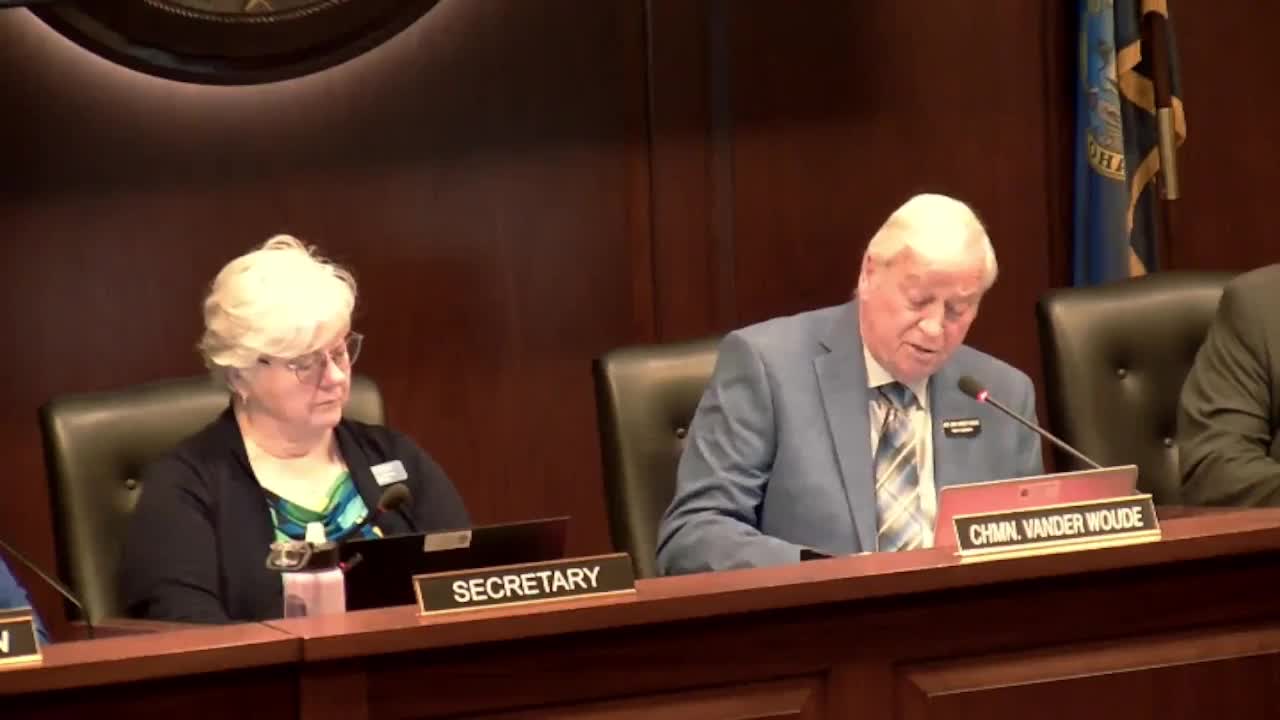
Representative Redmond moved to send House Bill 62 to the House floor with a due‑pass recommendation. The committee approved the motion by voice vote; Chair recorded his aye and announced House Bill 62 was sent to the floor with a due‑pass recommendation.
No appropriation to the department was requested during the committee discussion; Fuhrman described the MOU as a mechanism for using existing state data to verify income in a way he said preserves confidentiality unless litigation proceeds.